

CDC Report: Overdose Deaths Decline 14% Nationally, First Sustained Drop in Decades
For the first time since the opioid crisis began its relentless expansion more than two decades ago, the United States has recorded a significant and sustained decline in drug overdose deaths. Provisional data released by the Centers for Disease Control and Prevention shows that approximately 80,000 Americans died from drug overdoses in 2024—a 14% decrease from the roughly 93,000 deaths recorded in 2023, and a dramatic reversal from the pandemic-era peak of 108,000 fatalities in 2022.
The reduction represents more than a statistical blip. Public health officials are cautiously calling it a genuine inflection point—the first evidence that the constellation of interventions deployed against the overdose crisis may finally be outpacing the lethality of an increasingly toxic drug supply.
The Numbers Behind the Trend
The CDC's National Center for Health Statistics provisional estimates, based on death certificate data from all 50 states and the District of Columbia, reveal declines across multiple drug categories. Opioid-involved deaths, which account for roughly three-quarters of all overdose fatalities, fell approximately 16%. Deaths involving synthetic opioids—primarily fentanyl and its analogues—dropped by a similar margin, suggesting that the reduction is not merely a statistical artifact of changing drug use patterns but reflects genuine progress against the substances driving the crisis.
Perhaps most encouragingly, the decline appears geographically widespread. Preliminary state-level data shows reductions in overdose mortality across the Northeast, Midwest, and West Coast regions that were hardest hit by the fentanyl wave. Even states like West Virginia and Kentucky, which have consistently ranked among the highest for overdose death rates, recorded meaningful decreases.
The timing matters as much as the magnitude. Overdose deaths had risen steadily for two decades, with only brief and isolated periods of stabilization. The 2024 decline follows a smaller reduction in late 2023, suggesting momentum rather than random variation. If confirmed by final mortality data, this would mark the first calendar year of national decline since 1999—the year the CDC began tracking overdose mortality systematically.
Explaining the Turnaround
Attributing the reduction to specific causes remains challenging given the multiplicity of interventions implemented during the same period. However, public health researchers point to several factors that likely contributed:
Expanded naloxone distribution has transformed bystander response to overdoses. An estimated 15 million doses of the opioid reversal medication were distributed nationwide in 2024, up from fewer than 1 million in 2015. Many states have implemented standing order laws allowing pharmacists to dispense naloxone without individual prescriptions, and community-based organizations have deployed the medication through vending machines, outreach programs, and mail-order services.
Medication-assisted treatment access has grown substantially. The elimination of the X-waiver requirement in 2023 allowed any DEA-registered prescriber to prescribe buprenorphine for opioid use disorder, effectively doubling the prescriber pool overnight. Telehealth flexibilities introduced during the COVID-19 pandemic were extended, enabling patients to initiate treatment via video consultation. Medicaid expansion in additional states has extended insurance coverage to low-income populations with high overdose risk.
Harm reduction services have proliferated despite political controversies. Syringe service programs now operate in at least 39 states, up from 33 in 2020. Fentanyl test strips, though banned from federal funding by recent policy changes, remain available in many jurisdictions through state and local support. Supervised consumption sites, while limited to just two cities, have demonstrated capacity to prevent fatal overdoses among highly vulnerable populations.
Changing drug use patterns may also play a role. Some research suggests that stimulant use—particularly methamphetamine and cocaine—has plateaued or declined in certain populations, reducing the pool of individuals at risk for polysubstance overdoses involving both stimulants and opioids. However, this trend remains contested, with other data sources showing continued stimulant availability and use.
Persistent Challenges and Emerging Threats
Despite the encouraging headline numbers, the overdose crisis is far from over. Eighty thousand deaths annually still represent a catastrophic public health failure—roughly equivalent to the entire population of a mid-sized American city dying each year from preventable causes. The 2024 death toll remains higher than any year prior to 2020, meaning the United States has merely returned to the elevated plateau of the late 2010s rather than achieving genuine crisis resolution.
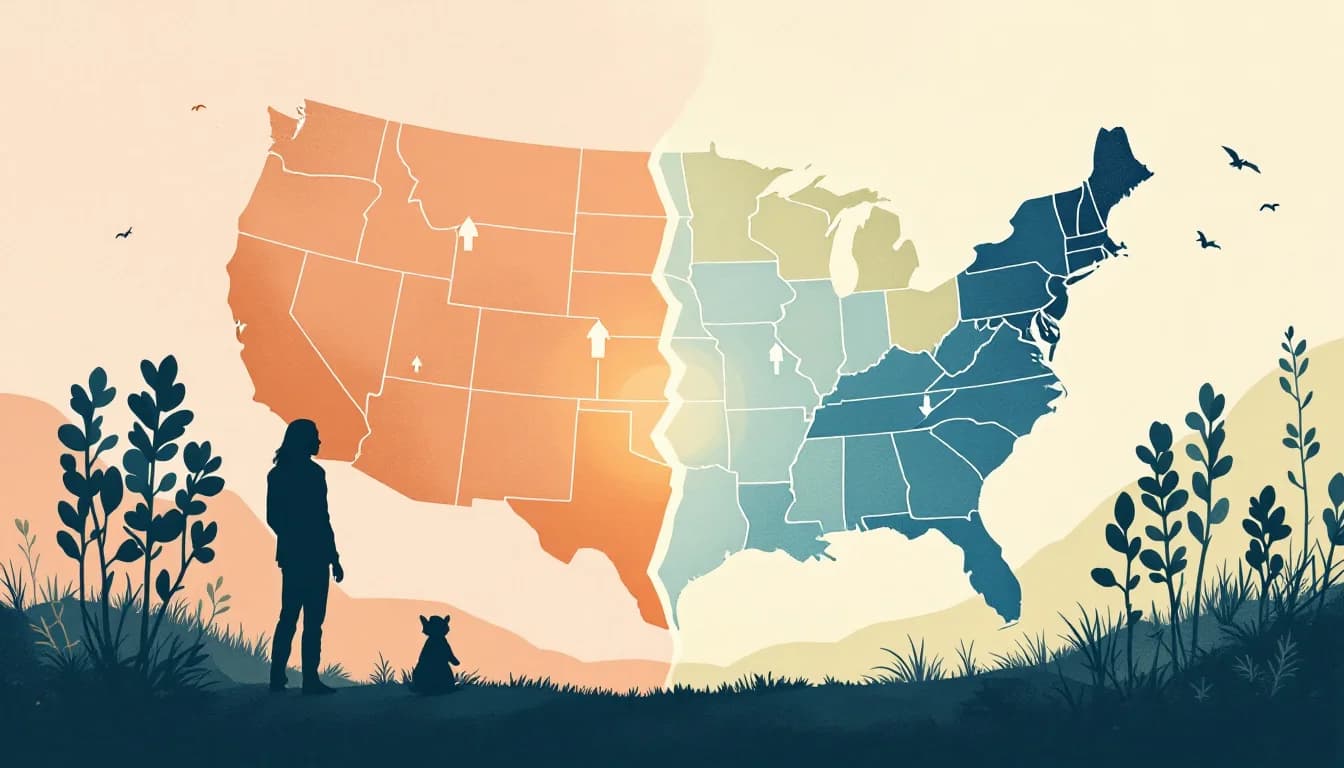
Geographic disparities persist and in some cases have widened. While coastal states and upper Midwest regions have recorded substantial declines, parts of the Southeast and Southwest continue experiencing elevated or even increasing overdose mortality. Rural communities remain disproportionately affected, with death rates consistently higher than urban areas and fewer treatment resources available.
Racial disparities present perhaps the most troubling aspect of the current data. While overdose deaths declined among white Americans, reductions among Black and Latino populations have been smaller or in some regions nonexistent. This divergence reflects longstanding inequities in healthcare access, housing stability, and economic opportunity that public health interventions have failed to address adequately.
Emerging drug threats also threaten to reverse progress. The veterinary tranquilizer xylazine, known as "tranq dope," has spread to at least 48 states and now contaminates an estimated 10-15% of the fentanyl supply in some regions. Because xylazine is not an opioid, naloxone does not reverse its effects, complicating overdose response. New synthetic opioids like cychlorphine—estimated to be ten times more potent than fentanyl—have begun appearing in overdose toxicology reports, potentially heralding another wave of increased lethality.
Policy Implications
The 2024 decline arrives at a moment of significant policy uncertainty. The Trump administration has proposed restructuring the Substance Abuse and Mental Health Services Administration, consolidating its grant programs into broader health block grants that may reduce targeted funding for addiction services. Medicaid work requirements, if implemented as proposed, could threaten coverage for approximately 40% of individuals receiving medication-assisted treatment.
Public health advocates argue that the progress demonstrated in 2024 should motivate sustained investment rather than retrenchment. "We've finally got some momentum," said Dr. Nora Volkow, director of the National Institute on Drug Abuse, in a statement accompanying the CDC data release. "This is exactly the wrong moment to pull back from the interventions that are working."
The data also complicates simplistic narratives about addiction policy. States with aggressive harm reduction programs—including syringe exchange, naloxone distribution, and supervised consumption—have generally recorded larger declines than states emphasizing enforcement and abstinence-based approaches. However, the correlation is imperfect, and some jurisdictions with limited harm reduction infrastructure have also achieved significant reductions.
The Fentanyl Factor
Understanding why fentanyl deaths have declined despite continued availability of the drug requires examining both supply and demand dynamics. On the supply side, international enforcement efforts have disrupted some trafficking networks, though fentanyl remains cheap and abundant. On the demand side, expanded treatment access has reduced the number of people using opioids without medical supervision.
However, the fentanyl supply has also evolved in ways that may temporarily reduce lethality. As the drug has become ubiquitous, users have developed greater tolerance and awareness. Fentanyl test strips, despite their limitations, may enable some users to adjust dosing. These adaptations represent harm reduction through experience rather than policy—a fragile buffer that could collapse if drug potency increases or novel substances enter the market.
Looking Forward
The CDC data covering the first quarter of 2025 suggests the decline may be continuing, with provisional estimates showing overdose deaths running approximately 12% below the same period in 2024. If this trend holds, 2025 could see the first multi-year reduction in overdose mortality since the crisis began.
Sustaining this progress will require addressing the structural factors that have made the United States an outlier among wealthy nations in drug overdose deaths. The American healthcare system's fragmentation, the criminalization of drug use, the limited availability of housing and social services for people in recovery, and the proliferation of firearms (which contribute to suicide risk among people with substance use disorders) all contribute to mortality rates that far exceed those of comparable countries.
For the families of the 80,000 Americans who still died from overdoses in 2024, the statistical progress offers little comfort. Each death represents a unique tragedy—a life cut short, a family devastated, potential unrealized. The 14% reduction means that approximately 13,000 fewer families experienced this particular form of loss compared to the previous year. That is genuinely meaningful progress, but it is not victory.
The challenge now is to convert a single year of improvement into sustained reduction that eventually drives overdose deaths down to levels comparable to other developed nations. Whether American policymakers have the will and wisdom to build on this fragile progress—or whether political gridlock, funding cuts, and emerging drug threats will reverse the trend—remains the defining question for addiction policy in the years ahead.
The CDC will release final 2024 overdose mortality data in December 2026. Provisional estimates are subject to revision as additional death certificate information becomes available.
Sources
Editorial Board
Editorial review using SAMHSA, CDC, CMS, and state agency sources
The NWVCIL editorial team reviews and updates treatment-center information using public data from SAMHSA, CDC, CMS, and state behavioral-health agencies. We cross-check facility records, state coverage rules, and clinical-practice updates so the directory reflects current evidence and policy.
Related Articles

Kentucky Overdose Deaths Decline for Fourth Consecutive Year, Reaching Lowest Level Since 2014
Kentucky reports 50.8% reduction in overdose deaths since 2021, marking four straight years of decline and the lowest fatality count in over a decade.
U.S. Overdose Deaths Keep Falling, But Western States Face Deadly Surge
National overdose deaths decline for third consecutive year, yet Alaska, New Mexico, and other western states see rising mortality amid fentanyl crisis

CDC Reports 15.9% Decline in Overdose Deaths as New Synthetic Drugs Emerge
New CDC data shows U.S. overdose deaths fell 15.9% in the past year, but emerging synthetic drugs like medetomidine threaten continued progress