
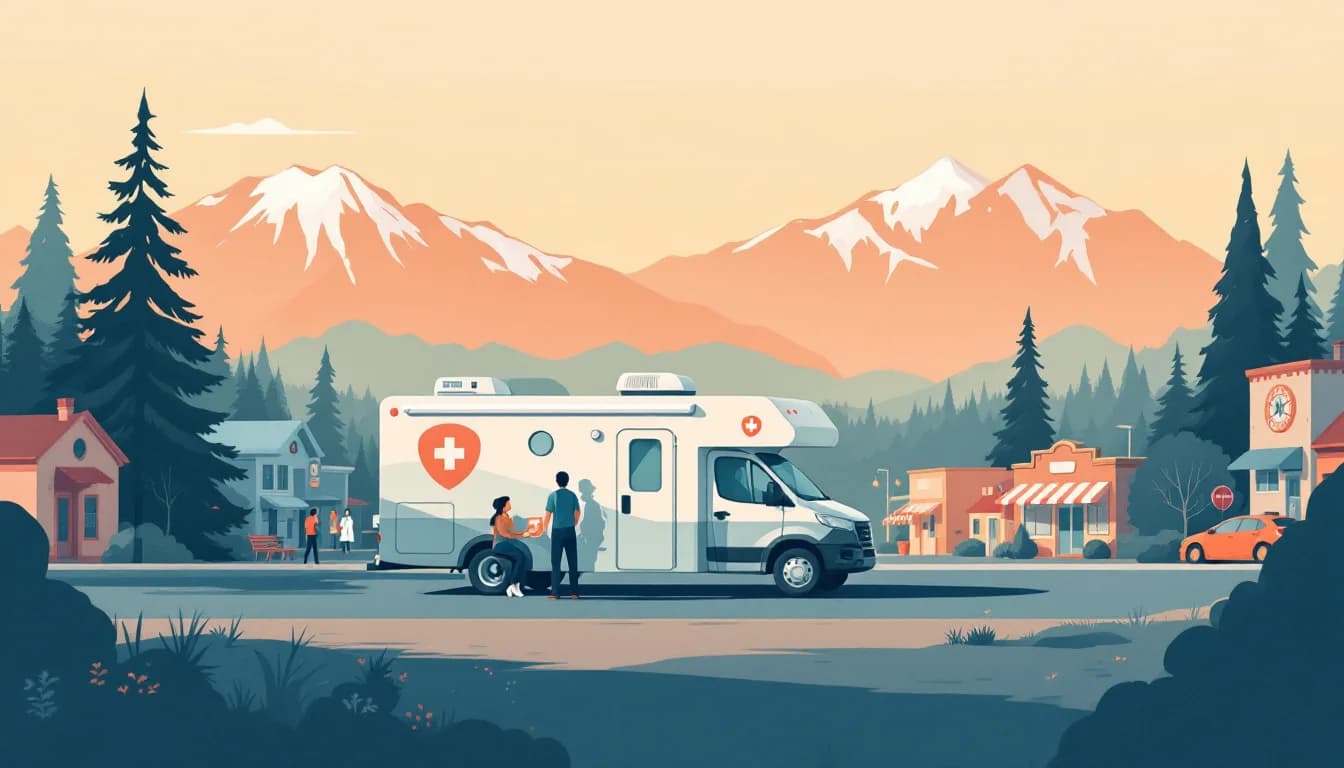
Mobile Methadone and Buprenorphine Clinic Rolls Into Rural California Counties
The rolling hills and historic gold country of California's Sierra foothills have long presented a paradox for residents struggling with opioid addiction. Some of the state's most picturesque landscapes—Amador and Calaveras counties—have also been among its most challenging places to access evidence-based addiction treatment. That changed on June 1, when a specially equipped Mobile Medication Vehicle began making its daily rounds, bringing methadone, buprenorphine, and telehealth services directly to communities that have historically faced hours-long drives to reach the nearest clinic.
Aegis Treatment Centers, part of the Pinnacle Treatment Centers network, launched its second California Mobile Medication Vehicle with a straightforward mission: eliminate distance as a barrier to recovery. The program operates five days per week, with scheduled morning stops at county health facilities in both Amador and Calaveras counties. Patients can receive medication-assisted treatment including methadone and buprenorphine (Suboxone), along with counseling support through integrated telehealth connections.
The Geography of Treatment Deserts
Amador County, population approximately 40,000, and Calaveras County, with roughly 45,000 residents, exemplify what public health researchers call "treatment deserts"—rural areas where geographic isolation combines with limited healthcare infrastructure to create formidable obstacles for people seeking addiction care. The counties sit in the western foothills of the Sierra Nevada, roughly 50 miles southeast of Sacramento. While the region draws tourists to its wineries, historic Gold Rush towns, and outdoor recreation, residents facing opioid use disorder have confronted a stark reality: the nearest dedicated opioid treatment programs often require round trips of two hours or more.
This distance creates cascading barriers. For patients receiving methadone, which requires daily dosing during the initial phases of treatment, such commutes can prove insurmountable. Even buprenorphine, which allows take-home prescriptions after stabilization, initially requires in-person evaluation and periodic follow-up visits that strain working schedules and transportation resources. The result is that many individuals who might benefit from medication-assisted treatment simply never initiate care, or they abandon treatment prematurely when the logistical burden becomes overwhelming.
How the Mobile Model Works
The Mobile Medication Vehicle operates on a fixed schedule designed to integrate with existing county health infrastructure. Each weekday morning, the vehicle arrives at Amador County Health and Human Services, where patients can receive services from 6:50 to 9:10 AM. The clinic then travels to Calaveras County Health and Human Services, operating there from 10:20 AM to 12:40 PM. This two-stop approach maximizes the vehicle's reach while maintaining the consistency that patients in early recovery often need.
The mobile unit functions as a fully equipped clinical environment. Patients receive the same medications—methadone and buprenorphine—that they would obtain at a traditional brick-and-mortar opioid treatment program. The vehicle's design accommodates private consultation spaces where patients can connect via telehealth with counselors and medical providers. This hybrid model, combining on-site medication dispensing with remote clinical support, represents an increasingly common approach to expanding treatment capacity in underserved areas.
For Amador and Calaveras county residents, the mobile clinic offers something that did not previously exist locally: same-day access to the full spectrum of medication-assisted treatment options. Methadone, the oldest and most extensively studied medication for opioid use disorder, remains unavailable through typical primary care or pharmacy channels due to federal regulations requiring specialized opioid treatment program certification. By bringing an OTP-certified facility to these communities, the mobile unit removes a regulatory barrier that has long disadvantaged rural populations.
The Broader Context of Mobile Treatment Expansion
Aegis's California expansion reflects a growing national recognition that mobile delivery models may be essential for addressing rural America's addiction treatment gap. Similar programs have launched in recent years across Washington State, Montana, rural Pennsylvania, and other regions where geographic barriers have historically limited access. The approach aligns with federal policy shifts, including the DEA's extension of telehealth flexibilities for controlled substance prescribing through December 2026, which enables the hybrid in-person and remote care model that mobile units employ.
Research on mobile medication-assisted treatment remains limited but promising. Studies of existing programs suggest that patients receiving care through mobile or telehealth models demonstrate retention rates comparable to those attending traditional clinics, with high satisfaction scores related to convenience and reduced transportation burden. For agricultural workers, parents with limited childcare options, and individuals without reliable vehicles, the ability to receive treatment locally rather than commuting to distant cities can mean the difference between sustained recovery and treatment discontinuation.
The timing of the Amador and Calaveras deployment carries particular significance. California, like much of the United States, has seen encouraging declines in overdose mortality over the past year, with expanded naloxone distribution and medication-assisted treatment access contributing to reduced fatalities. However, rural counties have often lagged urban centers in accessing these interventions. The mobile unit represents an explicit effort to ensure that geographic location does not determine survival probability.
Challenges and Considerations
Mobile treatment programs, while innovative, face operational challenges that fixed facilities do not. Vehicle maintenance, weather-related disruptions, and the logistical complexity of maintaining medication security during transport all require sophisticated operational protocols. The limited hours of operation—morning schedules that may not accommodate all patients' work commitments—represent a trade-off between reach and accessibility.
Additionally, mobile units alone cannot address all the gaps in rural addiction care. Patients requiring residential treatment, intensive outpatient programs, or specialized services for co-occurring mental health conditions may still need to travel to regional centers. The mobile clinic functions most effectively as an entry point to care and a stabilizing force for patients who can maintain recovery with medication and counseling support, rather than as a comprehensive solution for all treatment needs.
Sustainability questions also loom. Mobile programs require ongoing funding for vehicles, fuel, staffing, and regulatory compliance. While Aegis operates as a private treatment provider with established revenue streams from insurance and patient fees, the long-term viability of mobile services in sparsely populated areas may depend on continued support from Medicaid, Medicare, and county health departments that recognize the public health value of bringing treatment to underserved communities.
A Model for Rural America
The launch of mobile medication services in California's gold country arrives as policymakers and treatment providers nationwide grapple with how to extend the benefits of addiction medicine to rural populations that have historically been left behind. The overdose crisis has demonstrated that geographic isolation correlates with higher mortality—not because rural residents are more likely to use opioids, but because they are less likely to access the treatments that prevent overdose deaths.
For the patients who will begin their recovery journeys at the Amador and Calaveras county stops, the Mobile Medication Vehicle represents something simpler than policy innovation: it brings help to where they live. In a region where the legacy of the Gold Rush still shapes the landscape, this new mobile clinic offers a different kind of prospecting—the search for health and stability against the backdrop of California's rolling foothills.
As the vehicle begins its daily rounds, it carries more than medications. It represents a test of whether American healthcare can adapt its delivery models to match the geographic realities of rural life, and whether the recent progress in reducing overdose deaths can be extended to communities that have watched from the sidelines as urban centers built the infrastructure of recovery.
Editorial Board
Editorial review using SAMHSA, CDC, CMS, and state agency sources
The NWVCIL editorial team reviews and updates treatment-center information using public data from SAMHSA, CDC, CMS, and state behavioral-health agencies. We cross-check facility records, state coverage rules, and clinical-practice updates so the directory reflects current evidence and policy.
Related Articles
Maine's Somerset County Jail Wins $3.1M to Keep MAT Program Alive
Somerset County, Maine's jail won a $3.1 million SAMHSA grant to fund its extended-release buprenorphine program until jails can bill Medicaid.

BAART Expands Buprenorphine Access at 11 Clinics Across Six States
BAART Programs adds office-based buprenorphine treatment at 11 opioid treatment centers in six states, two days after sister brand MedMark expanded at 25 sites.

California Launches Nation's First Statewide Same-Day Opioid Treatment Service
Governor Newsom launches CA Bridge Connect, a first-in-the-nation free service offering immediate same-day help for Californians seeking opioid addiction treatment.