
New Season Opens Mobile Methadone Unit in Yulee, Florida
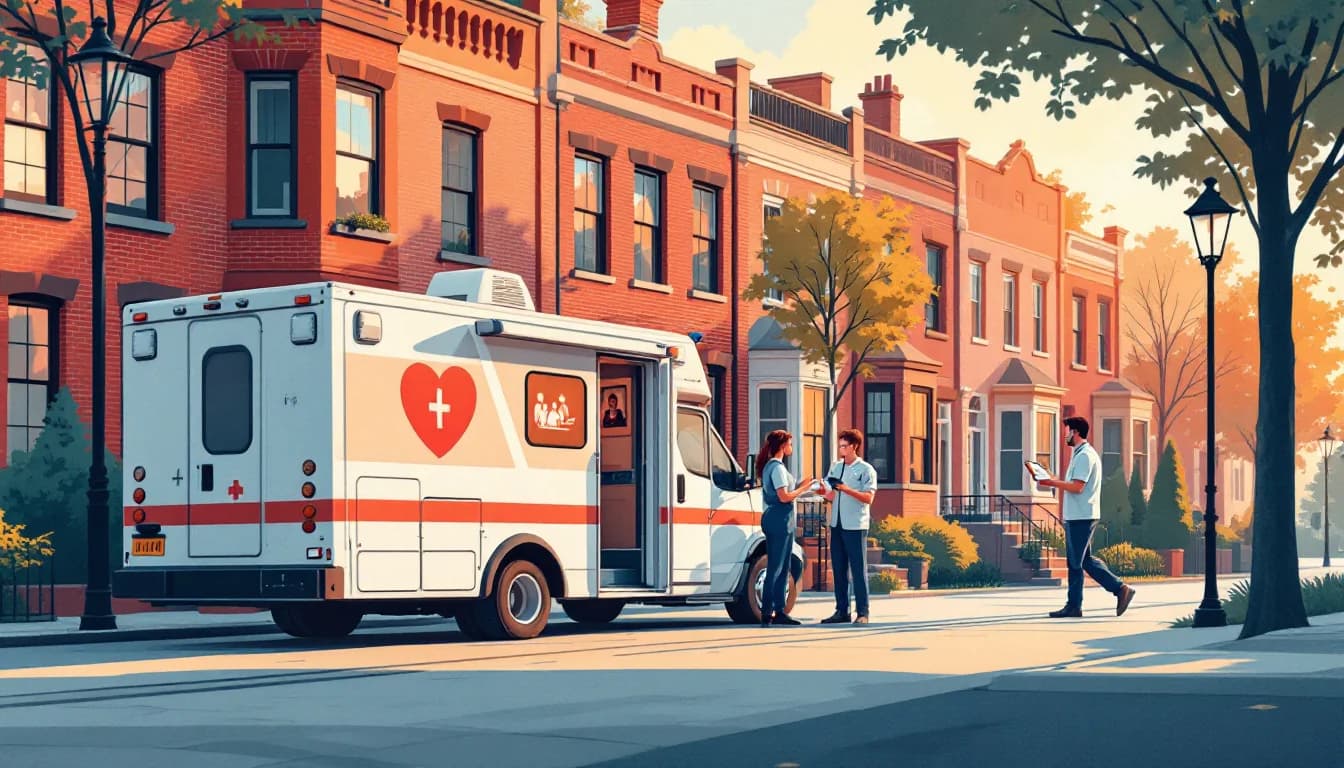
New Season Treatment Center began dosing patients from a mobile unit in Yulee, Florida, on Tuesday, parking at 904 Health, 96040 Lofton Square Court, from 6 to 8 a.m. Monday through Saturday. The unit is the fourth in the company's "On the Road to Recovery" program and operates as an extension of the Jacksonville Metro Treatment Center, roughly half an hour south.
Nassau County, where Yulee sits, has had no opioid treatment program of its own; residents who need daily methadone have driven into Jacksonville. The mobile unit shortens that trip to a parking lot on the county's main commercial corridor, but it compresses the visit into a two-hour window that opens before most workplaces do.
Two hours, six days a week
The schedule is the substance of the announcement. A methadone patient at a conventional clinic has a broader dosing window and, over time, earns take-home doses that reduce how often the trip is required. A mobile site with a 6-to-8 a.m. window concentrates everyone into the same 120 minutes, which is workable for early shifts and early risers and difficult for anyone whose job starts before six, whose bus does not run that early, or who has small children to move first.
There is also no Sunday. Federal rules phase in take-home doses based on time in treatment and clinical criteria, so a patient who has not yet earned them faces a gap: the unit doses Monday through Saturday, and Sunday depends on a take-home supply the newest patients do not have. That is not unique to Yulee — most opioid treatment programs in the country close on Sunday — but it is the part of mobile dosing that the announcement does not address.
What the unit offers
New Season lists daily dosing of methadone, buprenorphine and Suboxone through two dosing windows, on-site intake so a patient can start treatment at the unit rather than at the Jacksonville clinic, crisis counseling, and virtual care through telehealth.
The intake piece is the one that changes the arithmetic. Starting methadone requires an evaluation, a medical history and a determination that the person meets criteria for opioid use disorder; doing that at the mobile site removes a separate trip to a clinic an hour away that a patient might not make. The two dosing windows matter for the same reason — a single line of patients arriving between six and eight in the morning would be a queue, and a queue is a reason not to come back.
Mobile units are not independent clinics. Federal rules treat them as extensions of a certified opioid treatment program, with the satellite location registered before it can dispense, which is why the Yulee site is formally attached to the Jacksonville facility rather than operating under its own license.
An improving region that is still short of care
The company's release cites 221 overdose deaths in Jacksonville in 2025, down from 472 in 2022. It also says Duval County residents experienced thousands of unintentional overdoses over the past several years without giving a figure or a source for the annual count.
Both of those things can be true at once. A death toll that has fallen by more than half in three years still leaves a city losing someone every day and a half, and the decline in Jacksonville tracks a national pattern rather than a local program. What the release does not offer is any measure of unmet demand: how many people in Nassau or Duval County are on a waiting list, how many drive past a clinic without entering, or how many of the county's overdose deaths involved someone who was never in treatment.
The count in the company's own release
The announcement calls the Yulee unit New Season's fourth. Its own description is more muddled: patients are already being served in Portland, Oregon, and Greensboro, North Carolina, while a unit in Rockland, Maine, is "scheduled to begin seeing patients soon."
That leaves two units in operation, one pending and one that is today's — a detail Amanda Hudak, the company's vice president of operations, reflects in her own quote. "With two units already in operation and another coming to Maine, we are expanding our reach," she said, which is a smaller number than the headline.
Hudak framed the program around the barrier that mobile dosing actually addresses. "By launching this mobile unit in Yulee, we are making recovery more accessible for individuals who may face transportation or scheduling challenges," she said. Diona Walker, program director of the Jacksonville Metro Treatment Center, called the vehicle "a lifeline for patients seeking care," and Kelly Moehling, the company's regional director for North Florida, credited the partnership with 904 Health for making the site work.
Why the schedule is the treatment
Methadone is a full opioid agonist dispensed under observation, which is why distance and hours are clinical variables rather than conveniences. A patient who misses doses loses tolerance and faces a heightened risk of overdose on return; a patient who cannot reach a dose skips it. That is the mechanism behind the geography argument that has driven the last several years of expansion in opioid treatment programs — mobile units, longer hours, and telehealth services for the counseling and psychiatric pieces that do not require a physical visit.
For a Nassau County resident already on buprenorphine, the mobile unit changes little, because that medication can be prescribed from an office and filled at a pharmacy. For someone who needs methadone, the two-hour window in a Yulee parking lot is now the closest thing to care — provided they can get there before eight.
Editorial Board
Editorial review using SAMHSA, CDC, CMS, and state agency sources
The NWVCIL editorial team reviews and updates treatment-center information using public data from SAMHSA, CDC, CMS, and state behavioral-health agencies. We cross-check facility records, state coverage rules, and clinical-practice updates so the directory reflects current evidence and policy.
Related Articles
In Camden, Paramedics Will Start Buprenorphine in the Field
Cooper Norcross Health's new mobile integrated health program sends paramedics into Camden to start buprenorphine on scene and connect overdose survivors to care.
Opioid Treatment Program Opens on Hull Street in South Richmond
Pinnacle Treatment Centers opened FCCR Richmond at 1801 Hull Street, offering methadone, buprenorphine, counseling and same-day admissions in South Richmond.
Philadelphia Launches First Mobile Methadone Van in Kensington
Philadelphia's first mobile methadone van, operated by Merakey in Kensington, has connected 567 people to treatment since its October 2025 soft launch.