
In Camden, Paramedics Will Start Buprenorphine in the Field
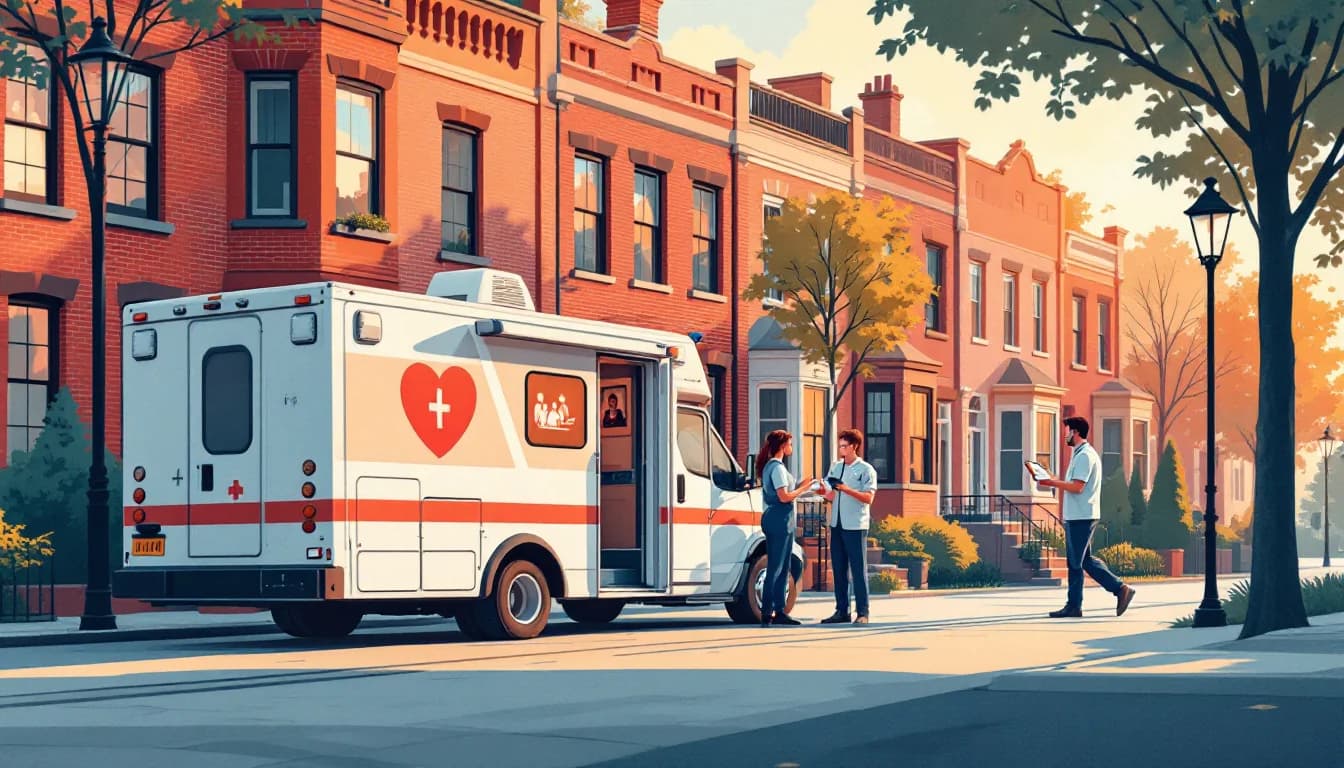
Paramedics in Camden will soon carry more than naloxone. Cooper Norcross Health launched a Mobile Integrated Health program this week that puts two teams on the street seven days a week, each pairing a specially trained paramedic with a community outreach coordinator, and authorizes the paramedic to start buprenorphine on scene when someone is in opioid withdrawal and ready to try treatment.
The program runs on a $500,000 grant from the State of New Jersey and works through Cooper Norcross Health's emergency medical service and its Division of Addiction Medicine. KYW Newsradio reported that former paramedics will work as mobile addiction response specialists in the city.
What happens at the curb
The clinical sequence is the story. A team responds, assesses the patient where they are — a porch, a shelter bed, a sidewalk — and, when appropriate, initiates medication for opioid use disorder on the spot rather than handing over a referral card and leaving. During the encounter, the paramedic can connect the patient to a Cooper Norcross physician or advanced practice provider over telehealth, and the team coordinates the pieces that usually break a same-day start: the prescription, the follow-up appointment and the ride to it.
For people who are not ready, the teams keep showing up. That follow-through is the part most outreach programs promise and few can staff; sustaining it means keeping caseloads small enough to revisit. Two teams is a small footprint for a city Camden's size, and the program's reach will depend on how tightly it targets the blocks where overdoses cluster.
"This program builds on the unique role EMS can play in connecting people to care beyond the emergency response," said Dr. Gerard G. Carroll, medical director and division head of EMS and Disaster Medicine at Cooper Norcross Health.
"Our paramedics are often among the first healthcare professionals to encounter people experiencing addiction or other complex health needs," he said. "By bringing clinical care and ongoing support into the community, we have an opportunity to engage people earlier, reduce barriers to treatment, and help connect them with the resources they need to move toward recovery."
Referrals come from four directions: 911 overdose responses, hospital discharges, community partners and direct outreach in high-need areas. That mix matters because each entry point catches a different person. Someone revived on a bathroom floor with naloxone is not the same patient as someone discharged from an emergency department after a withdrawal seizure, and neither resembles the person who walks up to a van because a neighbor told them it was there.
Why start the medication before the clinic visit
Buprenorphine is a partial opioid agonist: it eases withdrawal and craving, and its ceiling effect on respiration makes it far safer than full agonists in an unmonitored setting. The drug can be started once a patient is in sufficient withdrawal, which is exactly the state a paramedic encounters on an overdose follow-up call.
Getting that first dose into someone within hours rather than weeks is the mechanism most likely to change outcomes. A randomized trial led by Yale's Gail D'Onofrio found that starting buprenorphine in the emergency department sharply increased the share of patients still engaged in treatment a month later, compared with referral alone. Mobile programs are effectively testing whether the same logic survives outside the hospital, in the places where people actually are.
There is early evidence that it can. A case series published October 22 in Prehospital Emergency Care by clinicians at Prisma Health Upstate and Greenville County Emergency Medical Services in South Carolina describes community paramedics treating two patients in severe withdrawal from concentrated kratom derivatives — 7-hydroxymitragynine and a related compound sold over the counter until recently — through a prehospital buprenorphine access program. One patient received 24 milligrams of buprenorphine; the other needed 32 milligrams of buprenorphine with 8 milligrams of naloxone. Both were linked to outpatient medication-assisted treatment and both were still in treatment at 30 days.
The authors' conclusion is narrower than the headlines around kratom derivatives: full-dose induction can be delivered in a prehospital setting, and concentrated over-the-counter products can produce genuine physical dependence. That is a useful data point for a New Jersey program that will encounter the same synthetic marketplace.
The gap between an overdose and a treatment slot
New Jersey recorded 3,171 confirmed drug overdose deaths in 2022, and state data cited at an October legislative hearing put suspected drug deaths just under 800 for this year. The weeks after a nonfatal overdose remain the most dangerous window in a person's drug-using career, and Cooper Norcross Health's program is designed around that window, with an explicit handoff from emergency response to ongoing care.
Whether the state grant model holds is a separate question. The $500,000 covers a pilot at best; sustained funding usually has to come from Medicaid billing for mobile crisis and treatment services, which requires the program to document encounters in a way that payers reimburse. The announcement did not say what happens when the grant expires, and it did not name outcome measures the state will use to decide whether to expand the model.
What the program does establish is a precedent: in New Jersey, a paramedic can now be the first clinician to treat opioid use disorder rather than the last person to see it before an overdose is reversed and forgotten. Emergency responders in the state administered naloxone in more than 9,500 incidents last year, according to state data. That is a lot of contact with people at the worst moment of their lives — and, until now, very little of it converted into a first dose of treatment.
Sources
Editorial Board
Editorial review using SAMHSA, CDC, CMS, and state agency sources
The NWVCIL editorial team reviews and updates treatment-center information using public data from SAMHSA, CDC, CMS, and state behavioral-health agencies. We cross-check facility records, state coverage rules, and clinical-practice updates so the directory reflects current evidence and policy.
Related Articles
Mobile Methadone and Buprenorphine Clinic Rolls Into Rural California Counties
Aegis Treatment Centers launches second Mobile Medication Vehicle to bring daily opioid treatment to Amador and Calaveras counties, eliminating geographic barriers in California's Sierra foothills.
Telehealth Platform Achieves 99% Medication Adherence in Opioid Treatment, Research Shows
Workit Health's evidence-based virtual care model delivers 62% rural retention at three months—more than double competing programs—with peer-reviewed studies in JAMA Network Open showing perfect buprenorphine adherence among participants.

SAMHSA Issues First Major OTP Rule Update in 20 Years, Expanding Telehealth Access to Methadone and Buprenorphine
SAMHSA updates 42 CFR Part 8 regulations for the first time in 20 years, expanding telehealth prescribing and take-home medication access for opioid treatment programs.