
Columbia, Missouri Expands 24/7 Naloxone Access as State Budget Cuts Threaten Rural First Responders
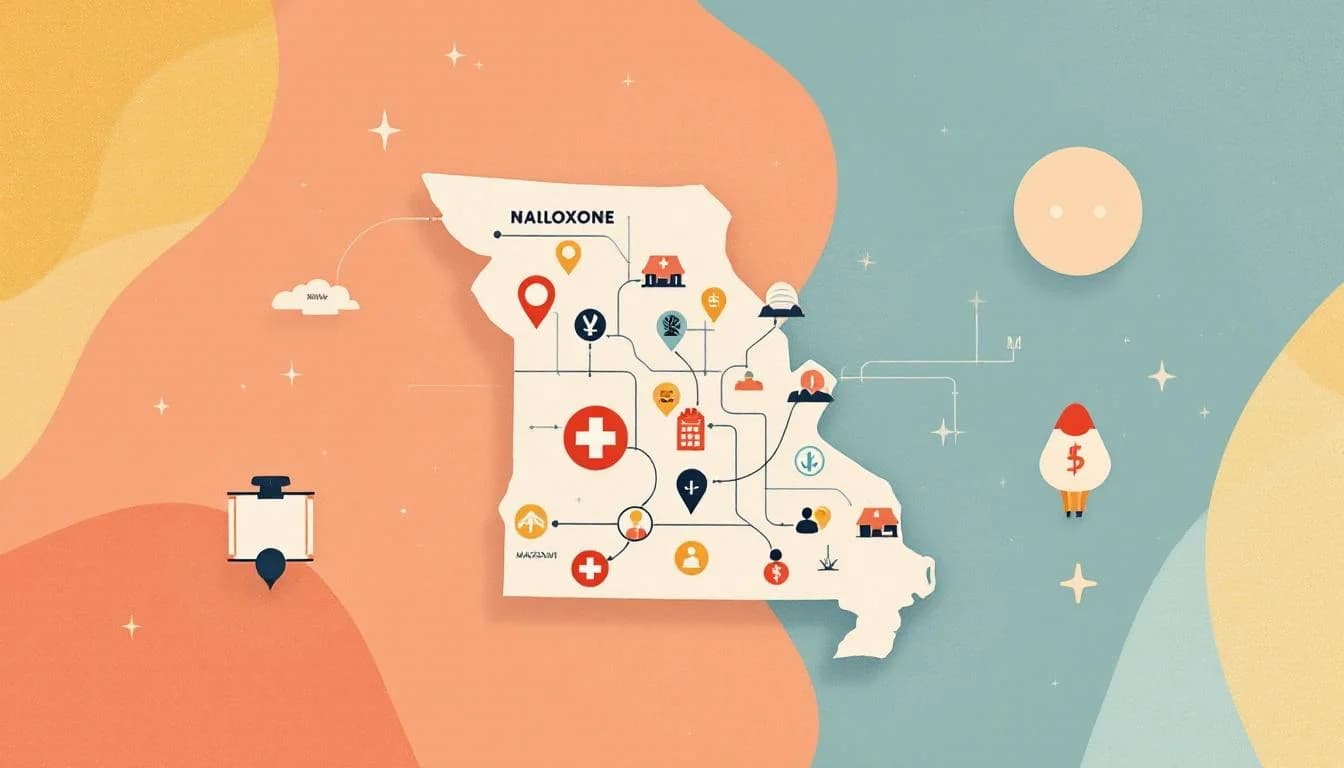
Columbia, Missouri now offers free naloxone around the clock through twelve public distribution boxes placed at fire stations, parks, and community centers—part of an expanding network launched last October by Columbia/Boone County Public Health & Human Services. The boxes have already distributed nearly 400 doses of the opioid overdose reversal medication since the program began, with plans to add more sites across the city.
But the local success story arrives alongside troubling news from Jefferson City: Missouri's House budget proposal would slash the state's naloxone funding by $8 million, a 54% reduction that threatens free distribution to police departments, sheriff's offices, fire stations, and correctional facilities statewide.
"The goal of our naloxone distribution program is to approach naloxone saturation, and that means having enough for every single person in the community—once or twice over," said Alec Mundle, a health educator with Columbia/Boone County Public Health. He emphasized that bystander intervention remains critical even as overdose deaths decline nationally. "Overdose rates are coming down, but they're not zero. There's still a potential for you to come across a community member who's experiencing an overdose. We want you to be ready."
The Four-Minute Window
Mundle described naloxone's life-saving potential in terms of oxygen deprivation. When someone overdoses on opioids, breathing slows or stops entirely. Brain damage can begin within minutes. In Columbia, first responders might arrive in four to seven minutes. In rural Boone County, response times stretch longer.
A bystander with naloxone can administer the medication immediately—collapsing that window before permanent harm occurs. The boxes contain nasal spray versions requiring no medical training: remove the device, insert into nostril, press plunger.
Columbia's distribution sites include fire stations on Vandiver Drive and Grindstone Parkway, parks like Cosmo and Twin Lakes, and community centers throughout the city. The health department selected locations based on accessibility, foot traffic, and proximity to neighborhoods where overdoses have occurred. Anyone can take a box, no questions asked.
Since October 2025, the boxes have been accessed regularly—evidence, Mundle said, that the community recognizes the need and trusts the resource. The boxes are refilled weekly, and the health department tracks usage patterns to identify where additional sites might help.
Federal grant funding paid for the distribution boxes themselves, and Missouri's state naloxone program provides the medication at no cost to local jurisdictions. Upkeep expenses remain minimal—mostly restocking and occasional maintenance. Mundle expects the program to continue expanding as long as state support holds.
That assumption now faces serious doubt.
$8 Million Cut, 800 Agencies Affected
Dr. Rachel Winograd directs the Missouri Institute for Mental Health's Addiction Sciences program at the University of Missouri-St. Louis. MIMH coordinates the statewide naloxone distribution system using funds allocated by the Missouri legislature, much of it derived from opioid settlement payments.
The budget line targeted for elimination funds naloxone saturation efforts for first responders: police departments, sheriff's offices, fire departments, the Department of Corrections, juvenile officers, and probation and parole agencies. Last year, that funding delivered nearly 600,000 naloxone doses to more than 800 front-line agencies across Missouri. It also supported training for approximately 34,000 first responders on how to recognize overdoses and administer the medication.
"We heard early last week," Winograd said, describing the proposed cut. "The line that was cut is dedicated to our first responder naloxone saturation efforts and training. So, we are talking about the free naloxone that goes to police, to sheriff's departments, to fire departments."
Since Missouri began tracking naloxone reversals in 2017, first responders have reported more than 7,500 overdose saves using state-provided medication. Winograd emphasized that number likely undercounts the true total, as reporting remains voluntary and some agencies document reversals inconsistently.
The proposed reduction would force local agencies into an impossible choice: fund their own naloxone supplies—potentially costing tens or hundreds of thousands of dollars annually—or go without. For rural departments already operating on razor-thin budgets, the latter becomes the only realistic option.
"We cannot turn our backs on first responders and front line workers who often find themselves at the scene of an overdose event and have come to rely on naloxone to save a life," Winograd said.
She's already hearing from concerned law enforcement partners in rural Missouri, where the nearest hospital might be thirty or forty minutes away and naloxone represents the only intervention available before an ambulance arrives. Removing that tool doesn't just threaten individuals who overdose—it places officers and deputies in the position of watching someone die without being able to help.
Settlements Funding Both Expansion and Contraction
The majority of Missouri's naloxone funding comes from settlements with opioid manufacturers, distributors, and pharmacies—money intended to address the crisis those corporations helped create. Those same settlement dollars fund Columbia's distribution boxes, MIMH's coordination work, and the first responder saturation program now targeted for cuts.
The irony runs deeper: as Columbia expands access locally using settlement funds, the state legislature considers eliminating the infrastructure that makes local programs sustainable. Distribution boxes work because they're part of a broader system—state procurement negotiates lower prices, coordinates shipments, provides backup when local supplies run low, trains staff, and tracks data. Without that backbone, individual jurisdictions face fragmented supply chains, higher costs, and administrative burdens many can't manage.
Winograd was careful to note that naloxone alone doesn't solve the overdose crisis. "We also need to support access to treatment, recovery, prevention, community, connection—everything else that makes people's lives worth living," she said. "But if they're dead, they don't even have an opportunity to thrive."
That statement captures the tension: naloxone is necessary but not sufficient. Treatment programs, peer recovery services, housing assistance, job training, mental health care—all those interventions matter. But none of them work if someone dies before accessing them. Naloxone buys time. It creates the possibility that someone survives long enough to find help.
The Politics of Harm Reduction
Missouri's proposed cut arrives amid broader national debates over harm reduction strategies. Some lawmakers and advocates view naloxone distribution as enabling drug use rather than preventing death. Others argue resources should prioritize treatment and enforcement over interventions that allow people to continue using opioids.
Winograd rejected that framing. She pointed to the 7,500 documented reversals in Missouri since 2017—each one representing a person who might have died but didn't. Some of those individuals went on to enter treatment. Some didn't. But all of them remained alive, which meant they still had the chance.
The budget proposal now moves to the Missouri House for a vote, expected in the coming days. If it passes, the Senate will take up the measure. Advocates hope the final version restores the funding, but no guarantees exist.
For Columbia, the immediate future remains secure. Federal grants and existing state support allow the distribution box program to continue expanding. Mundle said the health department plans to add more sites and increase community awareness through outreach and education.
But the broader question lingers: what happens when settlement payments taper off in a few years, as they're structured to do? If the state budget won't sustain naloxone saturation now—when settlement dollars are flowing and overdose deaths remain a documented crisis—what happens when those temporary funds dry up?
Local programs like Columbia's demonstrate what's possible when communities prioritize access. Twelve boxes, nearly 400 doses distributed, zero barriers to obtaining life-saving medication. But sustainability depends on state infrastructure, political will, and consistent funding.
The Missouri House will decide in the coming days whether the 800 agencies currently receiving free naloxone continue to have that resource—or whether local jurisdictions face the choice between budget cuts elsewhere or watching people die.
Mundle's optimism reflected confidence in public health priorities at the federal and state levels. "As long as we're seeing investment by our state government, by our federal government, we shouldn't have a problem with getting naloxone into people's hands."
The proposed $8 million cut suggests that confidence might be misplaced. The House vote will clarify whether Missouri's commitment to naloxone saturation extends beyond rhetoric—or whether expanding access in Columbia represents the exception rather than the rule.
Editorial Board
Editorial review using SAMHSA, CDC, CMS, and state agency sources
The NWVCIL editorial team reviews and updates treatment-center information using public data from SAMHSA, CDC, CMS, and state behavioral-health agencies. We cross-check facility records, state coverage rules, and clinical-practice updates so the directory reflects current evidence and policy.
Related Articles
NYC Launches Public Health Vending Machines on Staten Island, Expanding 24/7 Access to Overdose Prevention Supplies
New York City opens first public health vending machines on Staten Island, providing free naloxone, fentanyl test strips, and harm reduction supplies around the clock using opioid settlement funds.

Michigan Expands Free Naloxone Access Through State Offices
MDHHS distributes free naloxone kits at local offices statewide, funded by $1.8 billion opioid settlement. State reports 35% decline in overdose deaths since 2023.
New Jersey Opioid Settlement Funds Spent on Concerts and Bounce Houses
Spending reports released Thursday show New Jersey towns used opioid settlement money on concerts, bounce houses and a muscle car, prompting an oversight bill.