
West Virginia Launches Flexible Regional Funding to Speed Opioid Settlement Impact
The organization managing West Virginia's nearly $1 billion in opioid settlement funds unveiled a new regional allocation system this week designed to address immediate community needs that don't fit traditional grant timelines.
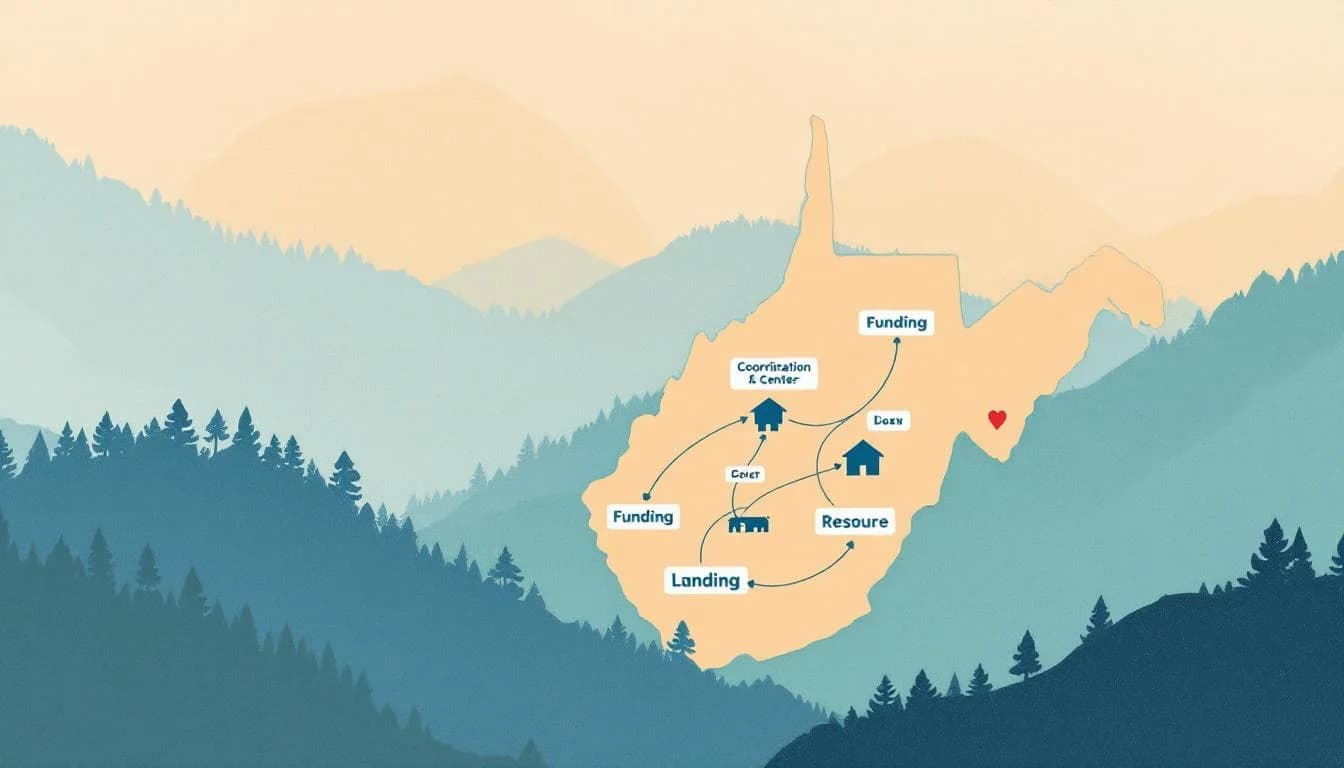
At its quarterly meeting Thursday, the West Virginia First Foundation Board of Directors approved the Regional Contingency Allocation Program (RECAP), giving each of the state's six regions flexibility to fund time-sensitive opportunities outside the foundation's standard grant cycles.
"The idea behind this is to give you guys, the board members, a practical tool to respond to community opportunities that might not fit within those larger grant cycles, but we're still going to maintain appropriate oversight and accountability through the foundation's existing administrative processes," said Anthony Woods, the foundation's chief financial officer.
The announcement comes as West Virginia continues grappling with one of the nation's highest overdose rates despite recording a dramatic 48.55% decline in opioid deaths over the past year. The state recorded an estimated 2,042 opioid overdose deaths from October 2024 through September 2025, down from 3,969 in the prior period—saving approximately 1,927 lives while still maintaining an overdose rate nearly triple the national average.
$370 Million Ready to Deploy
The foundation currently holds more than $370 million in total liquidity, according to Board Treasurer Jeff Sandy's February report. Since operations began in 2024, the foundation has awarded more than $34 million in grants, paid out close to $22 million, and has an additional $12.5 million pending distribution.
The Regional Contingency Allocation Program represents a shift from the foundation's earlier grant cycles, which included $10 million in Initial Opportunity Grants to 38 projects in December 2024, followed by subsequent rounds totaling more than $30 million for addiction treatment programs, harm reduction services, and recovery support infrastructure across the state.
Jonathan Board, the foundation's executive officer, emphasized that RECAP addresses a key implementation challenge: maintaining responsiveness to urgent local needs while ensuring strategic coordination across West Virginia's diverse regions.
"This approach is designed to support timely, regionally informed investments that can address immediate needs and strengthen local impact across the state," Woods said at the meeting.
Six Regions, Six Priorities
West Virginia's settlement fund structure divides the state into six regions, each represented on the foundation's board. The regional model recognizes that a rural county facing treatment desert challenges may require different interventions than an urban area dealing with concentrated overdose hotspots.
RECAP allows regional board members to identify and fund opportunities—such as a sudden clinic closure requiring bridge funding, an unexpected increase in demand for naloxone distribution, or a promising peer recovery program seeking startup capital—without waiting months for the next formal grant cycle.
The program maintains oversight through the foundation's existing administrative processes, ensuring that rapid-response funding doesn't compromise accountability or evidence-based standards.
Statewide Needs Assessment Launches
Alongside the RECAP announcement, the board revealed West Virginia University will conduct a comprehensive statewide needs assessment to guide long-term settlement allocation strategy.
Named the "West Virginia Wayfinder," the effort brings together the WVU Health Affairs Institute, the Institute for Policy Research and Public Affairs, and Data Driven WV to create what Board described as an "interoperable network"—one of the foundation's original mandates.
"The fact that we are moving forward with this process in roughly the first 18 months or so of operation is really extraordinary," Board said.
The Wayfinder project will collect and analyze data on treatment capacity, geographic access barriers, harm reduction infrastructure, recovery housing availability, and workforce development needs. This evidence base will inform future grant cycles and help regional boards prioritize RECAP allocations.
Next Grant Cycle: Community Catalyst
The foundation's next traditional grant cycle, the Community Catalyst Grant, is scheduled to open June 1. The program will focus on community-led initiatives that address local addiction challenges through partnerships between treatment providers, law enforcement, schools, faith communities, and recovery organizations.
The dual-track approach—combining structured grant cycles with flexible regional contingency funding—aims to balance strategic planning with tactical responsiveness, a tension many states managing opioid settlement funds have struggled to resolve.
Settlement Spending Under National Scrutiny
West Virginia's approach comes amid growing national attention to how states and localities deploy opioid settlement revenues. Recent investigations in Mississippi exposed conflicts of interest and minimal spending on evidence-based treatment, prompting legislative reforms. Massachusetts launched a public dashboard in March revealing that municipalities spent only 12% of available funds in fiscal year 2025.
The West Virginia First Foundation's structure—combining board oversight, regional flexibility, needs-driven data analysis, and phased grant cycles—represents an attempt to avoid both extremes: hoarding funds while communities suffer, or rapidly depleting resources on programs with limited evidence.
With settlement payments front-loaded over the next decade and gradually tapering through the late 2030s, the foundation faces pressure to invest aggressively in infrastructure that will outlast the settlement itself while also demonstrating immediate impact in a state where overdose deaths remain catastrophically high by national standards.
Still the Hardest-Hit State
Despite the 48% decline in opioid deaths, West Virginia continues to lead the nation in overdose mortality among middle-aged adults. The state's small population of approximately 1.8 million means 2,042 annual deaths translate to one of the highest per-capita rates in the country.
Emerging challenges complicate the picture. "Fifth wave" overdoses involving stimulants—particularly methamphetamine combined with fentanyl—are rising, creating clinical challenges that naloxone alone cannot address. Xylazine, a veterinary sedative that doesn't respond to overdose reversal medication, has increasingly appeared in West Virginia's drug supply.
The Regional Contingency Allocation Program gives the foundation a tool to respond quickly when these evolving threats create sudden demand for new interventions—whether that's stimulant treatment capacity, xylazine test strips, or training for emergency responders encountering unfamiliar drug combinations.
Settlement Funds as Bridge, Not Solution
Woods and Board emphasized at Thursday's meeting that nearly $1 billion sounds substantial, but spread over a decade across a state with West Virginia's scale of need, it represents seed capital, not a permanent funding stream.
The foundation's challenge is using settlement dollars to build treatment infrastructure, harm reduction networks, and recovery support systems that can survive once the pharmaceutical company payments end. That requires not just funding programs but creating sustainable revenue models—whether through Medicaid billing, state budget appropriations, or partnerships with healthcare systems.
RECAP's regional flexibility may prove particularly valuable for pilot programs that can demonstrate effectiveness and secure long-term funding. A successful mobile addiction treatment unit launched with contingency funds in one region could attract state investment for statewide replication. A peer recovery program showing strong outcomes might position itself for Medicaid reimbursement.
The West Virginia First Foundation's next board meeting is tentatively scheduled for June 18, when members will review the first RECAP allocations and receive updates on the Community Catalyst grant cycle.
For communities across the state—where treatment centers close due to lack of funding, where naloxone distribution depends on volunteer networks, where people drive hours for medication-assisted treatment—the question is whether new funding mechanisms can match the urgency of need.
The 1,927 lives saved over the past year suggest interventions work. Whether the infrastructure to sustain those interventions can be built before settlement funds taper remains West Virginia's billion-dollar question.
Sources
Editorial Board
Editorial review using SAMHSA, CDC, CMS, and state agency sources
The NWVCIL editorial team reviews and updates treatment-center information using public data from SAMHSA, CDC, CMS, and state behavioral-health agencies. We cross-check facility records, state coverage rules, and clinical-practice updates so the directory reflects current evidence and policy.
Related Articles
Texas Prison Overdose Deaths Rose From 4 to 131; No New Treatment Money
Confirmed overdose deaths in Texas prisons rose from 4 in 2020 to at least 131 in 2025, while TDCJ asked lawmakers only to maintain treatment funding.

NJ Township Spent Opioid Funds on Police SUVs and Flock Cameras
Washington Township told New Jersey it spent $170,446.70 in opioid settlement funds on drug education. Bill lists show two police SUVs and 15 Flock cameras.

Grand Traverse County Opens $2.3 Million in Opioid Settlement Grants
Five years after the national settlement, Grand Traverse County opens applications Sept. 14 for more than $2.3 million in opioid settlement funding.