
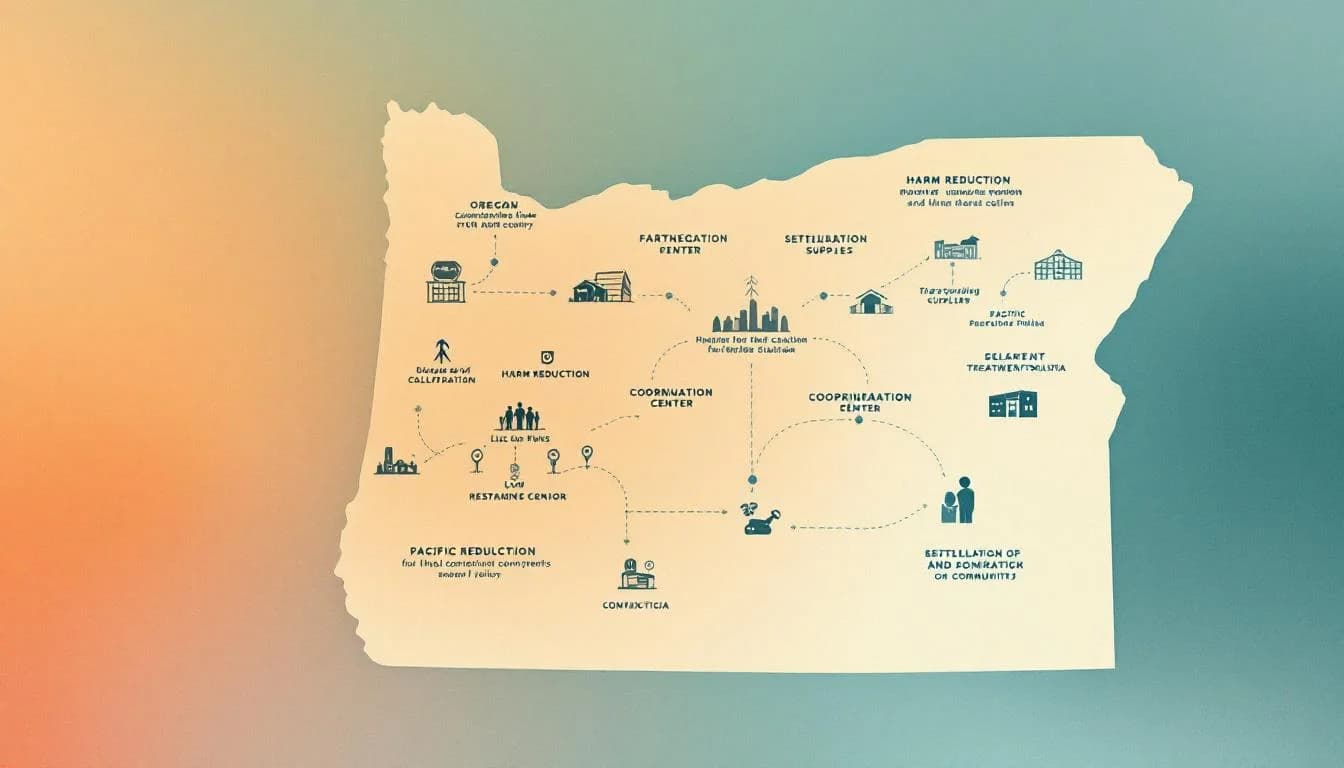
Oregon Allocates $90 Million in Opioid Settlement Funds to Expand Prevention, Treatment, and Recovery Services
The Oregon Health Authority announced Thursday that substance use and recovery organizations across the state have received more than $90 million over the past two years from opioid litigation settlements, marking one of the most significant deployments of pharmaceutical settlement funds in the Pacific Northwest.
The funding announcement coincides with preliminary data showing Oregon's overdose deaths have declined for the second consecutive year, dropping from approximately 1,800 fatalities in 2023 to roughly 1,500 in 2024, and now to 1,100 in 2025. This represents the first sustained year-over-year decline in fatal overdoses since 2016 for a state that has endured nearly a decade of escalating mortality.
"This improvement is the result of deep partnerships between state agencies, behavioral health providers, local officials and law enforcement," Governor Tina Kotek said in a statement following the data release. "We have to stay on track. Together, we can save the lives of our neighbors, friends and family members."
How Settlement Dollars Are Reaching Communities
The $90 million allocation flows through the Oregon Opioid Settlement Prevention, Treatment and Recovery Board (OSPTR), which oversees distribution of funds from multiple pharmaceutical manufacturer and distributor settlements. Unlike some states where settlement money has been diverted to general budgets or unrelated expenses, Oregon has established a dedicated framework ensuring resources reach evidence-based interventions.
The funding supports a comprehensive spectrum of services spanning prevention programs in schools and communities, expanded medication-assisted treatment capacity, harm reduction infrastructure including naloxone distribution, peer recovery support services, and residential treatment facilities.
"The sustained decline in overdose deaths is encouraging to see, but we still have a long way to go," said Tom Jeanne, deputy state health officer and deputy state epidemiologist at the Oregon Health Authority. "Continued investment by the state and community partners across the full spectrum of prevention, harm reduction, treatment and recovery is needed to keep overdoses on a downward trajectory."
Harm Reduction as a Cornerstone Strategy
Central to Oregon's approach has been the Save Lives Oregon Harm Reduction Clearinghouse, a state-funded initiative that provides no-cost supplies to health clinics, law enforcement agencies, tribal health programs, and community-based organizations across the state. The clearinghouse distributes naloxone, infection prevention kits, wound care supplies, and other harm reduction materials.
This investment in harm reduction comes despite ongoing federal policy uncertainty. The state's commitment to these services reflects a growing consensus among public health officials that meeting people where they are—rather than requiring abstinence before offering support—produces measurable mortality reductions.
John McIlveen, Oregon's State Opioid Treatment Authority, emphasized that historically underserved communities continue bearing the brunt of the crisis. However, he noted that targeted investments in these communities are showing results, with expanded access to medication-assisted treatment and peer services helping bridge gaps that have long existed in the state's behavioral health infrastructure.
The Persistent Challenge of Fentanyl and Methamphetamine
Despite the encouraging mortality trends, Oregon's crisis is far from resolved. According to McIlveen, more than 90% of overdose deaths in 2025 involved fentanyl, methamphetamine, or some combination of both substances. This polysubstance pattern complicates both prevention and treatment efforts, as individuals often use multiple drugs simultaneously or sequentially.
The prevalence of fentanyl—a synthetic opioid roughly 50 times more potent than heroin—has transformed the overdose landscape in Oregon and across the nation. Even as overall deaths decline, the proportion involving fentanyl has increased, reflecting both the drug's lethality and its near-total saturation of the illicit opioid supply.
Methamphetamine, a stimulant that does not respond to naloxone, presents distinct challenges. The combination of opioids and stimulants creates particularly dangerous scenarios where individuals may experience conflicting physiological effects, increasing the risk of cardiac events and complicating emergency response.
From Settlement to Services: The Implementation Challenge
Oregon's experience illustrates both the potential and the complexity of converting legal settlements into public health outcomes. The state has received funds from multiple settlements, including those with Purdue Pharma, the Sackler family, and major drug distributors. These payments will continue over 15 to 18 years, creating a sustained revenue stream for addiction services.
However, funding alone does not automatically translate into expanded capacity. Workforce shortages in addiction medicine, particularly in rural areas east of the Cascade Mountains, remain a significant barrier. The state has invested in training programs and incentives for providers willing to practice in underserved areas, but building a robust treatment infrastructure takes time.
Additionally, Oregon has grappled with policy debates surrounding Measure 110, the voter-approved initiative that decriminalized possession of small amounts of drugs. The legislature recently recriminalized drug possession through House Bill 2645, creating a complex policy environment where harm reduction and law enforcement approaches must coexist.
Looking Forward: Sustaining Momentum
The $90 million distributed to date represents just the beginning of Oregon's settlement-funded response. With payments scheduled to continue for more than a decade, state officials are working to establish sustainable programs that can maintain progress even as the political and funding landscape evolves.
Tom Jeanne's cautionary note reflects the experience of previous public health crises, where early gains were lost when attention and resources shifted elsewhere. The challenge for Oregon—and for other states receiving settlement funds—will be converting time-limited litigation recoveries into lasting systems change.
For communities across Oregon, the settlement funds have already meant the difference between life and death for some residents. Expanded naloxone availability has reversed countless overdoses. New treatment slots have provided entry points for people ready to seek help. Peer recovery specialists with lived experience have connected with individuals who might never have engaged with traditional healthcare providers.
Whether these interventions can drive overdose deaths down further—toward the levels seen before the fentanyl era transformed the crisis—will depend on sustained commitment, effective implementation, and continued adaptation to an evolving drug supply that shows no signs of becoming less dangerous.
Sources
Editorial Board
Editorial review using SAMHSA, CDC, CMS, and state agency sources
The NWVCIL editorial team reviews and updates treatment-center information using public data from SAMHSA, CDC, CMS, and state behavioral-health agencies. We cross-check facility records, state coverage rules, and clinical-practice updates so the directory reflects current evidence and policy.
Related Articles

Grand Traverse County Opens $2.3 Million in Opioid Settlement Grants
Five years after the national settlement, Grand Traverse County opens applications Sept. 14 for more than $2.3 million in opioid settlement funding.

Iowa AG Awards First Opioid Settlement Grants After Delay Criticism
Iowa AG Brenna Bird awarded $1.6 million to five organizations in the first wave of opioid settlement grants after months of criticism over delays.

Suffolk County Overhauls Opioid Grant Process After Ethics Concerns and Delays
Suffolk County adopts new transparency measures for opioid settlement funds after critical audit found selection issues and ethics violations, holding first public hearing with nonprofits.