
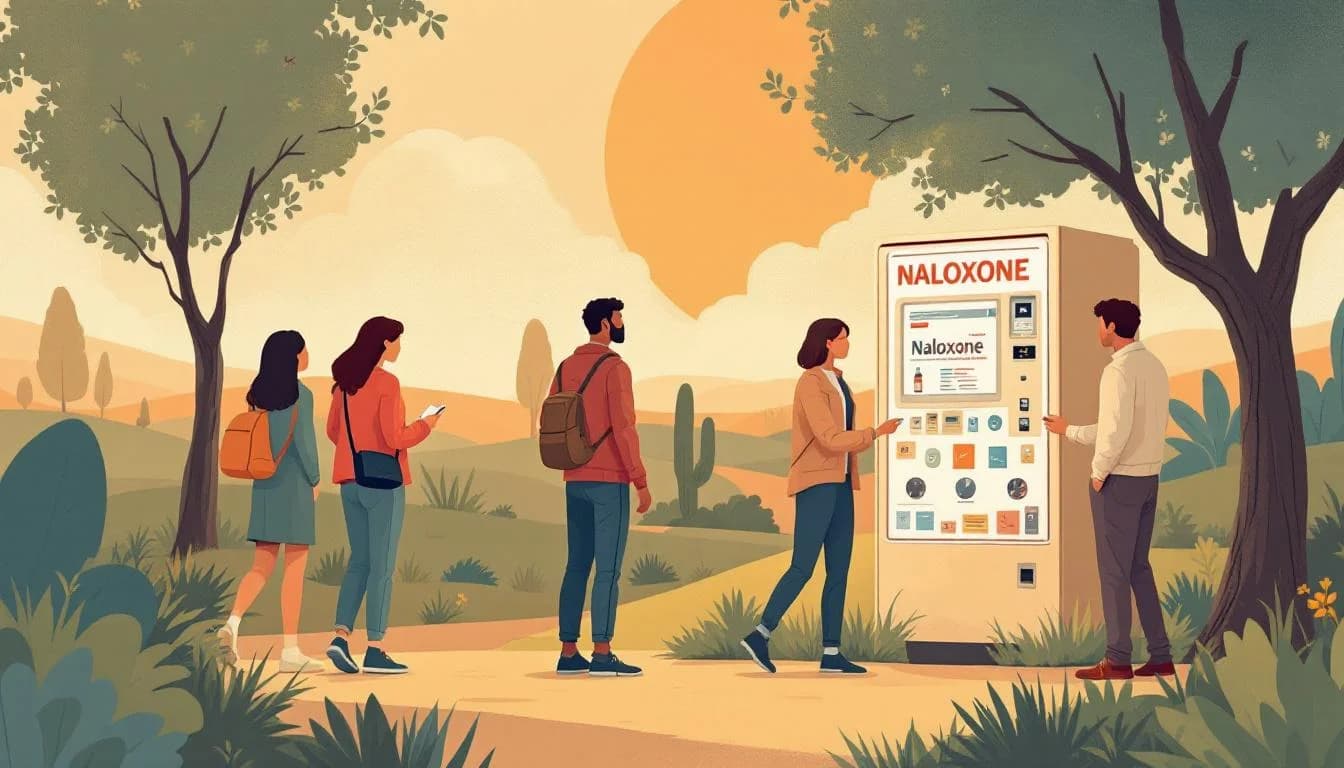
Missouri Expands Naloxone Access for Minors as Overdose Deaths Drop for Third Consecutive Year
Missouri Expands Naloxone Access for Minors as Overdose Deaths Drop for Third Consecutive Year
Missouri has taken a significant step in broadening its harm reduction infrastructure by updating its statewide naloxone standing order to explicitly include individuals under age 18, a move that reflects both the evolving reality of the opioid crisis and the state's commitment to reducing barriers for young people who may witness or experience overdoses.
The Missouri Department of Health and Senior Services announced the updated 2026 standing order this week, which simplifies eligibility criteria and allows pharmacists to dispense larger quantities of the life-saving medication when clinically appropriate. The changes arrive as the state reports encouraging progress: overdose deaths have fallen for three consecutive years, with 2025 seeing a 23% decline in opioid-related fatalities and a 17.4% reduction in accidental drug poisonings overall.
"Overdose deaths are decreasing at the same time naloxone utilization is growing. This is one tactic that is truly saving lives," said Dr. Heidi Miller, chief medical officer with DHSS. "We have to meet people where they are at. If we can save the life, we then have the opportunity to help them find a path toward long-term recovery."
Youth Inclusion Marks Policy Evolution
The explicit inclusion of minors in the standing order represents a notable shift in how states are approaching naloxone access. While many standing orders technically do not exclude young people, the formal recognition that individuals under 18 can—and should—carry naloxone removes ambiguity that might otherwise discourage pharmacists from dispensing to younger customers or deter families from seeking the medication for household protection.
Data from the Missouri Department of Social Services reveals that children under 18 have already been accessing naloxone through the standing order, accounting for nearly 600 claims since 2023. The updated policy codifies this practice and signals state endorsement of youth preparedness, even as schools across the nation grapple with rising overdose incidents involving adolescents.
The standing order update also incorporates enhanced instructions for rescue breathing and emphasizes the importance of continued monitoring after naloxone administration—a critical addition given the emergence of ultra-potent synthetic opioids that may require multiple doses and prolonged emergency response.
Medicaid Utilization Signals Growing Acceptance
The scale of Missouri's naloxone distribution through its standing order illustrates how far the state has come in normalizing access to overdose reversal medication. Annual Medicaid claims for naloxone dispensed under the standing order now exceed 11,000, with 11,436 claims processed in 2025 alone. The numbers have increased steadily each year, suggesting that both healthcare providers and the public are increasingly comfortable with the concept of widespread naloxone availability.
Adults ages 35–54 represent the largest group of claimants, with more than 18,000 claims since 2023, followed by adults 55 and older with over 13,000 claims. This demographic pattern reflects the reality that opioid use disorder affects individuals across the lifespan, and that family members, friends, and caregivers of all ages may find themselves in positions where naloxone access proves critical.
Missourians can obtain naloxone through multiple pathways: at pharmacies statewide using the standing order, through free mail-order or pickup options at locations listed on GetMissouriNaloxone.com, and via training and overdose response information provided by DHSS and partner organizations.
Outpacing National Decline
Missouri's overdose mortality reductions have modestly exceeded the national average, with the state's 23% decline in opioid deaths outpacing the roughly 14% national reduction reported by the CDC for 2025. This places Missouri among the states demonstrating that sustained investment in harm reduction infrastructure—combined with expanded treatment access and evolving clinical practices—can bend the trajectory of the overdose crisis.
The correlation between rising naloxone distribution and falling overdose deaths supports what public health researchers have long argued: that harm reduction tools, when deployed at scale and without stigma, save lives. Each naloxone claim represents a potential overdose reversed, a family spared the permanent loss of a loved one, and an opportunity to connect someone with the treatment and support that might lead to sustained recovery.
Dr. Miller's emphasis on meeting people "where they are at" reflects a broader philosophical shift in addiction response—one that prioritizes survival and connection over judgment and exclusion. The standing order model, which allows pharmacists to dispense naloxone without an individual prescription, removes the barrier of requiring a medical visit at a moment when every hour of delay can mean the difference between life and death.
Adapting to an Evolving Drug Supply
The updated standing order also addresses the reality that the illicit drug supply continues to evolve in dangerous directions. The inclusion of specific guidance for rescue breathing and extended monitoring acknowledges that newer synthetic opioids, including compounds like nitazenes and the recently emerged cychlorphine, may produce overdose scenarios that require more intensive intervention than traditional heroin or prescription opioid overdoses.
"Naloxone is effective for all opioids, including newer kratom-derived compounds," Miller noted, underscoring the medication's broad utility even as the specific substances driving overdoses shift over time.
This adaptability is crucial. The opioid crisis has demonstrated repeatedly that the drug supply can change faster than policy or clinical practice can respond. By building flexibility into the standing order—allowing for larger quantities when appropriate and emphasizing comprehensive response protocols—Missouri is attempting to create a harm reduction infrastructure that can evolve alongside the threats it faces.
The Road Ahead
While the progress Missouri has achieved is significant, public health officials acknowledge that challenges remain. Sustaining the decline in overdose deaths will require continued investment not just in naloxone distribution, but in the treatment capacity, housing support, and economic opportunity that help people maintain recovery over the long term.
The standing order update represents one piece of a larger puzzle—a tool that saves lives in the immediate moment of crisis, creating the possibility of longer-term transformation. Each person who survives an overdose because naloxone was available represents a potential success story, someone who might eventually find stability in recovery and contribute to the broader effort to reduce the toll of addiction.
For Missouri families, the expanded standing order offers a concrete form of protection. Parents can now obtain naloxone for their households with confidence that the policy explicitly includes young people. Schools, community centers, and other institutions serving youth have clearer guidance for maintaining overdose reversal supplies. And young people themselves—who may be most likely to witness peer overdoses—have formal recognition of their role in the harm reduction ecosystem.
As the state continues to track outcomes, the Missouri model may offer lessons for other jurisdictions seeking to expand naloxone access while addressing the specific vulnerabilities of adolescent populations. The data showing nearly 600 youth claims already processed suggests that demand exists; the policy update ensures that supply can meet it without bureaucratic obstacles.
In the broader context of the opioid crisis, Missouri's experience demonstrates that progress is possible—even in the face of evolving drug threats and persistent challenges. The combination of pragmatic policy, robust data collection, and sustained public health investment has produced measurable improvements in mortality. The updated standing order, with its explicit inclusion of young people, suggests that the state intends to build on this foundation rather than retreat from it.
For a crisis that has claimed hundreds of thousands of American lives, each year of declining deaths represents hard-won ground. Missouri's commitment to expanding naloxone access—particularly for the young people who represent the future of any meaningful solution—suggests a state determined to hold that ground and, perhaps, to advance it.
Editorial Board
Editorial review using SAMHSA, CDC, CMS, and state agency sources
The NWVCIL editorial team reviews and updates treatment-center information using public data from SAMHSA, CDC, CMS, and state behavioral-health agencies. We cross-check facility records, state coverage rules, and clinical-practice updates so the directory reflects current evidence and policy.
Related Articles

Medina County, Ohio, Cuts Overdose Deaths by Nearly 80% Through Community Coalition
Medina County reduced fatal overdoses from 42 in 2017 to 8 in 2025, an almost 80% drop, as Ohio's statewide rate fell from 70 to 27 per 100,000.

Santa Cruz County Overdose Deaths Fall for Third Consecutive Year
Santa Cruz County reports 20 overdose deaths in first half of 2026, down from 36 in 2025, marking third straight year of decline after peak of 130+ deaths in 2023.

Illinois Opioid Overdose Deaths Plunge 36% as State's Harm Reduction Strategy Shows Results
Illinois reports dramatic 36% decline in opioid overdose deaths from 2023 to 2024, with synthetic opioid fatalities down 38%. The reduction reflects sustained investments in naloxone distribution, harm reduction, and treatment access.