
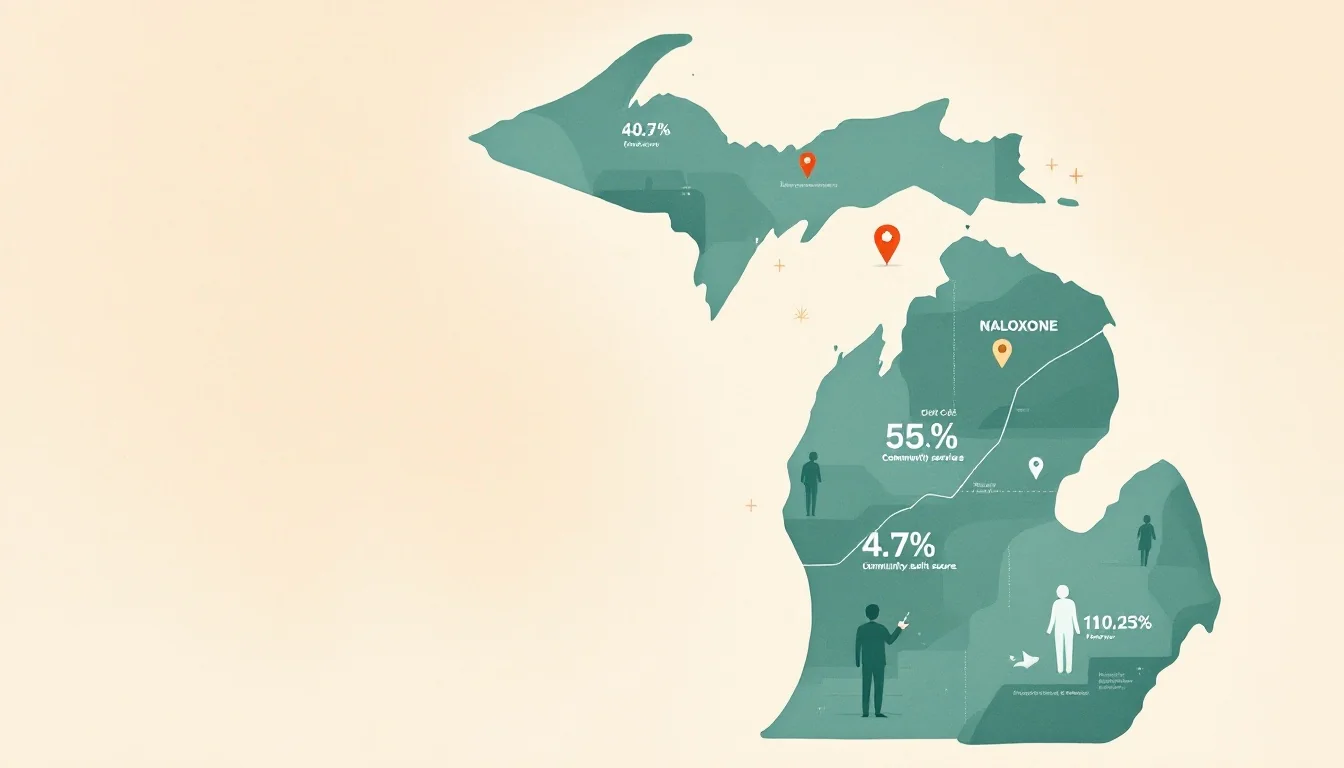
Michigan Overdose Death Rate Declines by 47% Since 2021, State Reports
Michigan health officials announced this week that the state's overdose death rate has fallen by 47% since its peak in 2021, marking one of the most significant reductions in drug mortality seen anywhere in the United States during this period. The decline, reported by the Michigan Department of Health and Human Services (MDHHS), represents thousands of lives preserved through a combination of expanded naloxone access, strengthened harm reduction infrastructure, and improved pathways to treatment.
The announcement arrives as overdose deaths decline nationally for a third consecutive year, though Michigan's reduction substantially outpaces the roughly 14% drop seen across the country. State officials emphasized that the progress stems from deliberate policy choices and sustained investment rather than fortunate circumstance.
The Scale of the Turnaround
Michigan's overdose crisis peaked in 2021, when the state recorded approximately 2,900 drug poisoning deaths driven largely by fentanyl's proliferation through the illicit drug supply. The subsequent decline has brought mortality rates to levels not seen since before the pandemic's disruption of treatment services and social support networks.
According to MDHHS, more than 1.8 million naloxone kits have been distributed statewide since the peak, with nearly 34,000 reported uses reversing potentially fatal overdoses. A modeling study released by the department in 2025 found that harm reduction programs alone have prevented hundreds of deaths annually by ensuring that life-saving medication reaches those most likely to witness an overdose.
Naloxone as Cornerstone
The widespread availability of naloxone has fundamentally altered the landscape of overdose response in Michigan. Where once opioid fatalities were frequently isolated events occurring far from medical help, communities across the state now have thousands of residents equipped to intervene during the critical minutes following an overdose.
State health officials have pursued aggressive distribution strategies, making naloxone available not only through traditional healthcare settings but also at libraries, community centers, faith organizations, and through mobile outreach teams. The medication's transition to over-the-counter status in 2023 accelerated these efforts by removing prescription barriers and reducing costs.
Dr. Natasha Bagdasarian, Michigan's chief medical executive, noted in previous statements that naloxone distribution represents only part of a comprehensive strategy. "These are not just statistics," she emphasized. "These are parents, children, siblings, friends and neighbors who are alive today because life-saving tools and services were available when they were needed."
Beyond Reversal: Treatment Access and Recovery Support
While naloxone prevents immediate death, Michigan's decline in overdose mortality also reflects improved access to longer-term treatment. The state has worked to remove barriers to medication-assisted treatment, expanding provider capacity and reducing administrative obstacles that previously delayed care initiation.
Medicaid expansion has played a critical role, with the program now covering comprehensive addiction treatment services for hundreds of thousands of Michiganders. The state's embrace of telehealth flexibilities during the pandemic, subsequently made permanent for many services, has extended specialist access to rural areas where geographic isolation previously meant hours-long drives to the nearest treatment provider.
Recovery housing and peer support services have also expanded, addressing the period immediately following acute treatment when relapse risk remains highest. These investments recognize that surviving an overdose represents only the beginning of a longer journey toward stable recovery.
Persistent Challenges and Disparities
Despite the overall improvement, MDHHS officials cautioned that significant disparities persist both geographically and demographically. Rural communities continue to face higher overdose death rates than urban centers, reflecting ongoing barriers to healthcare access and economic opportunity. Racial disparities also remain evident, with Black and Native American communities experiencing disproportionate mortality even as statewide numbers improve.
The changing nature of the drug supply presents additional complications. While fentanyl drove the initial surge in deaths, Michigan has seen increasing presence of xylazine and other veterinary tranquilizers that complicate overdose response. These substances, often called "tranq dope," do not respond to naloxone and can cause severe withdrawal symptoms requiring specialized medical management.
State officials indicated that addressing these emerging threats while maintaining momentum on proven interventions represents the central challenge for Michigan's overdose prevention efforts in coming years.
National Context and Policy Implications
Michigan's experience offers lessons for other states grappling with similar crises. The 47% reduction demonstrates that sustained public health investment can bend the mortality curve even amid an evolving and dangerous drug supply. Key elements of Michigan's approach—including massive naloxone distribution, Medicaid-funded treatment expansion, and harm reduction infrastructure—have been replicated with varying success across the country.
The decline also comes amid shifting federal policy. Recent SAMHSA guidance emphasizing counseling requirements alongside medication treatment has raised concerns among some advocates that new mandates could reduce access for populations already struggling to engage with healthcare systems. Michigan's data suggests that flexibility and rapid access may matter more than rigid adherence to any single treatment model.
As opioid settlement funds continue flowing to states from pharmaceutical litigation, Michigan's trajectory provides a template for converting those resources into measurable mortality reduction. The state's experience demonstrates that even in the face of synthetic opioids far more potent than anything seen in previous drug crises, public health interventions can preserve lives at scale.
For families across Michigan, the statistics represent something more personal: a second chance for loved ones who might otherwise have been lost to the epidemic. Whether that progress can be sustained—and extended to communities still bearing disproportionate burdens—will determine whether the current decline represents a lasting turning point or a temporary reprieve.
Sources
Editorial Board
Editorial review using SAMHSA, CDC, CMS, and state agency sources
The NWVCIL editorial team reviews and updates treatment-center information using public data from SAMHSA, CDC, CMS, and state behavioral-health agencies. We cross-check facility records, state coverage rules, and clinical-practice updates so the directory reflects current evidence and policy.
Related Articles

Cook County Leads Nation With 42% Drop in Opioid Overdose Deaths
Chicago and suburban Cook County report largest overdose death reduction of any U.S. county, with deaths falling from 1,961 in 2022 to 1,138 in 2024 through strategic harm reduction and naloxone distribution.

Massachusetts Reports 60% Drop in Opioid Overdose Deaths, Reaching Lowest Level Since 2013
Massachusetts opioid overdose deaths fell to 978 in 2025, a nearly 60% decline from the 2022 peak of 2,364 deaths. The state credits comprehensive harm reduction, expanded treatment access, and community partnerships.

New York Overdose Deaths Plunge 45% as State's Multi-Pronged Strategy Shows Results
CDC data shows New York State overdose deaths fell 44.9% over three years, saving more than 5,000 lives, with opioid fatalities down nearly 52% since 2022.