
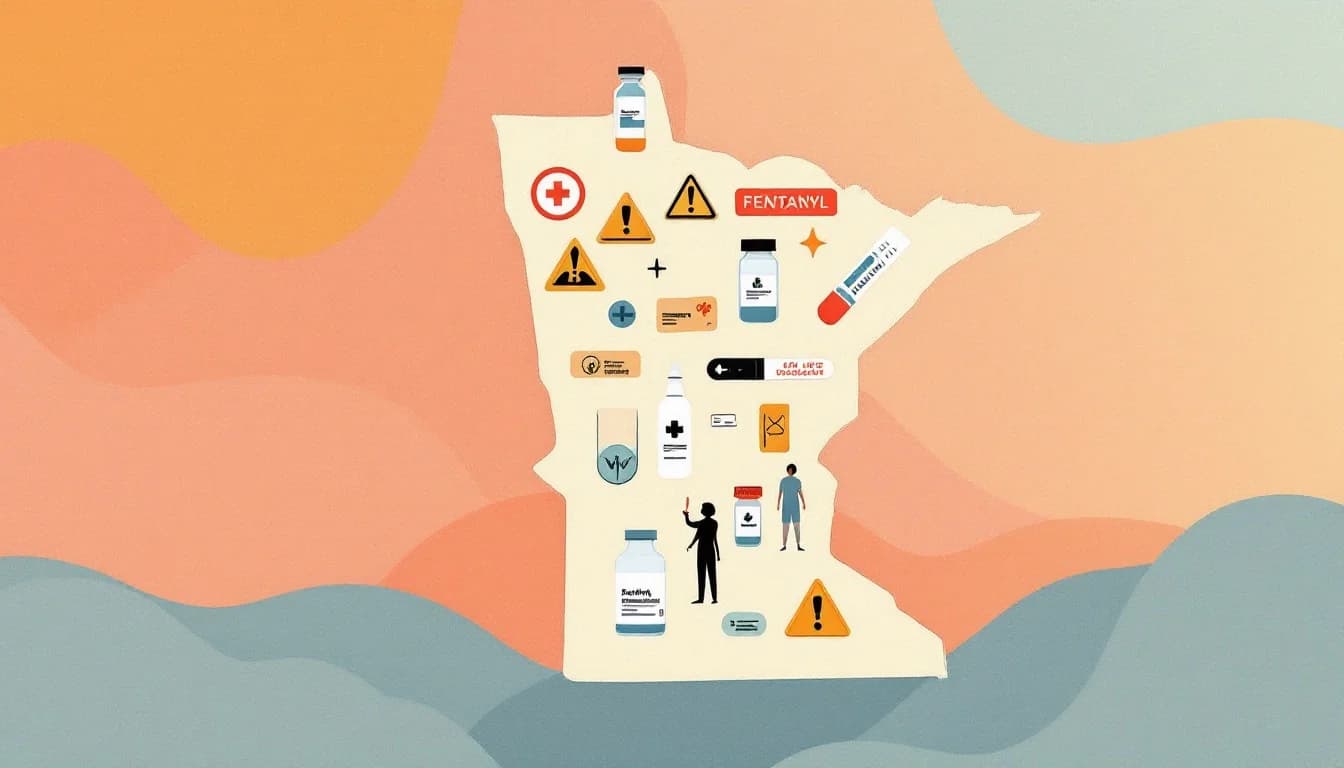
Minnesota Health Officials Warn of Medetomidine, 'Rhino Tranq' Contaminating Fentanyl Supply
A powerful veterinary sedative used to immobilize large animals is now contaminating Minnesota's illicit fentanyl supply, prompting urgent warnings from harm reduction workers who say the drug creates unprecedented challenges for overdose response and addiction treatment. Medetomidine, a tranquilizer 100 to 200 times more potent than xylazine, has begun appearing in drug samples across the state, marking the latest evolution in a synthetic drug supply that continues to outpace public health interventions.
Staff at Red Door Exchange, a Minneapolis harm reduction program, report first hearing about medetomidine several years ago when the substance emerged in coastal drug markets. Now it has reached the Midwest, bringing with it a distinctive set of dangers that complicate both emergency response and clinical care for substance use disorders.
What Makes Medetomidine Different
Medetomidine belongs to the same class of alpha-2 adrenergic agonists as xylazine, the "zombie drug" that has adulterated fentanyl supplies across the eastern United States since 2022. But medetomidine's extreme potency creates qualitatively different clinical challenges. Where xylazine causes profound sedation and severe skin ulcers, medetomidine produces even deeper unconsciousness that can persist for hours beyond the reversal of opioid effects.
The drug was developed for veterinary use to sedate large mammals, including rhinoceroses—earning it the street moniker "rhino tranq." Its potency means that even trace amounts laced into fentanyl can overwhelm human physiology, causing respiratory depression independent of opioid effects and creating what amounts to a naloxone-resistant overdose.
The Naloxone Challenge
Standard overdose response protocols rely on naloxone to reverse opioid-induced respiratory depression. When medetomidine is present, however, victims may remain unconscious even after naloxone administration restores normal breathing. First responders in jurisdictions where the drug has become prevalent report encountering patients who appear to have survived the immediate overdose threat but cannot be roused, creating uncertainty about appropriate next steps.
This phenomenon represents a significant departure from typical opioid overdoses, where naloxone revival is usually dramatic and rapid. The extended sedation caused by medetomidine raises questions about whether additional interventions are needed and, if so, what those interventions should be. Current medical protocols offer limited guidance for managing patients who have received appropriate naloxone dosing but remain unresponsive due to non-opioid sedatives.
Withdrawal Complications
Beyond acute overdose risks, medetomidine creates severe challenges for individuals attempting to reduce or discontinue substance use. The drug produces a withdrawal syndrome distinct from both opioid and xylazine withdrawal, characterized by dangerous blood pressure spikes, rapid heart rate, and violent vomiting that can require intensive medical management.
In Pittsburgh, where medetomidine has been present in the drug supply since 2024, clinicians report that patients experiencing medetomidine withdrawal often require ICU-level care to manage cardiovascular instability. Standard detoxification protocols designed for opioid withdrawal provide little relief for medetomidine's adrenergic rebound effects, leaving treatment providers scrambling to adapt.
For individuals in correctional settings—where medication-assisted treatment access remains inconsistent—medetomidine withdrawal poses particularly acute risks. Jails in affected regions have reported cases where inmates received only basic supportive care for withdrawal symptoms that actually required emergency intervention.
Geographic Spread
Minnesota's emergence as a medetomidine market follows a familiar pattern. The drug first appeared in limited pockets on the East and West Coasts in 2023, then spread through major urban centers before reaching the Midwest. CDC data shows medetomidine detections increased 3,000 percent between 2023 and 2025, rising from 247 samples to over 8,000 across 18 states.
This geographic diffusion mirrors the spread of xylazine, which followed similar pathways from initial detection to widespread prevalence over approximately two years. Public health officials in Minnesota are now racing to prepare healthcare systems and harm reduction programs for a substance that has already overwhelmed response capacity in other jurisdictions.
Harm Reduction Adaptations
Harm reduction programs like Red Door Exchange are adapting distribution strategies to address the evolving threat. In addition to naloxone, many are now providing test strips capable of detecting medetomidine and educational materials explaining the drug's unique risks. The goal is to help people who use drugs make informed decisions and recognize when standard overdose response may be insufficient.
Some programs have begun distributing oxygen masks and training staff in rescue breathing techniques specifically for medetomidine-involved overdoses, where maintaining airway patency becomes critical during prolonged sedation. These adaptations represent the frontline reality of responding to a drug supply that changes faster than regulatory or clinical frameworks can accommodate.
Policy Implications
Medetomidine's emergence comes at a moment of significant policy uncertainty for addiction services. The Trump administration has moved to restrict federal funding for harm reduction programs, including fentanyl test strips and syringe services, while simultaneously emphasizing abstinence-based approaches that may be ill-suited to a drug supply increasingly characterized by potent adulterants.
Public health experts warn that medetomidine's dangers are magnified when users cannot access testing supplies or supervised consumption services that might identify contaminated drugs before use. The drug's naloxone-resistant properties also complicate the administration's framing of expanded naloxone access as a primary overdose prevention strategy.
At the same time, the severe withdrawal syndrome associated with medetomidine underscores the importance of maintaining robust medication-assisted treatment infrastructure. Patients stabilized on buprenorphine or methadone are less likely to encounter medetomidine through continued illicit drug use, while those attempting to quit without medical support face compounded risks from both opioid and sedative withdrawal.
Looking Forward
Minnesota's experience with medetomidine will likely serve as a preview for other Midwestern states as the drug continues its geographic expansion. The state's response—combining enhanced harm reduction services, healthcare provider education, and real-time drug supply monitoring—offers a potential model for jurisdictions confronting similar threats.
What remains unclear is whether public health systems can adapt quickly enough to stay ahead of a synthetic drug market that has demonstrated remarkable capacity for innovation. Each new adulterant—xylazine, then medetomidine, now nitazenes and other novel compounds—requires new clinical protocols, new training for first responders, and new strategies for keeping people alive until they can access treatment.
For Minnesota's harm reduction workers, the arrival of "rhino tranq" represents another chapter in an ongoing crisis that shows no signs of abating. The tools they have—naloxone, test strips, education, and human connection—remain essential even as the specific threats evolve. What changes is the urgency of their work and the stakes of falling behind a drug supply that grows more dangerous with each new iteration.
Sources
Editorial Board
Editorial review using SAMHSA, CDC, CMS, and state agency sources
The NWVCIL editorial team reviews and updates treatment-center information using public data from SAMHSA, CDC, CMS, and state behavioral-health agencies. We cross-check facility records, state coverage rules, and clinical-practice updates so the directory reflects current evidence and policy.
Related Articles

New York Prison Overdoses Rise Despite 2021 Physical Mail Ban
Corrections data compiled by the Correctional Association of New York show prison staff used Narcan 51% more often in 2025, with 12 deaths in each of the past two years.
Mississippi Overdose Deaths Fall 39.8% From 2021 Peak, State Leaders Say
Mississippi reports 449 overdose deaths in 2025, a 39.8% decline from the 2021 peak of 746, as state officials prepare for International Overdose Awareness Day events.

Fentanyl Deaths Plunge 54% from Peak as U.S. Overdose Fatalities Decline Sharply
CDC provisional data show fentanyl-related deaths dropped 54% from their peak, with total overdose fatalities falling to approximately 70,000 in 2025—a third consecutive year of decline.