
CDC Study Finds Sharp Rise in Abandoned Buprenorphine Prescriptions
More than one in three first-time buprenorphine prescriptions written for opioid use disorder were abandoned before the medication ever reached the patient in 2024, up from roughly one in five just four years earlier, according to a research letter published Monday in JAMA Network Open by scientists at the Centers for Disease Control and Prevention.
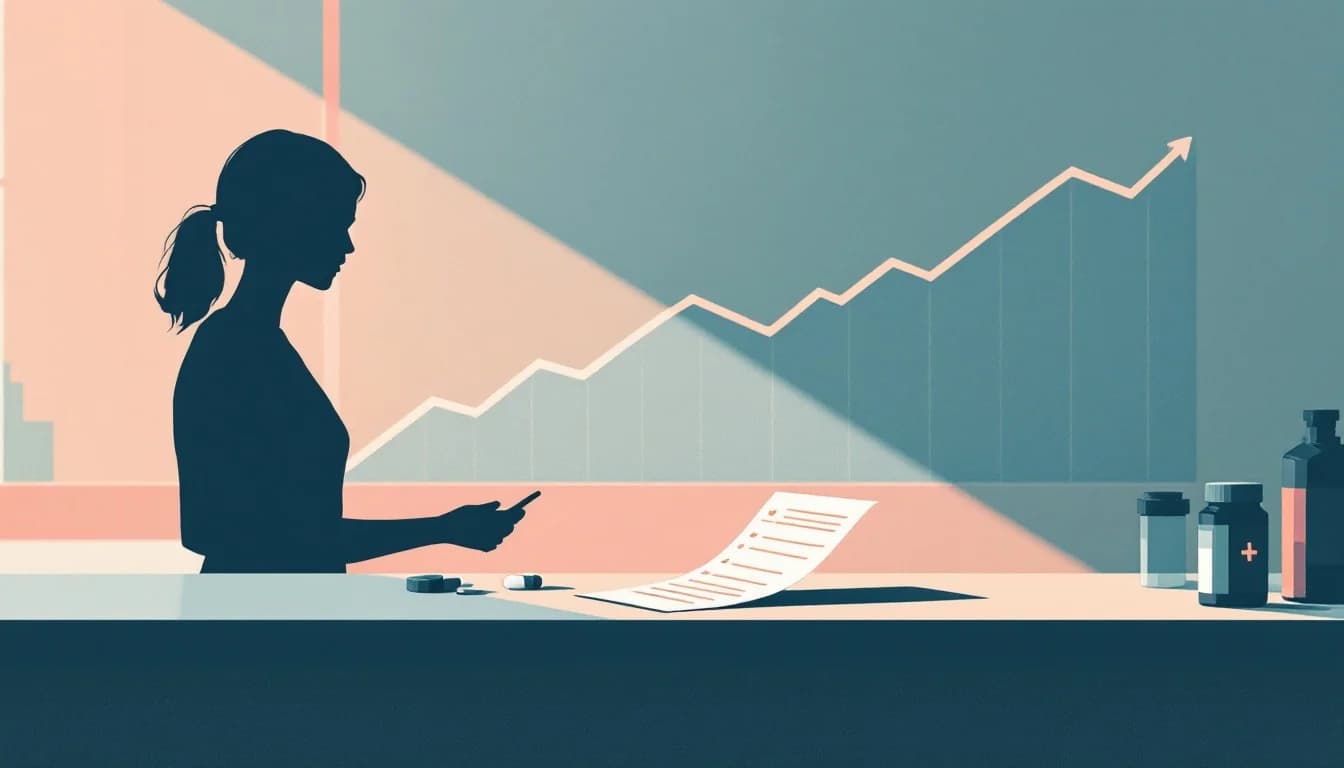
The analysis, drawn from de-identified electronic health records linked with insurance claims in the Optum Labs Data Warehouse, tracked adults with commercial coverage or Medicare Advantage plans who received a first buprenorphine prescription for opioid use disorder between January 2020 and September 2024. Of the 1,428 patients in the cohort, 25.8 percent never had that first prescription dispensed — either because the patient did not fill it or because an insurer or pharmacy rejected it. The trend line moved steadily in the wrong direction: 19 percent of first prescriptions were abandoned in 2020, compared with 37 percent in 2024.
"Over 1 in 3 patients' first buprenorphine prescriptions were abandoned in 2024, representing a missed opportunity for treatment initiation and engagement," wrote Xinyi Jiang, PhD, of the CDC's Division of Overdose Prevention, and co-authors.
Who leaves prescriptions behind
The patients most likely to walk away from a first prescription did not match the profile of those who filled theirs. Abandonment was more common among younger patients — mean age 54.3 versus 57.4 among those who received the medication — and among Hispanic patients, who accounted for 10.6 percent of the abandonment group but only 4.8 percent of those whose prescriptions were dispensed. The authors noted that language barriers and limited access to retail pharmacies in Hispanic communities could help explain the gap.
Cost appears to matter as well. Patients who abandoned prescriptions carried substantially higher pharmacy deductibles, averaging $483.80 against $296.40 for those who filled theirs, and 51.8 percent of the abandonment group held commercial insurance compared with 29.4 percent of the dispensed group. The authors wrote that "plan deductibles may be an important factor associated with abandonment."
Notably, patients with more severe illness were more likely to get the medication. Those whose prescriptions were dispensed were more likely to have a documented diagnosis of opioid use disorder or a prior overdose (54.4 percent versus 40.1 percent), another substance use disorder (21 percent versus 15.5 percent), or a mental health diagnosis (52.5 percent versus 38.5 percent) in the 180 days surrounding the first prescription.
A barrier after the prescription pad
The findings land on a stubborn paradox in the national response to the overdose crisis. Buprenorphine is one of the most effective tools for reducing mortality in opioid addiction, and federal policy has spent years trying to put it in more hands — eliminating the special waiver once required to prescribe it, expanding telehealth prescribing, and encouraging emergency departments to initiate treatment. Prescribing has become easier. Getting the pills into a patient's hand, this study suggests, has become harder.
"Pharmacy- and patient-level barriers can undermine efforts to expand access to buprenorphine through clinician prescribing," the authors wrote. The research letter echoes an earlier analysis that found 32 percent of buprenorphine prescriptions written from 2015 to 2019 were never dispensed, evidence that the leakage between prescription and pharmacy counter predates the current study period.
Peter Friedmann, MD, MPH, of the University of Massachusetts Chan Medical School-Baystate, who was not involved in the study, told MedPage Today the severity pattern fits clinical experience. "In general, folks with more severe opiate disorders tend to get prescribed meds and tend to fill" them, he said. Patients with milder or moderate disorders — people who may not have overdosed or faced social consequences — can be less ready to accept a diagnosis and the treatment that comes with it. Even among those who do start, he added, roughly half stop taking buprenorphine within six months in his experience.
What could close the gap
Jiang told MedPage Today that policymakers have concrete levers: reducing insurance coverage restrictions, making sure pharmacies actually stock buprenorphine, and stripping out other obstacles including stigma and out-of-pocket costs. Clinicians, she said, can connect patients with navigators and support services that help locate a stocking pharmacy, or steer them toward programs offering low- or no-cost medication-assisted treatment.
The authors called for deeper analysis of insurance benefit design — prior authorization requirements, quantity limits, and cost-sharing structures — as a next step. Friedmann suggested qualitative work aimed directly at patients who never filled their prescriptions. "Is it the copay? Is it the notion of taking a medicine for addiction," he asked, referring to the persistent view that such treatment replaces one addiction with another. "We just don't know."
The study carries limitations the authors acknowledged: the cohort reflects only commercially insured and Medicare Advantage populations, leaving out Medicaid enrollees and the uninsured, and the data could not distinguish prescriptions abandoned by patients from those rejected by insurers or pharmacies. With overdose deaths still numbering in the tens of thousands annually, the widening gap between a written prescription and a filled one represents a fixable failure point in the treatment pipeline — one that sits after the doctor's visit, where policy attention has only recently begun to turn.
Sources
Editorial Board
Editorial review using SAMHSA, CDC, CMS, and state agency sources
The NWVCIL editorial team reviews and updates treatment-center information using public data from SAMHSA, CDC, CMS, and state behavioral-health agencies. We cross-check facility records, state coverage rules, and clinical-practice updates so the directory reflects current evidence and policy.
Related Articles
Hospital Algorithm Screened 9,140 Records to Start 23 on Buprenorphine
A Bronx trial's automated opioid-use screen flagged 9,140 records but produced just 23 buprenorphine starts, a 5 percent initiation rate.
Penn Study Links Medetomidine in Fentanyl to Surge in ICU Withdrawal
A JAMA Internal Medicine study of two Philadelphia hospitals finds severe withdrawal needing an ICU sedative rose from under 6% to about 32% as medetomidine spread.
Study: Buprenorphine-Naloxone Cuts Overdose Risk Better Than Naltrexone After Detox
JAMA Network Open study of 36,752 patients finds buprenorphine-naloxone reduces nonfatal opioid overdose risk compared to extended-release naltrexone following medical detox.