
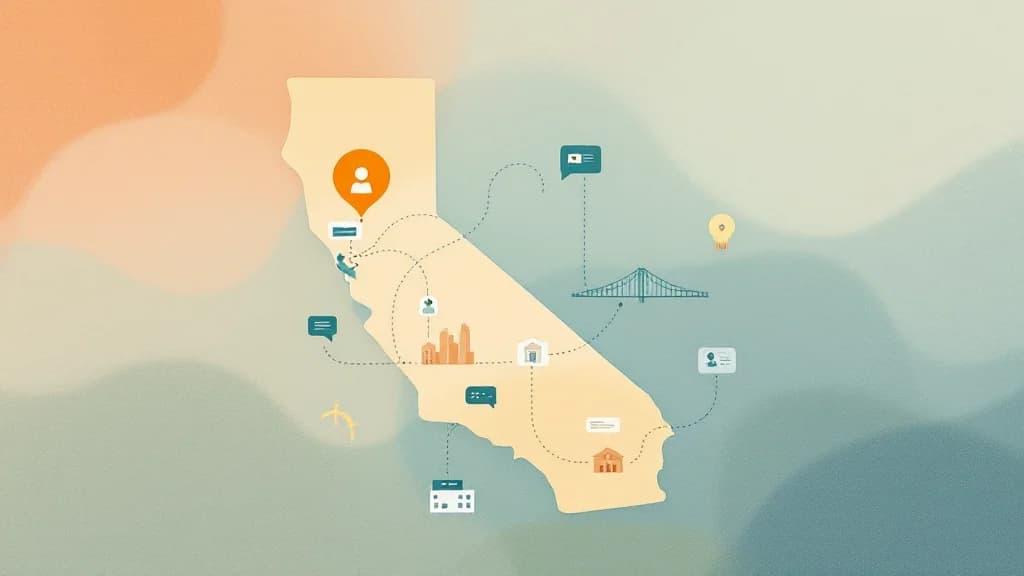
California Launches Nation's First Statewide Same-Day Opioid Treatment Service
California has become the first state in the nation to offer a comprehensive same-day opioid treatment support system, Governor Gavin Newsom announced this week. The new CA Bridge Connect program provides free, confidential assistance through phone and text, connecting residents with immediate care options regardless of insurance status or location.
The initiative represents a significant expansion of California's "no wrong door" approach to addiction care, designed to eliminate the dangerous delays that often occur between a person's decision to seek help and their first clinical encounter.
How CA Bridge Connect Works
Californians seeking assistance can call 1-800-944-1807 or text 1-833-308-0461 during weekday hours (9 AM to 5 PM) to reach trained Behavioral Health Navigators. These specialists assess individual needs, coordinate real-time referrals to appropriate providers, and can facilitate immediate connections to emergency departments, community clinics, and telehealth services.
"When someone is ready to seek treatment for opioid use disorder, help should be easy to find and easy to access," Governor Newsom stated in the announcement. "CA Bridge Connect gives Californians a direct, same-day route to lifesaving care."
The service builds upon California's existing CA Bridge program, launched in 2018 as the country's largest emergency department-based opioid addiction treatment model. Data from that initiative demonstrates the critical importance of immediate access: 40% of emergency department patients offered medication-assisted treatment accepted it, and when substance use navigators were involved, acceptance rates rose to 85%.
Addressing Barriers to Treatment
The program specifically targets two persistent obstacles in addiction care: the fragmentation of services that leaves patients navigating complex systems during crisis moments, and the geographic disparities that place effective treatment beyond reach for rural and underserved communities.
"Accessing treatment can be difficult in fragmented health systems," said Dr. Arianna Campbell, co-founder of CA Bridge. "Through strong clinical partnerships and dedicated Behavioral Health Navigators, we are committed to making it easier for anyone to access care quickly. No one should face addiction alone."
The Department of Health Care Services has integrated CA Bridge Connect with California's 988 crisis call centers and the Addiction Treatment Locator, Analysis and Standards (ATLAS) database, ensuring that residents seeking help encounter consistent information and streamlined pathways regardless of their entry point into the system.
Part of Broader Opioid Strategy
CA Bridge Connect joins an array of California initiatives targeting the overdose epidemic. The state offers naloxone at reduced prices through its CalRx program and distributes free naloxone kits through the Naloxone Distribution Project, which has documented over 460,000 overdose reversals.
Recent legislation has strengthened the treatment infrastructure, including a 2022 law requiring facilities to offer medication-assisted treatment or establish effective referral processes, and a 2024 measure increasing flexibility for substance use disorder hospital beds. The state also maintains the Tribal MAT Project, MAT Access Points, and the California Hub & Spoke System to extend treatment reach.
"We are building a system that prioritizes care, dignity, and recovery," said Michelle Baass, director of the Department of Health Care Services.
The Centers for Disease Control estimates that approximately 17,000 Iowans live with opioid addiction, while overdose deaths continue to claim lives across the country. California's approach treats these statistics not merely as public health data points but as individuals who, when offered appropriate support at the critical moment, demonstrate remarkable capacity for recovery.
For immediate assistance, California residents can call 1-800-944-1807 or text 1-833-308-0461. Additional resources are available at Opioids.CA.GOV.
Editorial Board
Editorial review using SAMHSA, CDC, CMS, and state agency sources
The NWVCIL editorial team reviews and updates treatment-center information using public data from SAMHSA, CDC, CMS, and state behavioral-health agencies. We cross-check facility records, state coverage rules, and clinical-practice updates so the directory reflects current evidence and policy.
Related Articles
Mobile Opioid Treatment Unit Brings Methadone and Buprenorphine to Rural Washington County
Comprehensive Healthcare launches mobile unit in Ellensburg to expand medication-assisted treatment access in Kittitas County, eliminating geographic barriers for rural patients seeking opioid use disorder care.

Alabama Awards Grant to Launch Medication-Assisted Treatment Program at Jefferson County Jail
Governor Kay Ivey awards $70,694 grant to implement substance abuse treatment combining medication-assisted treatment with counseling for inmates at Jefferson County Jail.

Delaware Hospitals Adopt Statewide Emergency Department Guidance for Opioid Use Disorder Treatment
Delaware becomes one of the first states to implement uniform emergency department protocols for treating opioid use disorder, aiming to transform overdose visits into recovery opportunities.