
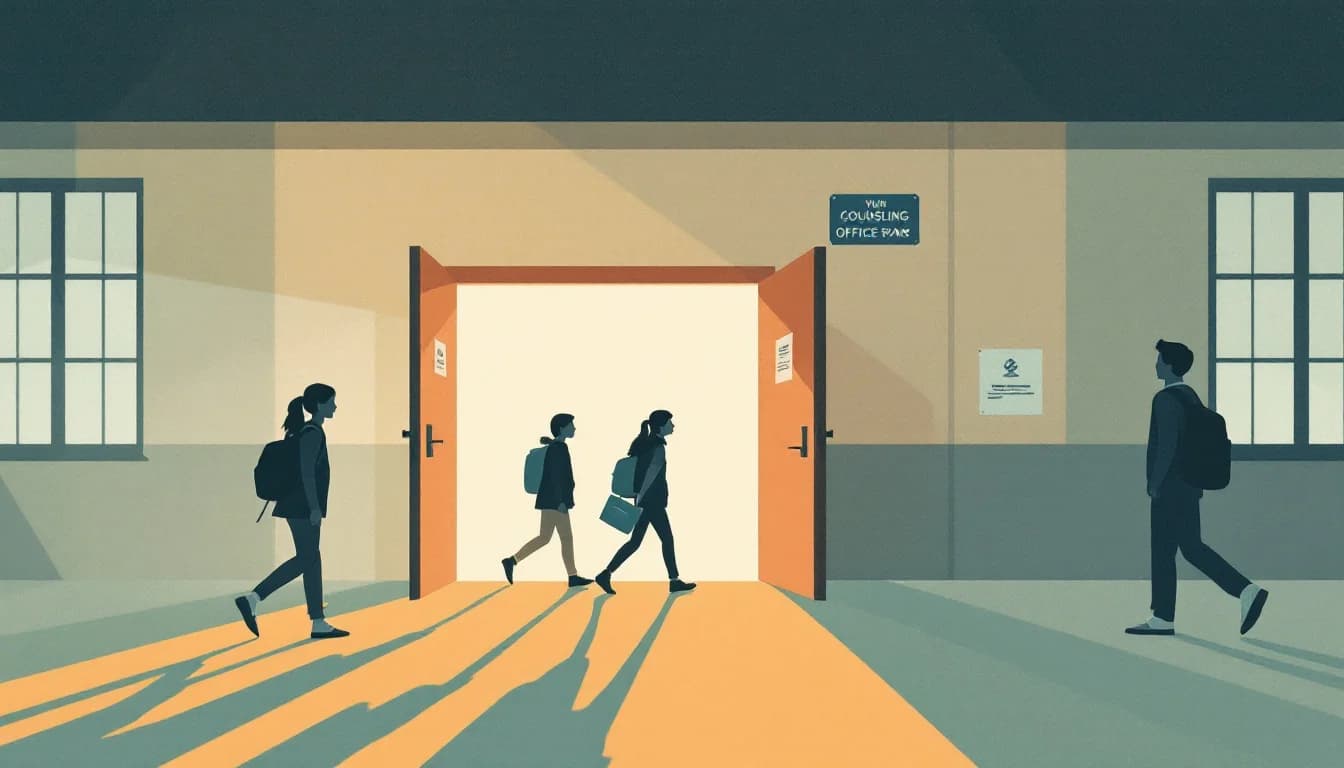
New Jersey Signs $8 Million School Mental Health Pilot Law
TRENTON — Gov. Mikie Sherrill signed legislation Monday creating an $8 million pilot program that moves clinical behavioral health services inside New Jersey school districts, funding psychiatric consultations, assessments and short-term stabilization for students who would otherwise wait weeks for a community appointment to open.
The program, called School-Based Partnerships for Access and Resilience for Kids, or SPARK, will run in up to 10 districts chosen by the state Department of Children and Families, which will administer it in consultation with the Department of Education. Districts will be recruited this fall, services begin in early 2027, and the legislation, S4413/A5253, carries $8 million from the fiscal 2027 budget. A request for proposals for a supporting mobile application is expected within weeks.
SPARK was signed into law as part of a broader announcement in which Sherrill's office pegged New Jersey's total investment in school- and community-based mental health and wellness programs for the 2026-2027 school year at more than $125 million.
What the pilot is designed to do
Under the law, participating districts get four things they largely lack today. The program provides psychiatric consultation and assessment, triage, and short-term stabilization and medication support for students awaiting longer-term care. It refers students and families to school- and community-based providers, including the state's existing NJ4S hub-and-spoke network. It assigns staff to coordinate care, obtain authorizations and reduce delays in treatment. And it supports students returning to class after a mental health crisis, hospitalization or emergency room visit with psychiatric clearance and transition planning.
The legislation also directs the state to give participating districts a secure platform for managing behavioral incident reports, suicide risk screenings, and harassment, intimidation and bullying complaints — recordkeeping that many districts now handle in disconnected systems or on paper.
Services reach K-12 students only after a referral by a teacher or school mental health professional and with parental permission. The legislation is sponsored by Senate President Nick Scutari and Sen. Joe Vitale, along with Assemblymembers Linda Carter, Andrea Katz and Vinnie Kearney.
"This legislation aligns with our broader work to improve student well-being, address chronic absenteeism, promote online safety, and ensure every student has the support they need to succeed in school and beyond," state Education Commissioner Lily Laux said in a statement.
Built on top of an existing patchwork
SPARK is less a new system than an additional layer on a substantial one. The Department of Children and Families already operates the NJ4S network, 90 School-Based Youth Services Programs, five school health centers, 40 Family Friendly Centers and eight Parent Linking Programs, among other school-linked services.
Also new this school year: the Department of Education began enforcing bell-to-bell restrictions on internet-enabled devices, including cellphones, for kindergarten through 12th grade students in all public districts — a policy the governor's office frames as a mental health measure as much as an academic one.
Sherrill placed both changes inside a single argument. "Our kids are facing unprecedented pressures, and as they head back to school, we need to make sure they know that help is there when they need it," she said. "From reducing digital distractions in the classroom to strengthening school-based mental health services and making it easier for students to connect with care, we are taking a comprehensive approach to supporting the well-being of New Jersey's young people."
Joseph Ribsam Jr., acting commissioner of the Department of Children and Families, described the pilot as the piece that connects the state's existing programs into a single continuum across schools and communities.
Where the program has to prove itself
The design reflects a problem familiar to families navigating adolescent mental health care: the gap between a school counselor's referral and a clinician's first available appointment. Filling that gap with short-term stabilization and medication support is intended to keep students functioning in school while they wait for intensive outpatient programs or other longer-term care to absorb them.
Whether 10 districts is enough to test the model is an open question. The pilot's services are voluntary and gated by parental consent, which historically limits take-up in the districts with the thinnest resources. And the money, while meaningful, is a fraction of the $125 million the state says it already spends each year on school- and community-based behavioral health.
For students whose needs extend past stabilization, the state points to 988 Suicide & Crisis Lifeline, the Children's System of Care, 2NDFLOOR and NJ Mental Health Cares. New Jersey, like most states, also reports rising demand for treatment of co-occurring mental health and substance use conditions among adolescents, a population the pilot is designed to catch earlier.
Editorial Board
Editorial review using SAMHSA, CDC, CMS, and state agency sources
The NWVCIL editorial team reviews and updates treatment-center information using public data from SAMHSA, CDC, CMS, and state behavioral-health agencies. We cross-check facility records, state coverage rules, and clinical-practice updates so the directory reflects current evidence and policy.
Related Articles

Indiana Cuts Force Marion County to Wind Down Treatment Courts
Marion County stopped accepting applicants to its reentry and drug courts after Indiana cut a $600,000 grant, with veterans and mental health courts at risk by 2027.

Cuyahoga County Asks Voters to Raise Taxes for Behavioral Health
Cuyahoga County's Issue 11 would renew a 4.7-mill health levy and add 2.5 mills, raising $261.5 million a year for 10 years as federal funds shrink.

Meta Ordered to Pay $567M for New Mexico Youth Mental Health Crisis
A New Mexico judge rules Meta created a public nuisance fueling the teen mental health crisis, ordering a $567 million abatement fund on top of a $375 million jury verdict.