
Music Therapy Cuts Cravings and Shifts Brain Activity, Study Finds
Adults receiving treatment for drug and alcohol use reported weaker immediate cravings after taking part in music therapy sessions, and their brain recordings looked different from those of patients who received standard care alone, according to a pilot study published in the journal Addiction Neuroscience.
The study, led by researchers at Anglia Ruskin University's Cambridge Institute for Music Therapy Research, is described by its authors as the first to record brain activity during music therapy sessions delivered as part of substance use disorder treatment. It combined electroencephalography, or EEG, with questionnaires and interviews, and its findings land in a treatment field where most interventions are measured by self-report.
What the researchers did
The randomized pilot enrolled 16 adults being treated for dependence on alcohol and illicit substances, including heroin, cocaine, and cannabis, through a community addiction service in London. Participants were assigned either to their routine recovery treatment or to standard treatment plus six weekly music therapy sessions.
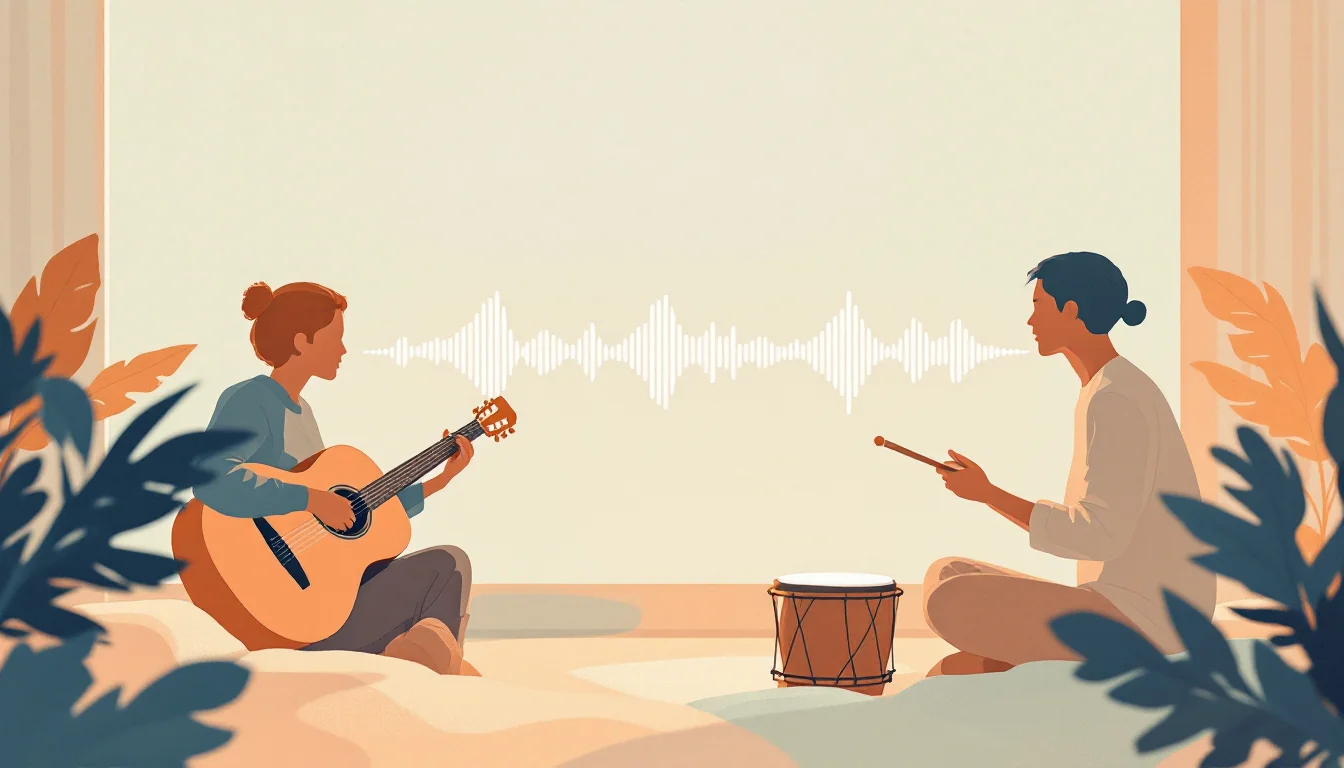
The sessions were not listening exercises. Participants made music themselves, using percussion, acoustic and electric guitars, drum pads, digital keyboards, and music production software, in both one-to-one and group formats. To capture brain activity during the sessions, the team converted space at the clinic into what the university described as a pop-up recording studio and portable neurobiology laboratory.
Cravings fell immediately after the music
Lead author Clemens Maidhof said craving is a core symptom of substance addiction and that the study measured it in the moment rather than over weeks. "Using a self-reported Craving Thermometer scale, participants who received music therapy reported less 'present moment' craving immediately following the sessions," he said.
That finding is consistent with earlier work on music-based interventions, but the researchers were after something more than a mood effect. "EEG recordings showed that these participants had lower levels of frontal beta activity compared to the control group," Maidhof said. Elevated frontal beta activity is a recognized correlate of acute craving and cognitive-affective distress, which is why its reduction interested the team.
Brain signals tied to emotional control
The second thread of the results concerns how participants processed negative emotion. Using a measure called frontal alpha asymmetry, which reflects the balance between approach and withdrawal motivation in the frontal areas of the brain, the researchers found statistically significant differences between the groups.
Combined with a behavioral response task, the authors interpret that shift as evidence that music therapy helped participants exert more control over anger, irritability, and frustration — the emotional states that often precede a return to use. "The results suggest that music therapy could help people process their negative emotions, which is relevant to managing cravings and supporting motivation to change their behavior, as well as be better able to inhibit or control their emotional responses, such as anger or frustration," said senior author Jörg Fachner, a professor of music, health, and the brain and co-director of the ARU institute.
Why the finding matters for treatment
Music therapy is already used as an adjunct in many addiction programs, often grouped with other complementary approaches such as movement and mindfulness. What has been scarce is objective physiological evidence that the practice changes something measurable in the brains of people in recovery. Fachner said earlier review work had shown music therapy can reduce cravings and improve motivation for change, but that the new study's contribution was pairing participants' own accounts with recordings of brain activity.
The clinical logic is straightforward: substance use disorders frequently travel with other conditions, and the people most at risk of relapse are often those who struggle to regulate intense negative emotion. Programs that treat co-occurring mental health and addiction already rely on structured behavioral therapy alongside medication, and the researchers position music therapy as an addition to that backbone rather than a replacement for it.
What the study does not show
The sample was small — 16 people at a single treatment service — and the authors describe the work as a pilot. Craving was measured immediately after sessions, so the study does not show whether the reduction persisted between sessions or after the six-week program ended. Participants were not followed for relapse outcomes, and as the university notes, EEG changes are not the same as lasting behavior change.
The team says it is now building larger, longer trials to test whether the effects hold up in a broader group of patients and over a longer period. Until those results exist, the findings add a measured data point to an understudied corner of addiction treatment rather than a new standard of care.
Sources
Editorial Board
Editorial review using SAMHSA, CDC, CMS, and state agency sources
The NWVCIL editorial team reviews and updates treatment-center information using public data from SAMHSA, CDC, CMS, and state behavioral-health agencies. We cross-check facility records, state coverage rules, and clinical-practice updates so the directory reflects current evidence and policy.
Related Articles
Johns Hopkins Study Finds 'Rock Bottom' Rarely Motivates Recovery
In interviews with 20 people recovering from opioid use disorder, Johns Hopkins researchers found 70% reached a rock bottom but only 10% said it drove them to stop.

Mindfulness Therapy Returns $12 Per Dollar in Opioid Misuse Treatment
An economic analysis finds Mindfulness-Oriented Recovery Enhancement saves $12 for every dollar spent on opioid misuse — more than $324,000 per patient over a lifetime.

Vaping Taxes Cut Teen Nicotine Use—But Not for LGBQ Youth, Study Finds
Wake Forest research reveals e-cigarette taxes reduced vaping among heterosexual teens by 3-4 percentage points, yet had no effect on LGBQ youth who use nicotine to cope with bullying and emotional distress.