
West Virginia University Takes Data-Driven Approach to $1 Billion Opioid Settlement Allocation
West Virginia University announced March 27 that it will lead an 18-month, comprehensive assessment of how nearly three-quarters of the state's $1 billion in opioid settlement funds should be allocated—a data-driven approach that could become a national model for turning litigation dollars into measurable community impact.
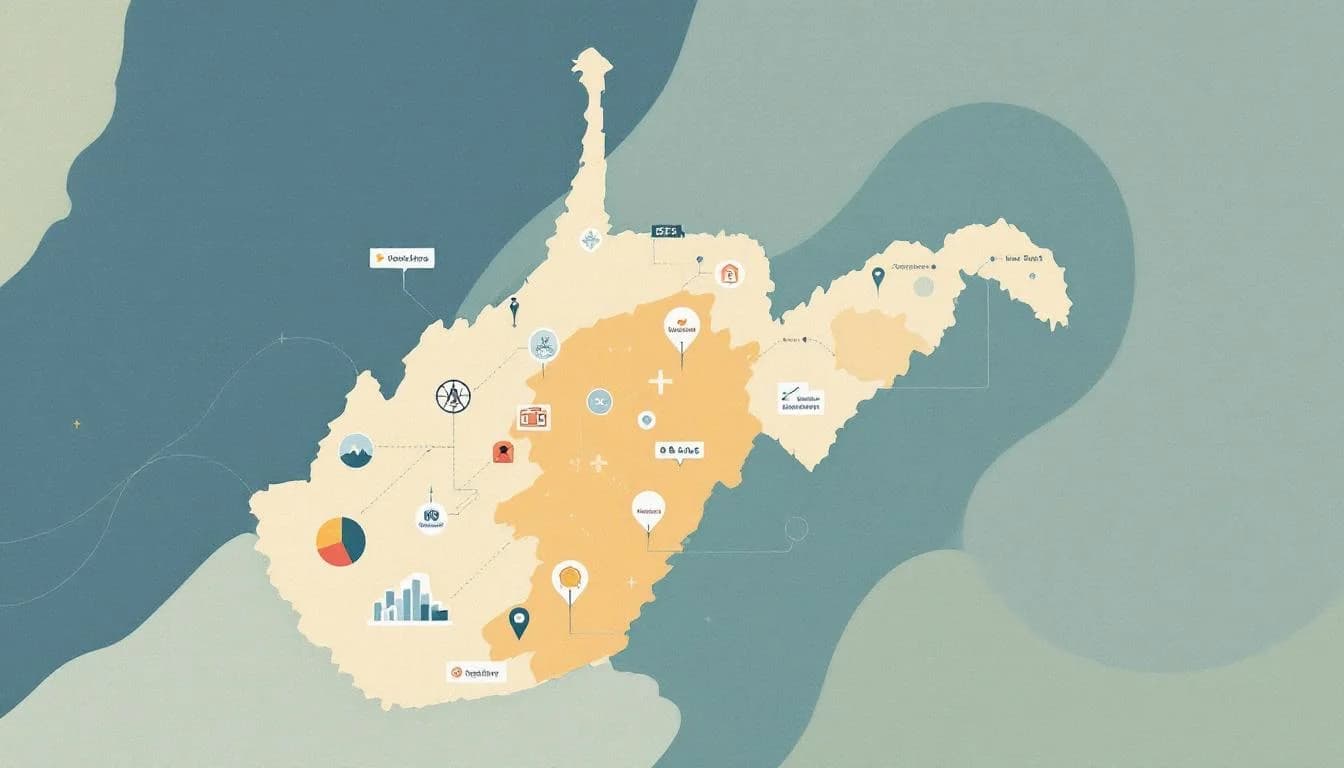
Commissioned by the West Virginia First Foundation, the initiative brings together expertise from across WVU: the Health Affairs Institute, the Institute for Policy Research and Public Affairs, and Data Driven WV from the John Chambers College of Business and Economics. Together, they're building what they're calling the "West Virginia Wayfinder"—a system designed to map the scope of the crisis, inventory existing services and funding streams, and identify where gaps remain.
The goal isn't simply to decide which programs get funded. It's to create an ongoing resource that can guide strategic decisions for years, complete with a public-facing dashboard showing where needs are greatest and which interventions deliver the strongest return on investment.
Why This Matters Now
West Virginia has been ground zero for the opioid crisis longer than most states. In 2021, it had the nation's highest age-adjusted drug overdose death rate at 90.9 deaths per 100,000 residents—more than double the national average. While recent years have seen modest declines, the state still grapples with profound addiction-related challenges affecting families, communities, and its healthcare system.
Settlement funds represent the largest single infusion of resources West Virginia will receive to address these challenges. The $1 billion comes from lawsuits against pharmaceutical companies, distributors, and pharmacies accused of fueling the opioid epidemic. But money alone doesn't solve problems—how it's spent determines whether it becomes transformative or squandered.
Other states have struggled with this question. Some have seen settlement dollars diverted to general budgets or spent on programs with little evidence of effectiveness. Others have funded initiatives without coordinating across regions, leading to duplicated services in some areas while others remain underserved.
West Virginia's approach attempts to avoid those pitfalls through rigorous assessment before allocation decisions are made.
What the Assessment Will Do
The WVU team will spend 18 months conducting what amounts to a statewide needs audit. Dr. Rebecca Gillam, senior research scientist at the Health Affairs Institute and project leader, explained they'll create and maintain an interactive dashboard to help the West Virginia First Foundation and state leaders "strategically prioritize new initiatives."
Specifically, the assessment will measure addiction burden at county and state levels using consistent metrics, map the current landscape of prevention and treatment services along with their funding sources (federal, state, and private), identify gaps across the full continuum of care, and establish clear definitions of "Health Return on Investment" to evaluate which services deliver the strongest outcomes.
Findings will be shared publicly to support coordination among state and federal partners, and the WVU team will provide the First Foundation with data-driven insights to guide future investments.
Dr. Clay Marsh, chancellor and executive dean for WVU Health Sciences, emphasized the stakes: "West Virginia has faced the weight of this crisis longer than most, and we owe it to our communities to let data lead the way."
The Dashboard Approach
One of the initiative's most significant components is the public-facing dashboard. Unlike one-time reports that gather dust on shelves, the dashboard is designed as a living tool—updated regularly to reflect changing conditions, new services, and emerging gaps.
Joshua Meadows, executive director of Data Driven WV and a West Virginian himself, framed the work as deeply personal: "We are not just analyzing data. We are working to represent the experiences of our families, our neighbors and our communities."
The dashboard aims to make complex information accessible. A county official wondering whether to apply for prevention funding could see how their region compares to others in addiction burden and existing service availability. State legislators debating where to direct resources could examine which interventions have shown measurable impact. Community organizations could identify collaboration opportunities with providers in neighboring counties.
Transparency serves multiple purposes. It builds public trust that settlement funds are being used effectively. It creates accountability—decisions made with publicly available data are harder to justify if they ignore evidence. And it enables coordination, reducing the likelihood that multiple organizations unknowingly duplicate efforts while other needs go unmet.
The Challenge of Equity
Sam Workman, director of WVU's Institute for Policy Research and Public Affairs, pointed to a particularly thorny challenge: "Amid the ruggedness of Appalachia, a key problem is developing systems that allow communities to learn from themselves over time and from each other across space."
West Virginia's geography complicates equitable service delivery. Rural counties separated by mountains may have vastly different resources despite similar addiction burdens. A treatment model that works in Huntington might not translate to McDowell County. Transportation barriers that are minor inconveniences in urban areas can be insurmountable obstacles in remote hollows.
The assessment must account for these realities. Simply dividing funds proportionally by population would shortchange rural areas where per-capita costs run higher due to distance and infrastructure challenges. But allocating based solely on need without considering capacity could fund services that communities lack the workforce or facilities to deliver.
Meadows emphasized their approach: "One of our priorities is ensuring resources are aligned with need in a way that is fair and transparent. By building a clearer picture of where gaps exist and where services are already working, we can help understand the investments that have the greatest impact for individual communities."
What Gets Measured
Measuring "addiction burden" sounds straightforward but involves complex decisions. Overdose deaths are the most visible metric, but they represent only the most severe outcome. Emergency department visits, neonatal abstinence syndrome cases, child welfare involvement, incarceration rates, lost workforce productivity—all reflect addiction's community impact.
Treatment capacity presents similar measurement challenges. Counting facilities tells you little about accessibility. Does the county have a methadone clinic? Great—but if it's only open three days a week, requires hour-long waits, and charges fees many residents can't afford, the effective capacity is far lower than the nominal number suggests.
The assessment must also grapple with gaps in existing data. West Virginia, like most states, lacks integrated systems tracking individuals across prevention programs, treatment episodes, emergency services, and criminal justice involvement. Someone who cycles through detox four times, has three emergency department overdose visits, and receives buprenorphine from two different providers might appear in databases as nine separate people rather than one person with complex, recurring needs.
Dr. Jeff Coben, director of the WVU Health Affairs Institute, noted this project "exemplifies how we work in partnership with agencies and organizations across the state to optimize the delivery of programs and services that address the health and health care needs of West Virginians."
Building better data infrastructure is itself an investment that will pay dividends beyond settlement allocation—enabling ongoing program evaluation, quality improvement, and policy adjustments as conditions change.
The Return on Investment Question
Perhaps the most challenging piece of the assessment is defining and measuring "Health Return on Investment." Not all effective interventions produce easily quantifiable returns on the same timeline.
Naloxone distribution prevents overdose deaths—a clear, measurable outcome within hours of administration. Residential treatment programs may take months to show impact, and measuring "success" is complicated. Is it abstinence? Reduced use? Improved employment? Fewer emergency department visits? All of the above?
Prevention programs targeting adolescents might not show measurable effects for years. Investing in peer recovery coaches creates value that's difficult to capture in traditional metrics—how do you quantify the impact of someone in recovery mentoring others, preventing relapses that would have led to job loss, family disruption, or death?
The assessment will need frameworks that value both immediate harm reduction and long-term recovery support, both clinical interventions and social determinants like housing and employment. Missing either half of that equation leads to underinvestment in crucial services.
What Happens Next
The 18-month timeline means findings will emerge in phases rather than all at once. Early results could inform funding decisions by late 2026, while the full assessment with interactive dashboard likely won't launch until 2027.
The West Virginia First Foundation, as a private nonprofit tasked with advancing an interoperable statewide network, will use these findings to guide how it allocates the roughly $750 million under its purview. (The remaining quarter of settlement funds goes directly to state government and local jurisdictions, which may or may not use the WVU assessment to inform their decisions.)
Other states will be watching. If West Virginia's data-driven approach proves effective—if settlement dollars demonstrably reach underserved communities, fund evidence-based interventions, and produce measurable improvements in addiction-related outcomes—it could become a template that other states adopt for their own settlement allocations.
If the approach falters—if data collection proves too difficult, if political pressures override evidence, if community input gets tokenized rather than genuinely integrated—it will reinforce skepticism that settlement funds can be anything other than political footballs subject to the same dysfunctions that plague other government spending.
The Stakes
President Michael T. Benson framed the initiative as central to WVU's land-grant mission: "WVU is committed to improving lives throughout the state, and there is no better way to do that than by bringing together our public health, data analytics, policy and community experts to help drive informed decisions on a statewide initiative that could save lives for generations."
That's not hyperbole. How West Virginia spends $1 billion in opioid settlement funds will shape the state's addiction treatment landscape for decades. Programs launched with settlement dollars will create infrastructure—facilities built, workforces trained, partnerships established—that persist long after the money runs out.
Getting allocation decisions right means communities that have struggled for years finally get resources matched to their needs. Getting it wrong means missed opportunities that won't come again, with settlement funds exhausted and the crisis continuing to devastate families.
Meadows put it simply: "This is our state, and our home. We have a responsibility to approach this work with care, with humility and with a commitment to getting it right. That means listening to communities, their experiences and making sure the insights we produce serve them in a meaningful way."
Whether the West Virginia Wayfinder achieves those goals will become clear over the next two years as data emerges, allocation decisions are made, and programs are implemented. For now, it represents something increasingly rare in addiction policy: a deliberate pause to assess evidence before spending, a commitment to transparency over backroom deals, and recognition that communities most affected by the crisis deserve a voice in how recovery resources are deployed.
In a field often characterized by crisis response and political expedience, West Virginia's data-driven approach to opioid settlement allocation stands out—not because it's guaranteed to succeed, but because it's designed to learn, adapt, and prioritize impact over appearance. For a state that has borne the opioid crisis's heaviest burden, that might be the most important investment settlement dollars can make.
Editorial Board
Editorial review using SAMHSA, CDC, CMS, and state agency sources
The NWVCIL editorial team reviews and updates treatment-center information using public data from SAMHSA, CDC, CMS, and state behavioral-health agencies. We cross-check facility records, state coverage rules, and clinical-practice updates so the directory reflects current evidence and policy.
Related Articles

Maryland Secures $13 Million from Generic Opioid Manufacturers in New Settlement
Maryland will receive more than $13 million from seven generic opioid manufacturers under a nationwide settlement that imposes new marketing restrictions and monitoring requirements.

Kentucky Launches Online Dashboard to Track Opioid Settlement Fund Spending
Kentucky Attorney General Russell Coleman unveils new online dashboard developed with University of Kentucky RADOR team to provide public transparency on opioid settlement fund investments.

Colorado Launches Data Dashboard to Track $912 Million Opioid Settlement Impact
University of Colorado researchers develop comprehensive tracking system to measure how opioid settlement funds reduce overdose deaths and improve addiction treatment across the state.