

Carfentanil Resurgence Threatens Overdose Progress as Synthetic Opioid Surges Nationwide
Michael Nalewaja had rebuilt his life. Nearly two decades after addiction sent him to rehab as a teenager, the 36-year-old electrician had settled into quiet stability in Alaska, far from the struggles of his youth. Days before Thanksgiving 2025, he and a friend took what they believed was cocaine. It was a lethal cocktail of fentanyl and carfentanil. Neither survived.
"I heard the word 'autopsy' and I literally just collapsed to the floor," his mother Kelley recalled, describing the call from his wife. "Even if somebody had been there prepared with Narcan — even if somebody had called 911 in time — he was not going to survive."
Her assessment reflects a terrifying new reality facing American communities. Carfentanil, a synthetic opioid developed as a veterinary tranquilizer for elephants and large animals, has surged back into the illicit drug supply with unprecedented speed. The Drug Enforcement Administration documented 1,400 identifications of the substance in drug seizures during 2025, compared to just 145 in 2023 and a mere 54 in 2022. The tenfold increase in a single year signals what law enforcement and public health officials fear could become the next phase of the synthetic opioid crisis.
A Chemical Weapon in the Drug Supply
The potency figures are difficult to comprehend. Carfentanil is approximately 10,000 times more potent than morphine and 100 times stronger than fentanyl, the drug that has driven American overdose deaths for nearly a decade. The DEA's entire annual quota for lawful veterinary manufacture of carfentanil is just 20 grams — an amount that fits in the palm of a hand and could, if distributed illicitly, kill millions of people.
"You're talking about not even a grain of salt that could be potentially lethal," said Frank Tarentino, the DEA's chief of operations for the northeast region spanning Maine to Virginia. "This presents an extremely frightening proposition for substance abuse dependent people who seek opioids on the street today."
The drug's history adds another dimension of concern. Russian forces deployed an aerosolized form of carfentanil against Chechen separatists during the 2002 Moscow theater hostage crisis, killing more than 100 hostages along with the terrorists. For years, military and intelligence agencies studied the compound as a potential chemical weapon. Now it is appearing in counterfeit pills and powder sold to unsuspecting users who have no tolerance for its effects.
The China Connection
The timing of carfentanil's resurgence is not coincidental. Over the past two years, the Chinese government has cracked down on the export of precursor chemicals used to manufacture fentanyl, responding to sustained diplomatic pressure from the United States. While these regulations have contributed to a measurable decline in fentanyl seizures at the border — Customs and Border Protection reported fentanyl seizures dropped to approximately 12,000 pounds in 2025, less than half the 2023 total — they have also created incentives for traffickers to adapt.
DEA intelligence bulletins reviewed by the Associated Press suggest that Mexican cartels, facing shortages of traditional fentanyl precursors, are increasingly experimenting with carfentanil as an alternative. The compound can be used to boost the potency of weakened fentanyl supplies, allowing traffickers to stretch limited resources while maintaining or even increasing the addictive potential of their product.
Some suppliers may be sourcing carfentanil directly from Chinese vendors who have found ways to skirt domestic regulations by advertising on online forums in other countries. The manufacturing process, however, presents extreme hazards even for sophisticated operations. "You can't just dabble in this," Tarentino emphasized. "This is not some mad scientist on Reddit you're going to get to go out to a rudimentary laboratory in Mexico to make carfentanil."
Complicating the Overdose Response
The carfentanil surge arrives at a moment of fragile optimism in America's overdose crisis. Deaths have fallen for more than two consecutive years — the longest sustained decline in decades — with provisional CDC data showing a 19 percent reduction since the August 2023 peak. Public health experts attribute this progress to expanded naloxone distribution, increased access to medication-assisted treatment, and growing public awareness of fentanyl risks.
Carfentanil threatens to undermine these gains. Unlike fentanyl overdoses, which typically respond to standard doses of naloxone when administered promptly, carfentanil poisoning may require multiple high-dose administrations of the reversal medication — and even then, success is not guaranteed. The speed and depth of respiratory depression caused by the ultra-potent synthetic can overwhelm the body's systems before help arrives.
In 2024, overdose deaths involving carfentanil nearly tripled compared to the previous year, with 413 fatalities documented across 42 states and Washington, D.C., according to CDC data. The true toll is likely higher, as standard toxicology panels used by many hospitals and medical examiners do not routinely screen for the compound, leading to misclassification of causes of death.
Enforcement and Prevention Challenges
The DEA has responded to the threat with increased focus on carfentanil intelligence and interdiction. The agency's proposed budget for the coming year includes a $362 million increase specifically targeted at cartel-driven fentanyl and synthetic opioid trafficking. Recent months have seen several large seizures, including a significant carfentanil interception by the DEA's Los Angeles field division in October 2025.
But enforcement alone cannot address the fundamental dynamics driving the crisis. Sara Carter, the Trump administration's drug policy director, framed the challenge in stark terms: "Anyone who takes a pill that is not prescribed to them by their doctor is playing a game of Russian roulette with their life. But if those terrorists think they can continue this chemical warfare without consequences, they are wrong."
Public health advocates emphasize that harm reduction strategies — expanded naloxone access, fentanyl test strips, supervised consumption sites, and low-threshold treatment entry — remain essential even as the drug supply grows more dangerous. Some programs have begun distributing higher-dose naloxone formulations and training users to recognize that multiple doses may be necessary when ultra-potent synthetics are suspected.
The Arms Race Continues
The carfentanil resurgence illustrates a pattern that has defined the synthetic opioid era. Each time enforcement pressure or regulatory changes disrupt the supply of one compound, clandestine chemists and traffickers adapt by introducing new substances — often more potent and less predictable than their predecessors. The cycle has progressed from prescription opioids to heroin, then to fentanyl and its analogs, and now to veterinary tranquilizers and designer benzimidazoles.
"It's like a biological weapon," said Michael King Jr., founder of the Opioid Awareness Foundation. "If the world thinks we had a problem with fentanyl, that's minute compared to what we're going to be dealing with with carfentanil."
Whether the current surge represents a temporary adaptation to precursor shortages or the beginning of a sustained shift in the illicit market remains uncertain. Geographic patterns suggest the drug is still concentrated in specific distribution networks rather than fully nationalized. But the speed of increase — from dozens of identifications to thousands in just three years — suggests that traffickers have overcome initial manufacturing and sourcing barriers.
For families like the Nalewajas, the statistics represent irreplaceable loss. Michael's death came after nearly two decades of sustained recovery, a reminder that the risks of the illicit drug supply extend far beyond active addiction. In an era when counterfeit pills containing lethal synthetics are increasingly common, a single mistake — one moment of curiosity or social pressure — can prove fatal regardless of a person's history or intentions.
The memorial his mother maintains in their California home includes photographs from the life he built: the electrician's certification, snapshots from Alaska, evidence of the stability he achieved. It also serves as a warning of how quickly that progress can be erased when the drug supply contains substances designed to tranquilize elephants, not humans.
As communities across the country grapple with the carfentanil threat, the fundamental challenge remains unchanged: how to reduce the harms of addiction while addressing the economic and social conditions that drive demand, and how to prevent the next Michael Nalewaja from becoming a statistic in an epidemic that continues to evolve faster than the responses designed to contain it.
Editorial Board
Editorial review using SAMHSA, CDC, CMS, and state agency sources
The NWVCIL editorial team reviews and updates treatment-center information using public data from SAMHSA, CDC, CMS, and state behavioral-health agencies. We cross-check facility records, state coverage rules, and clinical-practice updates so the directory reflects current evidence and policy.
Related Articles

Orphines Emerge as New Synthetic Opioid Threat, Complicating Overdose Response
A novel class of synthetic opioids called orphines is appearing in the U.S. illicit drug supply with potency exceeding fentanyl, challenging detection and overdose reversal efforts.

New Synthetic Opioid Cychlorphine Linked to 50+ Deaths in Tennessee as DEA Warns of Spreading Threat
A powerful synthetic opioid 10 times stronger than fentanyl has emerged in East Tennessee, claiming more than 50 lives and spreading to multiple states.
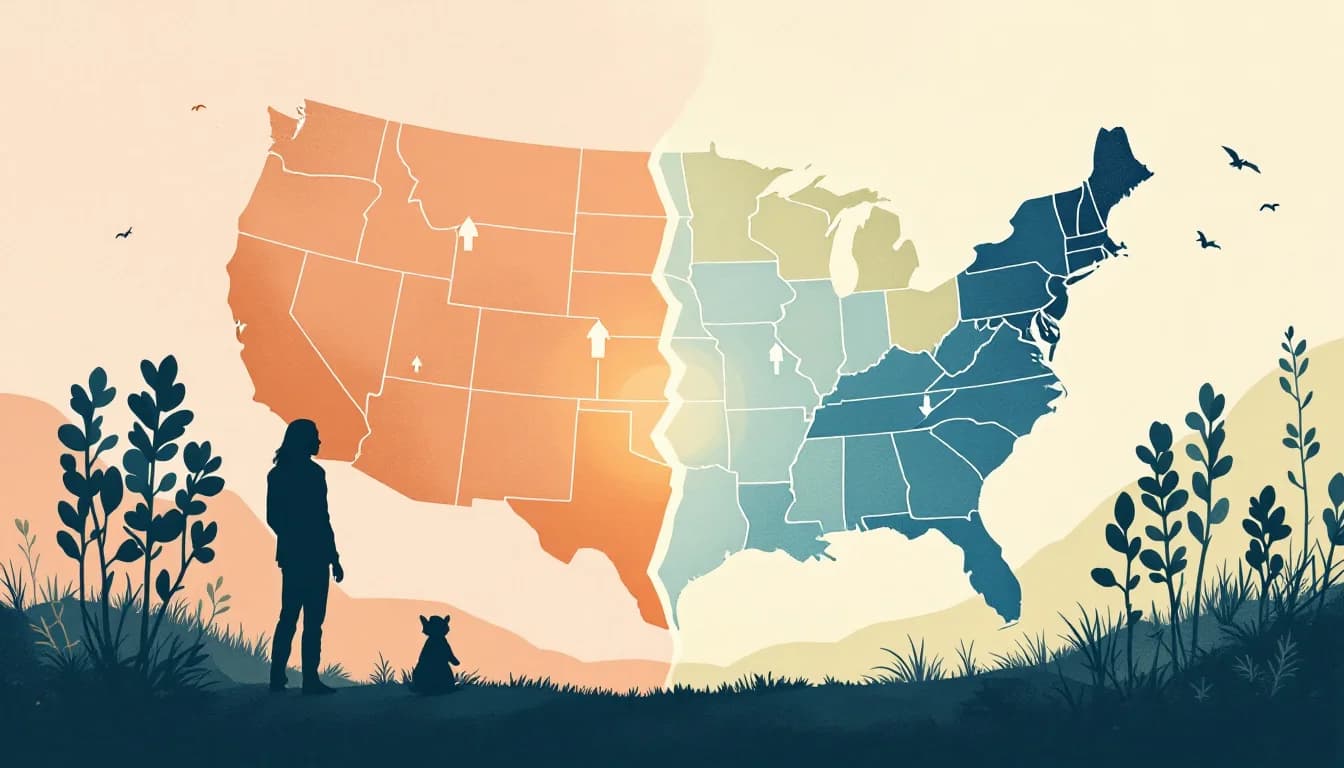
U.S. Overdose Deaths Keep Falling, But Western States Face Deadly Surge
National overdose deaths decline for third consecutive year, yet Alaska, New Mexico, and other western states see rising mortality amid fentanyl crisis