
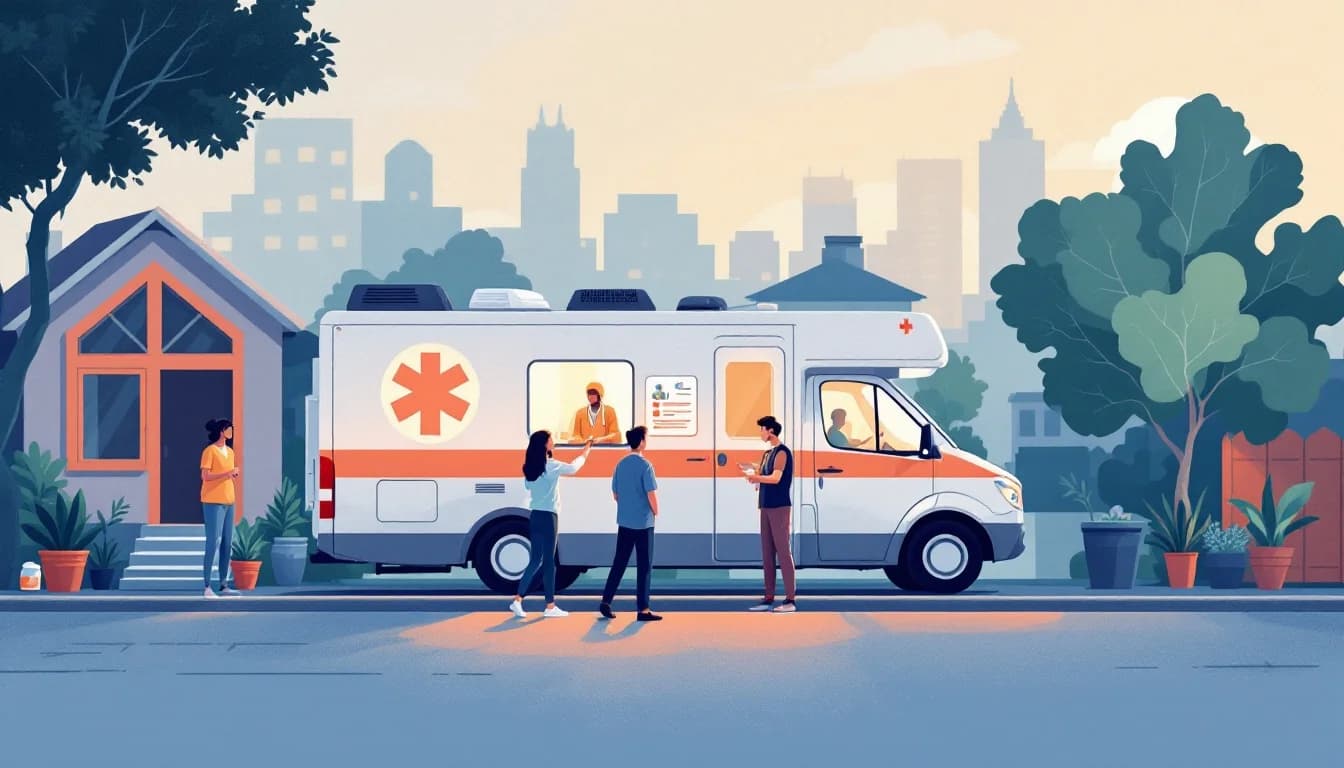
SouthLight Healthcare Launches Mobile Addiction Treatment Unit in Raleigh
The landscape of addiction treatment in North Carolina shifted this week as SouthLight Healthcare rolled out the state's third mobile medication-assisted treatment unit, parking its clinical services directly at Oak City Cares—a Raleigh hub that serves people experiencing or at risk of homelessness.
The program launched June 15, representing a growing recognition that traditional clinic-based models often fail to reach those who need help most. By bringing medication-assisted treatment to a location where vulnerable populations already gather, SouthLight is testing whether proximity and convenience can overcome the barriers that keep thousands from starting recovery.
Meeting Patients Where They Are
Oak City Cares functions as a centralized access point for people navigating housing instability, offering meals, showers, case management, and now—directly outside its doors—buprenorphine and methadone prescriptions. The mobile unit operates on a walk-in basis during scheduled clinic hours, eliminating the appointment requirements and transportation logistics that derail many treatment attempts.
For someone sleeping in a shelter or encampment, the calculus of accessing care changes dramatically when the clinic comes to them. Rather than spending hours on buses to reach a fixed-site facility—often only to encounter waitlists or intake processes that require documentation they may not have—patients can now access FDA-approved opioid addiction medications at a location they already trust.
SouthLight's main Opioid Treatment Program continues operating at its Raleigh Hub with extended hours, but the mobile expansion addresses what public health researchers call the "distance death sentence" phenomenon: the correlation between geographic isolation from treatment and elevated overdose mortality.
The Mobile MAT Movement
North Carolina now joins a national trend toward decentralized addiction care. Mobile units have proliferated across rural and urban areas alike, from California's Sierra foothills to Washington's agricultural communities, as providers adapt to a crisis that has claimed over 100,000 American lives annually in recent years.
The model addresses multiple failure points in traditional systems. Transportation barriers disappear. Stigma dissipates when clinical services integrate into community settings rather than segregating patients in specialized facilities. And the flexibility allows rapid response to emerging hotspots of overdose activity.
SouthLight's unit is the third now operating in North Carolina, suggesting the state is building infrastructure that treats addiction as a public health emergency requiring mobile, adaptable responses rather than static institutional solutions.
The Evidence Behind Medication-Assisted Treatment
The medications dispensed from SouthLight's mobile unit—buprenorphine and methadone—represent the gold standard for opioid use disorder treatment. Research consistently demonstrates that these medications reduce overdose deaths by approximately 50% compared to abstinence-only approaches, while also decreasing infectious disease transmission, criminal justice involvement, and healthcare costs.
Buprenorphine, a partial opioid agonist, blocks withdrawal symptoms and cravings without producing the euphoria of full agonists like heroin or fentanyl. Its ceiling effect on respiratory depression makes it safer than methadone in overdose scenarios. Methadone, a full agonist administered under strict federal regulations, remains particularly effective for patients with severe, long-standing opioid dependence.
Both medications face persistent stigma from those who view them as "substituting one drug for another"—a framing that addiction medicine specialists reject, noting that stabilized patients on appropriate doses function normally, hold jobs, and rebuild relationships in ways that active addiction precludes.
Challenges and Context
The mobile unit's launch comes as North Carolina, like much of the nation, experiences encouraging but fragile progress against overdose mortality. After years of relentless increases, provisional data shows declines in many jurisdictions—attributed to expanded naloxone distribution, the elimination of the X-waiver requirement for buprenorphine prescribing, and growing treatment access.
Yet the crisis continues evolving. Synthetic opioids like fentanyl dominate the illicit supply, with novel adulterants including xylazine and medetomidine complicating overdose response. Stimulant-related deaths continue rising even as opioid fatalities moderate. And the fundamental shortage of addiction treatment capacity persists, with millions of Americans who meet criteria for substance use disorders unable to access care.
Mobile units address only part of this gap. They cannot replace the need for comprehensive residential treatment, mental health integration, housing support, and long-term recovery services. But they represent an important expansion of the care continuum—meeting patients at their point of need rather than demanding they navigate complex systems while in crisis.
Looking Forward
SouthLight's partnership with Oak City Cares offers a model that other communities might replicate. By embedding addiction treatment within broader social services infrastructure, the program recognizes that substance use disorders rarely exist in isolation. Housing instability, unemployment, trauma, and mental health conditions intertwine with addiction in ways that require coordinated responses.
The mobile unit will likely face operational challenges—staffing shortages that plague healthcare nationwide, funding sustainability questions, and the logistical complexity of delivering controlled substances from a vehicle. But its existence signals a shift in how communities conceptualize addiction treatment: not as a service delivered in designated facilities to those who can reach them, but as a resource that should flow to wherever suffering concentrates.
For the patients who will walk up to SouthLight's mobile unit in the coming months, that shift could mean the difference between continuing use and starting recovery. In a crisis that has proven stubbornly resistant to conventional interventions, such alternative approaches deserve attention and evaluation—as does any model that removes barriers between people and the medications that can save their lives.
Editorial Board
Editorial review using SAMHSA, CDC, CMS, and state agency sources
The NWVCIL editorial team reviews and updates treatment-center information using public data from SAMHSA, CDC, CMS, and state behavioral-health agencies. We cross-check facility records, state coverage rules, and clinical-practice updates so the directory reflects current evidence and policy.
Related Articles

Pennsylvania Jail's Medication-Assisted Treatment Program Cuts Reincarceration Rates Nearly in Half
New data from Lancaster County Prison shows medication-assisted treatment for opioid addiction reduced reincarceration rates by nearly 50%, offering a model for correctional facilities nationwide.

Wisconsin Jails and Prisons Double Access to Opioid Treatment Medications in Four Years
New Wisconsin Policy Forum report reveals dramatic expansion in MOUD access across state correctional facilities from 2021 to 2025, coinciding with substantial decline in overdose deaths.

Washington State Makes Progress on Opioid Crisis as Federal Policies Threaten to Unravel Gains
Opioid deaths fell 12% in Washington last year while innovative programs expanded access to life-saving treatment. But new Medicaid work requirements and federal funding cuts are already disrupting care.