
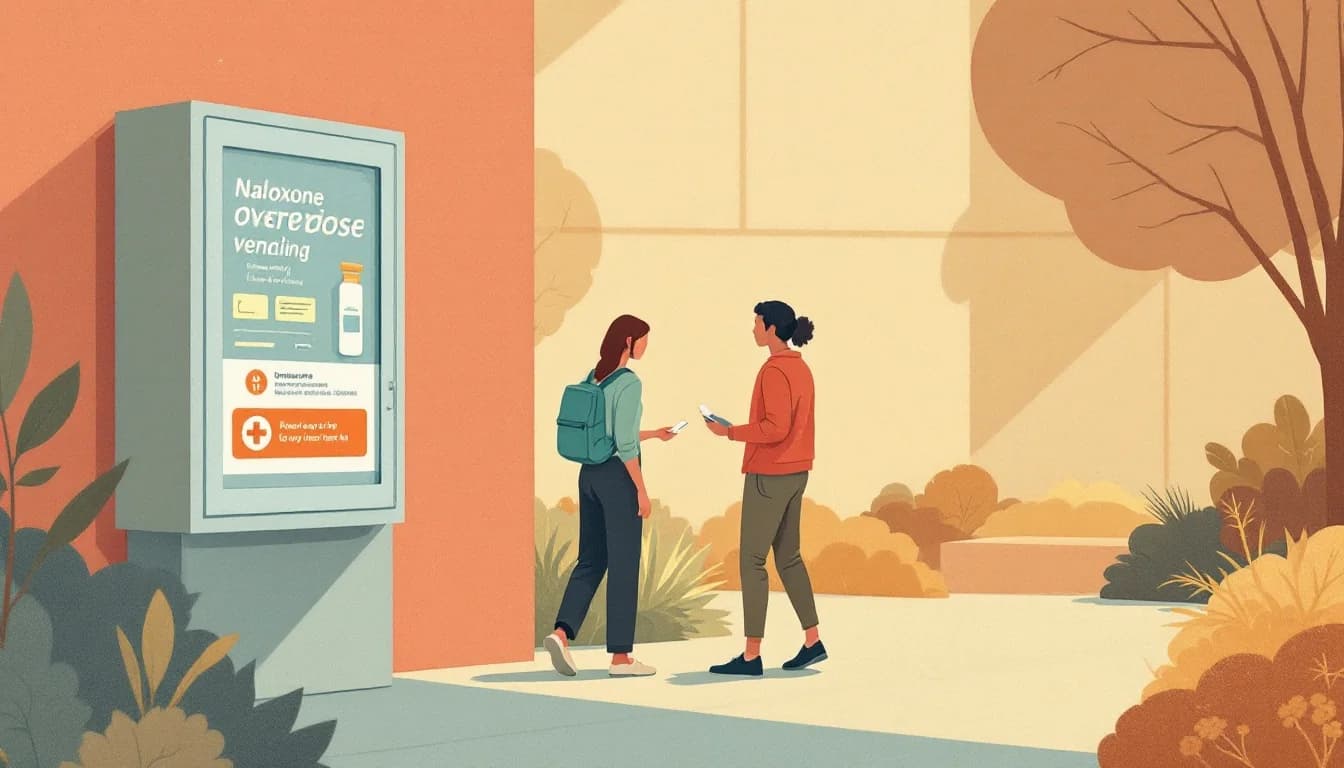
Howard County Installs 24/7 Naloxone Vending Machines to Combat Opioid Overdoses
Howard County has become the latest Maryland jurisdiction to embrace an innovative harm reduction strategy, installing two outdoor vending machines that provide free, anonymous, around-the-clock access to naloxone and other overdose prevention supplies. The machines, located in Columbia and Jessup, represent a growing recognition that traditional healthcare access points often fail to reach those at highest risk of fatal overdose.
The Naloxone and Safe Choice Vending Machines operate without staff interaction, allowing individuals to obtain two-dose boxes of naloxone—the medication that reverses opioid overdoses—along with test strips for fentanyl, xylazine, barbiturates, and medetomidine. Each machine also dispenses condoms and displays QR codes linking to naloxone training videos and treatment resources.
Data-Driven Placement
County health officials selected the outdoor locations using a combination of quantitative analysis and community input. The Howard County Substance Use Dashboard and Overdose Risk Map identified areas of highest need, while stakeholder feedback ensured accessibility for populations that might otherwise struggle to reach traditional health facilities.
One machine stands at the Grassroots Day Resource Center at Leola Dorsey in Jessup, a location chosen to serve individuals experiencing homelessness and housing instability. The second sits at the Howard County Health Department building in Columbia, positioned under the green Environmental Health awning near Silverman Treatment Solutions.
The approach reflects lessons learned from other jurisdictions that have deployed similar machines. Baltimore County launched its public dashboard for tracking opioid settlement spending earlier this month, while New York City expanded its vending machine program to Staten Island after seeing overdose deaths there drop by nearly half. Philadelphia and several California counties have also reported promising results from automated distribution models.
Measuring the Need
Between June 2025 and May 2026, Howard County recorded 13 opioid-related deaths—a figure that County Executive Calvin Ball emphasized represents "every life lost to overdose is a tragedy." During the same period, county fire and rescue personnel administered naloxone to 163 individuals, suggesting that timely access to overdose reversal medication already saves lives regularly.
"Access to naloxone leads to measurable drops in opioid overdose deaths," said Dr. Maura Rossman, the county health officer. "This vending machine investment will help lower the barriers of stigma, cost, and access to these essential resources."
The machines address a persistent challenge in overdose prevention: the moments when traditional services are unavailable. Most pharmacies close evenings and weekends. Many community health centers operate limited hours. And for individuals actively using substances, the prospect of interacting with staff—however well-intentioned—can create insurmountable barriers.
Anonymous Access, Strategic Data Collection
While the supplies are free, users must enter basic demographic information including age, gender, and ZIP code. This data collection serves dual purposes: it helps county officials understand who is accessing the machines and where additional resources might be needed, while the anonymous nature of the transaction protects users from potential legal or social consequences.
Barbara Allen, co-chair of the Howard County Opioid Restitution Fund Commission, described the machines as representing both "relief and pride." Relief, she explained, because individuals hindered by stigma around substance use disorders can now access life-saving options without fear of judgment. Pride because the commission advocated for this specific use of opioid settlement funds.
The funding itself comes from the Howard County Opioid Restitution Fund, administered by the Department of Community Resources and Services. These dollars originate from litigation against pharmaceutical manufacturers and distributors whose marketing practices contributed to the opioid crisis. Howard County's decision to direct settlement money toward low-barrier harm reduction tools follows guidance from public health experts who have urged jurisdictions to prioritize evidence-based interventions.
Beyond Emergency Response
Naloxone vending machines represent one component of a broader strategy, but public health officials emphasize that overdose reversal is not treatment. The QR codes displayed on the machines connect users to resources for medication-assisted treatment with buprenorphine, methadone, or naltrexone—the approaches that address the underlying physiological dependence on opioids.
The machines also distribute test strips for emerging adulterants beyond fentanyl. Xylazine, the veterinary tranquilizer that causes severe skin wounds and complicates overdose reversal, has spread through the Mid-Atlantic drug supply. Medetomidine, an even more potent sedative sometimes called "rhino tranq" for its use in immobilizing large animals, has begun appearing in Baltimore's drug supply and poses similar challenges. Barbiturate test strips address another class of substances that have resurged in some markets.
By providing testing capabilities alongside naloxone, the machines enable people who use drugs to make more informed decisions about their consumption and to prepare for potential emergencies.
A National Trend
Howard County joins a growing list of jurisdictions experimenting with automated harm reduction distribution. The approach has gained traction as overdose deaths have begun declining nationally—down 14% in 2025 according to CDC data—while remaining unacceptably high at approximately 70,000 fatalities annually.
The vending machine model addresses several limitations of traditional naloxone distribution. Pharmacy-based access, while expanded through over-the-counter approval of products like Narcan, RiVive, and the newly approved Rextovy, still requires individuals to interact with pharmacists and navigate retail environments. Community distribution programs often operate limited hours and may require engagement with staff that some individuals wish to avoid.
The 24/7 anonymous model removes these barriers while maintaining accountability through data collection. It also reduces the burden on emergency responders, who currently serve as the primary source of naloxone administration in many overdose situations.
Challenges Ahead
Despite the promise of automated distribution, public health officials acknowledge limitations. Naloxone reverses opioid overdoses but has no effect on overdoses involving stimulants like cocaine or methamphetamine, which are increasingly prevalent. The test strips provide information but cannot prevent all adverse outcomes, particularly when drugs contain multiple adulterants or when users lack private spaces to test substances before consumption.
Additionally, the machines require maintenance, restocking, and protection from vandalism or theft. Other jurisdictions have reported occasional technical issues and the need for regular servicing to ensure consistent availability.
Perhaps most significantly, vending machines—however well-designed—cannot address the structural factors driving the overdose crisis: poverty, housing instability, untreated mental illness, and limited access to medication-assisted treatment and recovery support services. They represent a harm reduction tool, not a comprehensive solution.
Looking Forward
Howard County officials plan to monitor usage data from the machines to assess their impact and identify potential locations for additional units. The approach aligns with Maryland's broader strategy of using opioid settlement funds transparently and strategically, as demonstrated by Baltimore County's new public dashboard tracking expenditures and outcomes.
For individuals at risk of overdose and their loved ones, the machines offer something simple but potentially life-saving: access to tools that can prevent fatalities, without judgment, without cost, and without delay. In a crisis that has claimed hundreds of thousands of American lives, such incremental innovations—multiplied across thousands of communities—may contribute to the momentum that has finally begun pushing overdose deaths downward after years of relentless increase.
The machines stand as physical manifestations of a philosophical shift in how communities respond to substance use: meeting people where they are, providing tools that reduce harm, and removing barriers that have historically prevented the most vulnerable from accessing life-saving resources.
Editorial Board
Editorial review using SAMHSA, CDC, CMS, and state agency sources
The NWVCIL editorial team reviews and updates treatment-center information using public data from SAMHSA, CDC, CMS, and state behavioral-health agencies. We cross-check facility records, state coverage rules, and clinical-practice updates so the directory reflects current evidence and policy.
Related Articles
Pennsylvania Launches Free Online Naloxone Training Program to Combat Opioid Overdoses
Pennsylvania's Department of Drug and Alcohol Programs introduces free self-paced online naloxone training, with over 100 residents completing the course in the first two weeks.
Ocean County Launches First Harm Reduction Vending Machine in New Jersey
Ocean County's first 24/7 harm reduction vending machine opens in Toms River, providing free naloxone, sterile syringes, and overdose prevention supplies anonymously.
Springfield Fire Department Installs 14 Free Naloxone Boxes as International Overdose Awareness Month Begins
Springfield, Missouri expands harm reduction infrastructure with 14 distribution boxes at fire stations, providing 24/7 access to overdose reversal kits without questions or paperwork.