
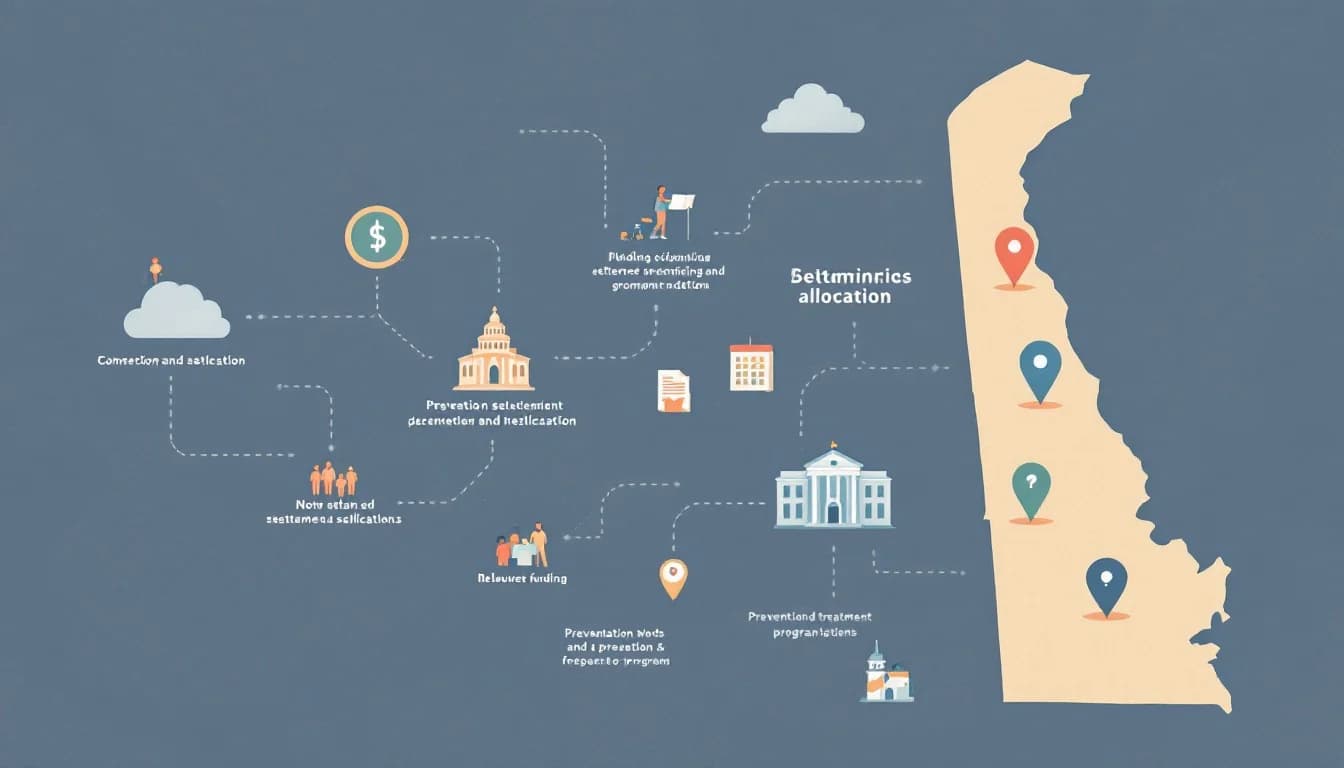
Delaware Opens $12.75 Million Opioid Settlement Grant Round for Prevention and Treatment Programs
The Delaware Opioid Settlement Commission has opened its fourth competitive grant round, making $12.75 million available to organizations working to address the state's opioid crisis through prevention, treatment, harm reduction, and recovery support programs. Applications are due August 12, with funding decisions scheduled for late September.
Three-Tier System Expands Access
The commission employs a tiered funding structure designed to accommodate organizations of varying sizes and capacities. General grants target established organizations proposing large-scale, evidence-based initiatives, with awards beginning at $30,000 and no formal maximum. Previous rounds have seen individual awards reach $1 million.
Mini grants ranging from $10,000 to $30,000 support smaller structured projects, pilot programs, and outreach efforts. Micro grants of up to $10,000 are reserved for small organizations, emerging groups, and short-term projects intended to create immediate local impact.
"Our priority is ensuring that settlement funds are used for responsible, sustainable and — most importantly — measurable solutions to the opioid crisis," said commission Director Brad Owens. "Measuring impact is essential, and we want to reward grantees who can show how their programs are moving the needle."
Local Governments Receive Separate Funding Stream
The community grant round operates independently from a new Local Government Grant program established by the commission with a 2026 budget of $3.25 million. This parallel initiative places settlement dollars directly in the hands of Delaware counties and municipalities, acknowledging that different levels of government have distinct roles in addressing substance use disorders.
The dual-track approach reflects lessons learned from other states where opioid settlement funds have sometimes been diverted to fill general budget gaps rather than expanding addiction services. By creating separate pools for community organizations and local governments, Delaware aims to ensure both grassroots initiatives and municipal infrastructure receive adequate support.
Review Process and Timeline
Applications submitted by the August 12 deadline will undergo a six-week review and scoring process. The commission is scheduled to vote on Round 4 recipients on Monday, September 28. This timeline allows organizations to plan for calendar-year programming while maintaining rigorous evaluation standards.
The commission's emphasis on measurable outcomes represents a shift in how opioid settlement funds are administered nationwide. Early rounds of settlement spending across multiple states often lacked clear metrics for success, making it difficult to determine which interventions were actually reducing overdose deaths and improving recovery outcomes.
Context of Settlement Funds
Delaware's grant rounds are funded through settlements with opioid manufacturers and distributors reached in recent years. These agreements have channeled billions of dollars to states and localities to address the consequences of the opioid epidemic, which has claimed hundreds of thousands of lives nationwide.
The state's approach of competitive grant rounds with tiered funding levels has drawn attention from other jurisdictions seeking models for transparent, accountable settlement spending. By requiring applicants to demonstrate measurable impact, Delaware attempts to avoid the pitfalls seen elsewhere where funds have been used for purposes only tangentially related to addiction crisis response.
Eligible Program Areas
The grant round supports initiatives across the full continuum of care: prevention programs targeting youth and at-risk populations; treatment services including medication-assisted treatment and clinical care; harm reduction services such as naloxone distribution and syringe access programs; and recovery support including housing assistance, employment services, and peer support networks.
This comprehensive scope recognizes that addressing the opioid crisis requires interventions at multiple points — from preventing initial substance use through supporting long-term recovery. Organizations specializing in any of these areas are encouraged to apply, with preference given to proposals demonstrating collaboration across service categories.
National Implications
As states across the country receive opioid settlement funds over the coming years, Delaware's structured approach offers a potential template. The emphasis on measurable outcomes, tiered funding for different organization sizes, and separation of community and government funding streams addresses common concerns about settlement fund accountability.
The coming months will reveal which organizations receive Round 4 funding and what programs they propose to implement. For Delaware residents affected by the opioid crisis, the grants represent a continued investment in the services and supports that can make the difference between addiction and recovery.
Sources
Editorial Board
Editorial review using SAMHSA, CDC, CMS, and state agency sources
The NWVCIL editorial team reviews and updates treatment-center information using public data from SAMHSA, CDC, CMS, and state behavioral-health agencies. We cross-check facility records, state coverage rules, and clinical-practice updates so the directory reflects current evidence and policy.
Related Articles

Grand Traverse County Opens $2.3 Million in Opioid Settlement Grants
Five years after the national settlement, Grand Traverse County opens applications Sept. 14 for more than $2.3 million in opioid settlement funding.

Iowa AG Awards First Opioid Settlement Grants After Delay Criticism
Iowa AG Brenna Bird awarded $1.6 million to five organizations in the first wave of opioid settlement grants after months of criticism over delays.

Suffolk County Overhauls Opioid Grant Process After Ethics Concerns and Delays
Suffolk County adopts new transparency measures for opioid settlement funds after critical audit found selection issues and ethics violations, holding first public hearing with nonprofits.