
Save a Life Day Brings Free Naloxone to Over 1,000 Sites Nationwide
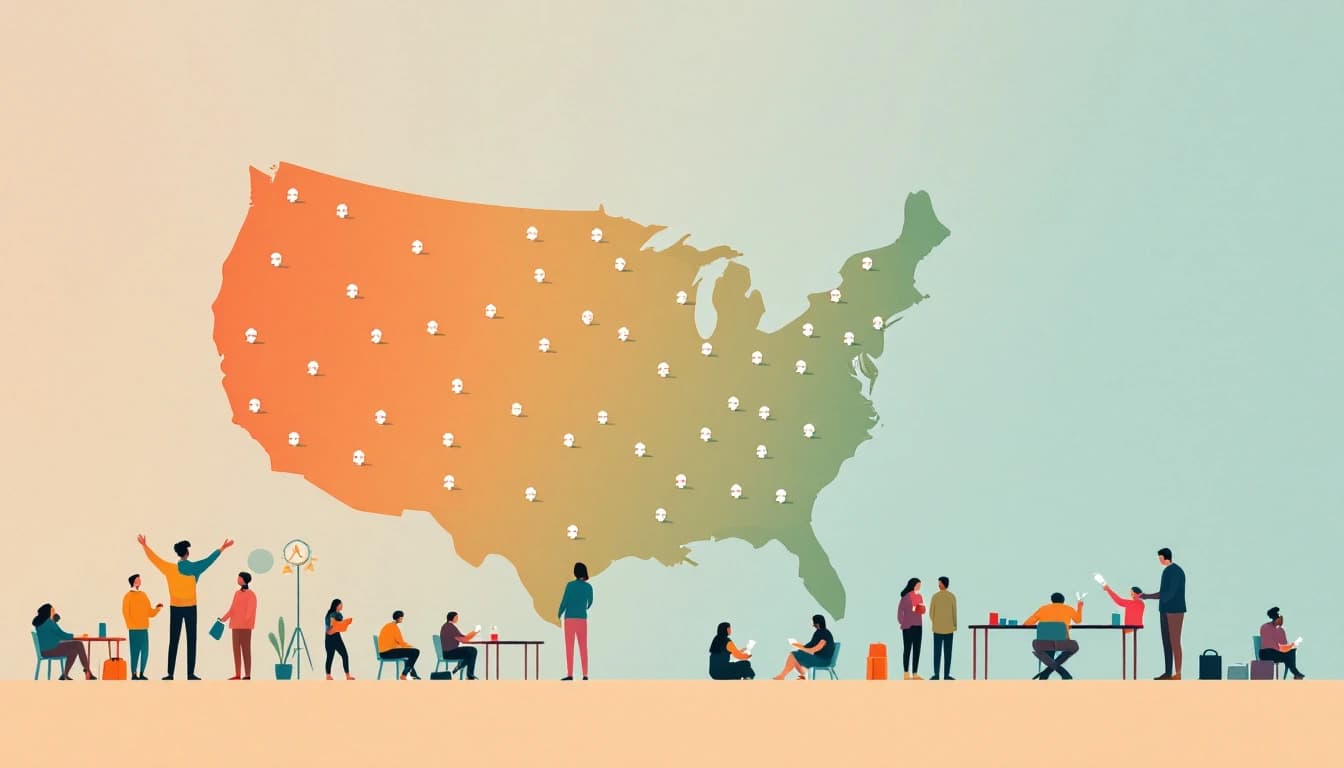
Volunteers staffed more than 1,000 distribution sites across all 50 states on Thursday for Save a Life Day, the country's largest annual day of free naloxone giveaways, handing out the overdose-reversal medication alongside quick training sessions in parking lots, libraries, health department offices and community centers.
Now in its seventh year, the event ran under the theme "Elevate Harm Reduction" — a deliberate choice by organizers at a moment when federal policy has moved in the opposite direction. Many sites went without fentanyl and xylazine test strips this year after the Substance Abuse and Mental Health Services Administration told grantees that federal funds cannot be used to buy drug-checking supplies.
A national event born in two West Virginia counties
Save a Life Day began in 2020 as a pilot in Kanawha and Putnam counties, West Virginia — a state that has historically recorded some of the highest overdose death rates in the nation. The Charleston-based nonprofit SOAR WV has coordinated the event since 2021, growing it into a fully national effort last year, when communities distributed roughly 133,000 naloxone doses at 1,044 events.
This year's edition was organized around a simple pitch: walk up, spend a few minutes learning how to use naloxone, and leave with a free kit. The medication, approved by the FDA more than 50 years ago and available over the counter since 2023, reverses opioid overdoses within minutes.
"This is one of the easiest ways and one of the easiest solutions to the overdose crisis," said Caroline Wilson, the national coordinator for Save a Life Day. "We have seen a huge drop in overdoses in West Virginia, and that is because of a lot of different things that have been done between prevention, treatment, recovery, harm reduction, etc."
Federal rules reshaped what was on the table
The gap at many distribution tables traced back to two federal decisions. An executive order signed last year declared that substance abuse agency funding could no longer support what it called "so-called 'harm reduction' or 'safe consumption'" efforts. Then, in a "Dear Colleague" letter dated April 24, SAMHSA spelled out that grant funding also cannot be used for certain harm reduction supplies, including drug test strips — though naloxone and infectious disease prevention services remain eligible. The restrictions built on an earlier SAMHSA policy shift that cut federal funding for syringe services programs and supplies like fentanyl test strips.
Wilson said sites interpreted the guidance differently depending on how they are funded. Some offered strips purchased with non-federal money. Others skipped them entirely because staff time was covered by a federal grant. Organizations that receive no federal funding at all, including SOAR WV, continued distributing testing supplies.
The pressure has gone beyond supplies. Wilson said several organizers have renamed their programs to avoid the phrase "harm reduction" altogether, rebranding as "overdose prevention" efforts in response to the executive order.
Organizers fear losing ground on overdose deaths
The policy shift arrives just as the country has posted measurable progress. The Centers for Disease Control and Prevention reported in May that drug overdose death rates dropped in almost every state last year.
Sarah Stone, a SOAR WV co-director and a founder of Save a Life Day, said she worries the new rules will undo that trend. "Things have taken a turn," she said. "We talk a lot about not celebrating until we get to overdose zero because every single overdose is somebody, but we were making some real progress."
Advocates point to test strips as a practical safeguard, particularly for people who use drugs recreationally and may not expect fentanyl to be present. "Overdose not only affects daily opioid users, but also people that are using drugs recreationally, because fentanyl is mixed in with a lot of other drugs," Wilson said.
In a statement to West Virginia Watch, a spokesman for the Department of Health and Human Services said the National Drug Control Strategy calls for improved drug testing in clinical and workplace settings and for assessing community drug-checking programs that use more sophisticated technologies, such as mass spectrometry. The spokesman said SAMHSA's role is to ensure government funds support "effective, common-sense solutions" proven to save lives, and noted the new requirements do not bar states and communities from using other funding to purchase test strips.
What comes next for naloxone access
Beyond the one-day event, SOAR WV says it has helped communities install more than 100 naloxone vending boxes and more than 5,200 emergency wall-mounted boxes, part of a push for year-round low-barrier access. Thursday's turnout — hundreds of event organizers and thousands of volunteers, by Wilson's count — suggested demand for that model remains strong even as the federal funding landscape narrows.
"There's something magical about knowing that on the same day, people in communities everywhere are connected by the simple belief that every life is worth saving," Stone said.
For people whose overdose risk involves opioid use, treatment options for opioid addiction remain available nationwide, and naloxone kits are stocked at pharmacies without a prescription in every state.
Editorial Board
Editorial review using SAMHSA, CDC, CMS, and state agency sources
The NWVCIL editorial team reviews and updates treatment-center information using public data from SAMHSA, CDC, CMS, and state behavioral-health agencies. We cross-check facility records, state coverage rules, and clinical-practice updates so the directory reflects current evidence and policy.
Related Articles
OSHA Issues Workplace Guidance on Opioid Overdose Rescue as Part of National Recovery Push
OSHA released a September 24, 2026, fact sheet advising employers on stocking naloxone and training workers to reverse opioid overdoses, though it stops short of mandatory requirements.
FBI: 'Fent-Free' Oxycodone Pills Sold on Darknet Contained Nitazenes
Prosecutors: two Jacksonville brothers sold 'fent free' counterfeit oxycodone pills that actually contained nitazenes, opioids rivaling fentanyl's potency.
Colorado Adds $3.5 Million to Statewide Naloxone Buying Fund
Attorney General Phil Weiser committed another $3.5 million in opioid settlement money to Colorado's naloxone bulk purchase fund, bringing the total to $6.5 million.