
Naloxone Vending Machine at Copper Mountain College Refilled Twice
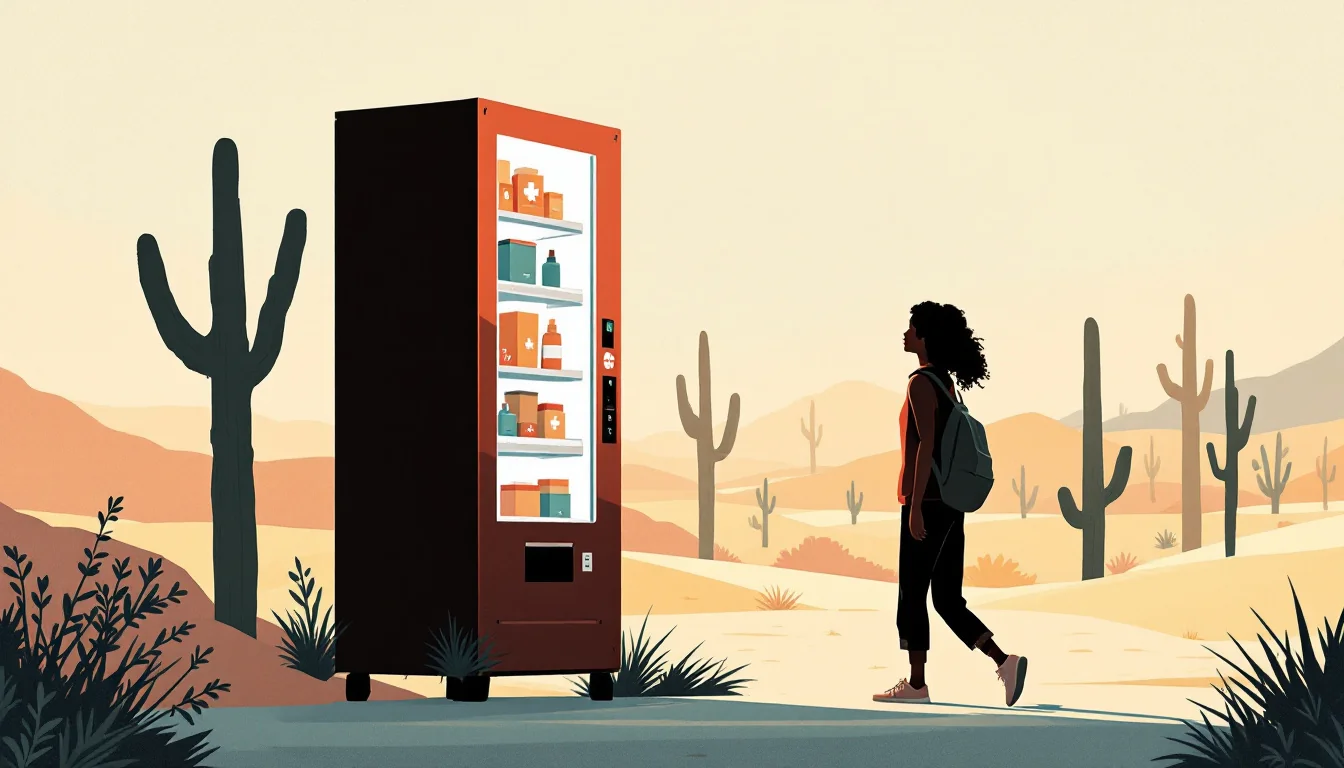
A vending machine that dispenses free naloxone, pregnancy tests and hygiene supplies on the Copper Mountain College campus in Joshua Tree was refilled twice in its first week, organizers said, an early measure of demand on a rural campus where a trip to the nearest convenience store can be a planning exercise.
The machine, called the Community Helping Hub, launched with a ribbon cutting on Sept. 29. It was built by the overdose prevention nonprofit Reach Out together with the college's student life office.
How the machine works
Users interact with a touchscreen much like a phone or tablet: they pick an item, add it to a cart and check out at no cost. Staff at the college said the machine was restocked twice within the first seven days.
Carrie Kish, a program manager for community health and policy at Reach Out, said the design was deliberate. "For this particular vending machine, there's no obligation to input any type of personal data," she said. "So it's anonymous in that sense."
The products are not visible from outside the machine, and users see what is available only once they begin navigating the screen. Organizers said that setup is meant to protect privacy and reduce the stigma that can stop people from asking for naloxone or other health supplies. Alongside the overdose reversal medication, the machine carries condoms, deodorant, body wipes, soap, pregnancy tests and toothbrushes.
A student's idea, three years later
The project joined two separate efforts. Reach Out was looking to expand overdose prevention resources in the Morongo Basin. Separately, Mariam Hussain, then the college's student trustee, began pushing about two and a half years ago for easier access to hygiene and wellness supplies on campus.
"It's not something that's just for a certain class or population of people. An opioid overdose can happen to anyone."
Carrie Kish, Reach Out
Conversations with Reach Out connected the two, and a grant made it possible to stock both needs in one machine. "We always like for projects on the campus to come from the students, and so that really propelled that forward," Kish told IE Community News.
Chelsi Chastain, the college's student life and wellness coordinator, said the library, where the machine sits, draws heavy student traffic and is a familiar setting for picking up sensitive items without asking an employee. "Students may get something from the vending machine that they may not want to ask a staff member for," she said.
Why a rural campus is different
Chastain said the obstacles on a rural campus go beyond discomfort. Students who depend on buses, or who have not learned to drive, cannot count on a quick trip off campus, and the college bookstore now operates entirely online, which removed the last routine source of soap and toothpaste.
Distance also shapes the overdose math. Kish said naloxone access matters more in rural areas because emergency responders may take longer to reach someone who has stopped breathing. The machine cost an estimated $10,000 excluding shipping, funded by the California Opioid Prevention Network, the Morongo Basin Community Coalition and the college's student life office.
Reach Out's director, Daniel Castillo, said in a written statement that rural communities face real barriers to reaching prevention resources, and that the machine is part of putting naloxone and everyday essentials in a place people already visit, at no cost and without having to ask.
Naloxone, and what it does not do
According to the Centers for Disease Control and Prevention, naloxone reverses overdoses involving opioids including fentanyl, heroin and prescription pain medications, which can slow or stop breathing. The agency advises giving naloxone if it is available, calling 911 and staying with the person until help arrives. Naloxone does not treat the dependence behind an overdose, and a single dose may not be enough when potent synthetic opioids are involved.
Kish said making the medication easy to grab helps normalize keeping it on hand the way households keep bandages and burn cream. "It's not something that's just for a certain class or population of people," she said. "An opioid overdose can happen to anyone."
The machine extends an existing partnership between Reach Out and the college, which already offers monthly overdose prevention education on campus. It follows similar vending machines placed in Ocean County, New Jersey and along the Mississippi Gulf Coast this year. Reach Out's Yucca Valley office serves the Morongo Basin, including Morongo Valley, Landers, Pioneertown and Wonder Valley, and the coalition behind the project also runs a monthly shower and resource fair and assesses risks in retail shops where drug products are sold.
Editorial Board
Editorial review using SAMHSA, CDC, CMS, and state agency sources
The NWVCIL editorial team reviews and updates treatment-center information using public data from SAMHSA, CDC, CMS, and state behavioral-health agencies. We cross-check facility records, state coverage rules, and clinical-practice updates so the directory reflects current evidence and policy.
Related Articles
$3M Grant Expands Houston Naloxone Training for First Responders
Houston's FRONTLINES program will use $3 million in federal money to train first responders across Harris and Fort Bend counties to reverse opioid overdoses with naloxone.
Milwaukee Puts Overdose Rescue Kits in Every Public School
A foundation started by a father who lost his son to an overdose delivered 500 naloxone kits to Milwaukee Public Schools, enough for every campus.
Orexo Resubmits FDA Application for High-Dose Naloxone Nasal Powder
Orexo completed a resubmission of its new drug application for IZIPRY, a high-dose naloxone nasal powder, answering a 2024 FDA rejection letter.