
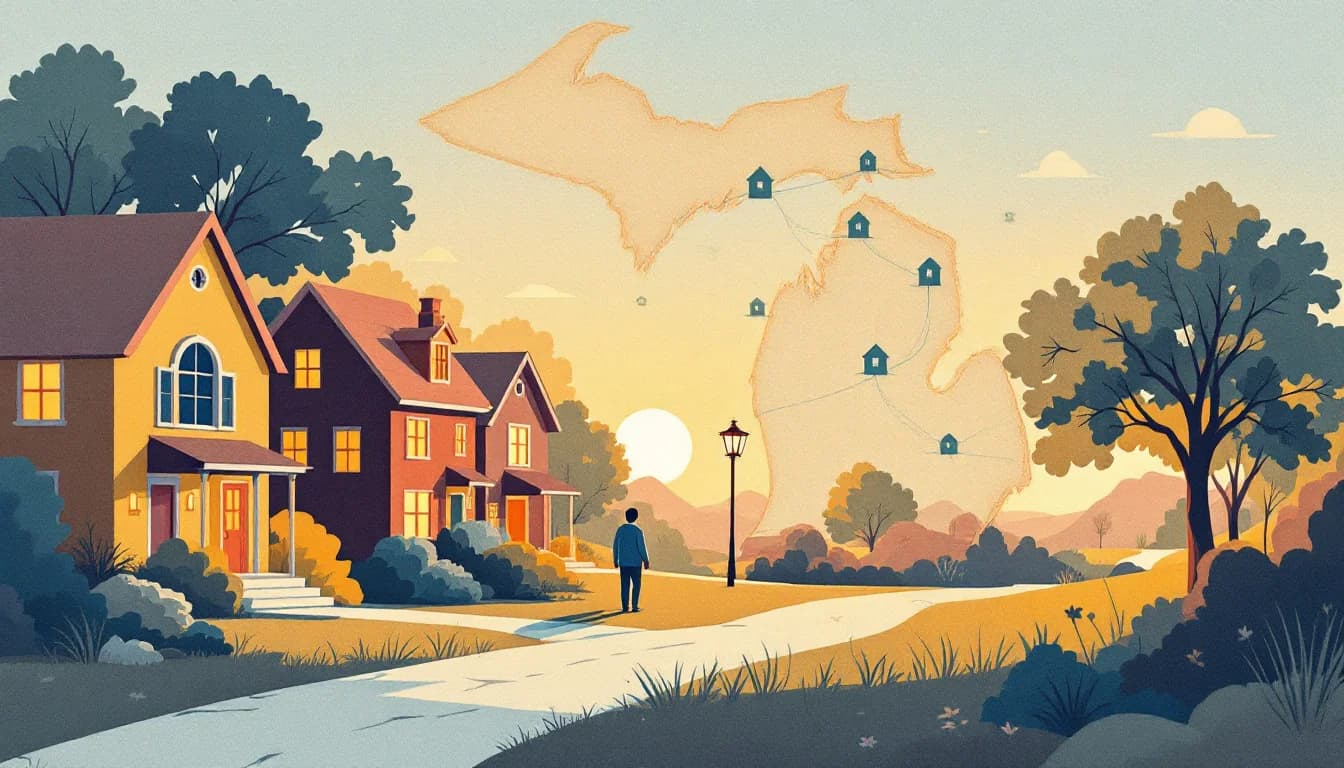
Michigan Awards $3.4 Million to Add 205 Recovery Housing Beds
Michigan will award $3.4 million to 18 organizations to buy or lease 24 recovery residences across 14 counties, adding an estimated 205 beds for people leaving addiction treatment or working to stay in recovery, the state Department of Health and Human Services announced Monday.
The money flows through the Recovery Housing Investment Program, a partnership between MDHHS and the Michigan State Housing Development Authority that uses opioid settlement dollars to acquire property rather than pay for short-term services. The program's fiscal 2026–2027 allocation is $3.37 million, according to MSHDA, and this round distributes that funding through a competitive grant process.
"Every person in recovery deserves the chance to rebuild their life with dignity, connection and hope," said Amy Epkey, acting MDHHS director. "When we invest in recovery supports, we're investing in stronger families, safer communities and a healthier Michigan."
What the grants actually buy
Recovery residences are not clinical facilities. They are certified, substance-free housing where people live after detoxification or residential treatment ends and before they have income, a lease history or a stable address. RHIP grants can be used to purchase or lease single-family homes and multifamily properties for that purpose, which lets an operator hold a building long term instead of renting month to month.
That distinction matters for how long the investment lasts. A purchase converts one year of settlement spending into a physical asset that keeps housing people for years; a lease keeps the option to walk away but leaves the operator exposed to rent increases.
The awards range from single properties to multi-county portfolios. Ten16 Recovery Network in Midland and Gladwin counties received funding for 14 beds, Pinnacle Recovery Group in Ingham County for 23, Hannahville Indian Community in Delta County for 12, and Catholic Social Services of the Upper Peninsula, also in Delta County, for six. Other recipients include 70x7 Life Recovery in Kent County, Hunter House Recovery in Macomb County, Kelsey's House Foundation in Oakland County and Superior Connections Recovery Community Organization in Marquette County.
Why a bed is the narrow point
State analysts have described recovery housing as the step where treatment gains are most often lost. A person who finishes withdrawal management with nowhere certified to go is far more likely to return to use than someone who moves into supervised, substance-free housing with peers.
MDHHS has framed the shortage in those terms before. When the department committed $37.5 million to recovery housing in December 2025, it cited an internal analysis finding that more than 7,500 discharges from publicly funded substance use disorder treatment each year ended with people leaving without stable housing. The department set a goal of creating 3,467 new recovery beds by 2028.
"Recovery is about more than overcoming addiction," said Amy Hovey, MSHDA's chief executive officer and executive director. "It's about having the stability and support to rebuild your life and reconnect with the people and communities that matter most. Housing is foundational to that journey."
What earlier rounds produced
This is not the program's first round. Previous RHIP investments produced 136 new recovery beds at 18 properties in six counties, MDHHS said. In the last few months alone, the state has awarded more than $12 million in opioid settlement dollars to more than 50 community agencies that offer community-based supports and recovery residences.
"Recovery housing gives people the stability they need to heal, rebuild and continue moving forward," said Dr. Natasha Bagdasarin, the state's chief medical executive and chair of the Opioids Task Force. "Housing is more than a roof. It's a foundation for long-term wellness, employment, connection and community participation."
The department also released a testimonial from a resident that it did not identify by name, describing the effect of stable housing on his family. "The biggest impact has been on my relationship with my 13-year-old daughter," he said. "There was a time when that relationship was at risk because of my addiction. Today, it is as strong as it has ever been."
The money behind the program
Michigan is slated to receive more than $1.8 billion from national opioid settlements by 2040. Half goes to the State of Michigan Opioid Healing and Recovery Fund, and half is distributed directly to county, city and township governments, which makes the pace of local spending a separate question from the state's.
The 205 beds announced Monday close part of a documented gap, but not all of it. Against the department's own 2028 target of 3,467 new beds, this round adds roughly 6 percent of the outstanding goal, with property acquisition, certification and staffing still to follow before anyone moves in. People seeking residential treatment or medication-based care can find programs through the state's substance use disorder resource listings.
Sources
Editorial Board
Editorial review using SAMHSA, CDC, CMS, and state agency sources
The NWVCIL editorial team reviews and updates treatment-center information using public data from SAMHSA, CDC, CMS, and state behavioral-health agencies. We cross-check facility records, state coverage rules, and clinical-practice updates so the directory reflects current evidence and policy.
Related Articles
Holyoke Awards First $1 Million in Opioid Settlement Funds to Expand Recovery Services
Holyoke, Massachusetts announces inaugural distribution of opioid settlement funds, awarding nearly $1 million to five organizations for recovery coaching, harm reduction, job training, and emergency support.
Kentucky Counties Form Regional Collaboration to Maximize Opioid Settlement Impact
Twenty Kentucky counties join forces through the KACo Opioid Solutions Network to share best practices and strategically deploy nearly $1 billion in settlement funds

Alaska's Kachemak Bay Recovery Connection Awarded National Grant to Expand Rural Addiction Services
Foundation for Opioid Response Efforts awards grant to Kachemak Bay Recovery Connection as part of $3.7 million nationwide investment in community-based addiction treatment infrastructure.