
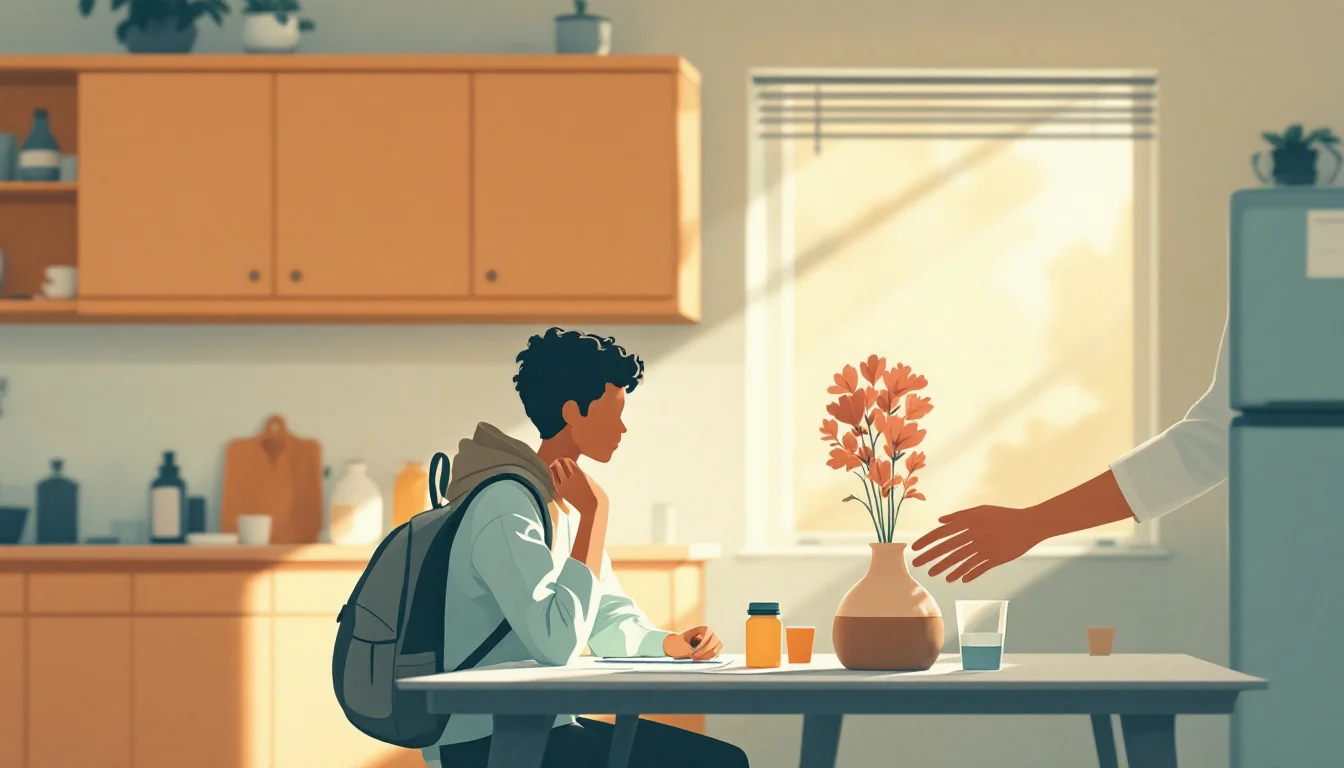
Depressed Teens Face Fourfold Odds of Prescription Drug Use Disorder
Adolescents and young adults who reported a major depressive episode in the past year had roughly four times the odds of meeting criteria for a prescription drug use disorder as peers without depression, according to a study published Oct. 16 in JAMA Network Open. The analysis drew on two years of the federal National Survey on Drug Use and Health and covered 22,906 adolescents ages 12 to 17 and 27,723 young adults ages 18 to 25.
Among young people with depression, 6.0 percent met the criteria for a prescription drug use disorder, compared with 1.5 percent of those without depression. Misuse short of a diagnosable disorder was also more common — 6.6 percent versus 3.2 percent — and after adjustment for sex, race and ethnicity, and insurance status, depression was associated with about twice the odds of misuse.
The authors, Michael S. Toce, John J. Porter, Jamie K. Lim and Florence T. Bourgeois of Boston Children's Hospital and Harvard Medical School, concluded that young people with depression "were more likely than their peers without depression both to report prescription drug misuse and to meet criteria for prescription drug use disorder."
Four medicine cabinets, not one
The study examined four classes of prescription drugs: opioid painkillers, tranquilizers such as benzodiazepines, stimulants, and sedatives such as zolpidem. All four are commonly prescribed, and as the study's authors note, they may already be in a family's medicine cabinet. That overlap is what turns a routine prescription into a household supply. The Food and Drug Administration requires boxed warnings on opioids and benzodiazepines about the combined risk of slowed breathing, and both classes figure in the study's misuse findings.
The reasons young people gave
The most striking result was not the prevalence but the stated motive. Among adolescents and young adults who misused tranquilizers, 29.8 percent of those with depression said the main reason was to help with their feelings or emotions, compared with 13.2 percent of peers without depression. For opioid painkillers the same comparison was 10.2 percent against 3.7 percent.
Youths with depression were also less likely to say they misused opioids mainly to relieve physical pain — 44.5 percent versus 62.3 percent — and more likely to say they did so to feel good or get high, 18.0 percent against 10.6 percent. Among those misusing sedatives, 55.4 percent of the depressed group named help with sleep as the primary reason, against 28.3 percent of peers. Stimulant misuse for the purpose of feeling good or getting high ran 14.2 percent versus 7.9 percent.
The authors read those answers as evidence that "unmet mental health needs may contribute to a meaningful share of misuse." The study allowed respondents to select only one main reason, which limits how finely the motives can be separated.
Depression was common in its own right
About 16.3 percent of those surveyed had a past-year major depressive episode, a share the authors translate to roughly 9.8 million Americans ages 12 to 25. Females reported depression at about double the rate of males, 22.0 percent against 10.7 percent.
That base rate is what makes the co-occurrence consequential for treatment planning. Mental health care and addiction treatment are frequently delivered by separate clinics with separate intake forms, and a teenager referred for therapy may never be asked about what is in the household medicine cabinet. The authors wrote that the findings underscore the need to address barriers to integrated care for at-risk youths, and the overlap points toward dual diagnosis treatment as the setting where both problems are addressed together rather than in sequence.
What a cross-sectional survey can and cannot show
The study is a snapshot, not a sequence. A cross-sectional design cannot establish whether depression preceded the misuse, whether misuse deepened the depression, or whether a third factor — trauma, family history, housing instability — drove both. All responses were self-reported, and young people may underreport or overreport behavior that carries stigma.
The survey also excludes people experiencing homelessness, a gap the authors acknowledge may bias results for young adults in particular. Question wording shifted slightly between the 2023 and 2024 survey years, and the analysis covers depression without examining other mental health conditions that commonly travel with substance use.
Funding came from a Boston Children's Hospital faculty development award and a Harvard Medical School faculty fellowship, with no role for either funder in the work. The lead author reported personal fees from a law firm for work outside the study.
For families, the practical reading is narrower than the headline. The finding does not suggest that a depressed teenager will develop a drug problem. It does suggest that prescription drug misuse and depression are worth discussing in the same appointment — and that opioids, benzodiazepines, stimulants and sleep medicines are worth counting and locking up. Leftover pills can be disposed of through federal take-back programs, and clinicians can screen for both conditions at routine visits.
Young people who need treatment referrals can reach the SAMHSA National Helpline at 1-800-662-4357 at any hour, and families looking for one setting that covers both depression and drug use can ask a pediatrician about outpatient treatment programs that pair psychiatric care with substance use counseling. Anyone in immediate danger from a suspected overdose should be given naloxone and connected to emergency care.
Sources
Editorial Board
Editorial review using SAMHSA, CDC, CMS, and state agency sources
The NWVCIL editorial team reviews and updates treatment-center information using public data from SAMHSA, CDC, CMS, and state behavioral-health agencies. We cross-check facility records, state coverage rules, and clinical-practice updates so the directory reflects current evidence and policy.
Related Articles
Mental Health and Addiction Care Is 7% of US Health Spending
A JAMA Psychiatry analysis of 2021-2023 federal survey data found mental health and substance use disorder care totaled $174 billion, or 7% of US medical spending.

Review of 57 Studies Backs Housing First Over Treatment-First Models
A rapid review of 57 studies finds Housing First programs house adults with substance use and mental health needs more reliably than treatment-first models.

Benzodiazepine Prescriptions Fell 26.7% Over a Decade, Study Finds
A Rutgers-led analysis of 1.1 billion fills found dispensing of Xanax, Valium and similar sedatives dropped from 7.5% to 5.5% of the population.