
Tennessee Will Put Mental Health Clinicians in Seven Rural Counties
Tennessee's Department of Mental Health and Substance Abuse Services will place a master's-level therapist and a peer wellness coach inside county health departments in seven rural counties, funded by a $10 million federal grant spread across five years, the department announced Tuesday. Services are expected to begin in early 2027.
The counties are Anderson, Cumberland and Hawkins in East Tennessee, Bradley in the southeast, Coffee in the middle of the state, Montgomery near the Kentucky line and Tipton outside Memphis. The grant comes through the Promoting Integration of Primary and Behavioral Health Care program at the Substance Abuse and Mental Health Services Administration.
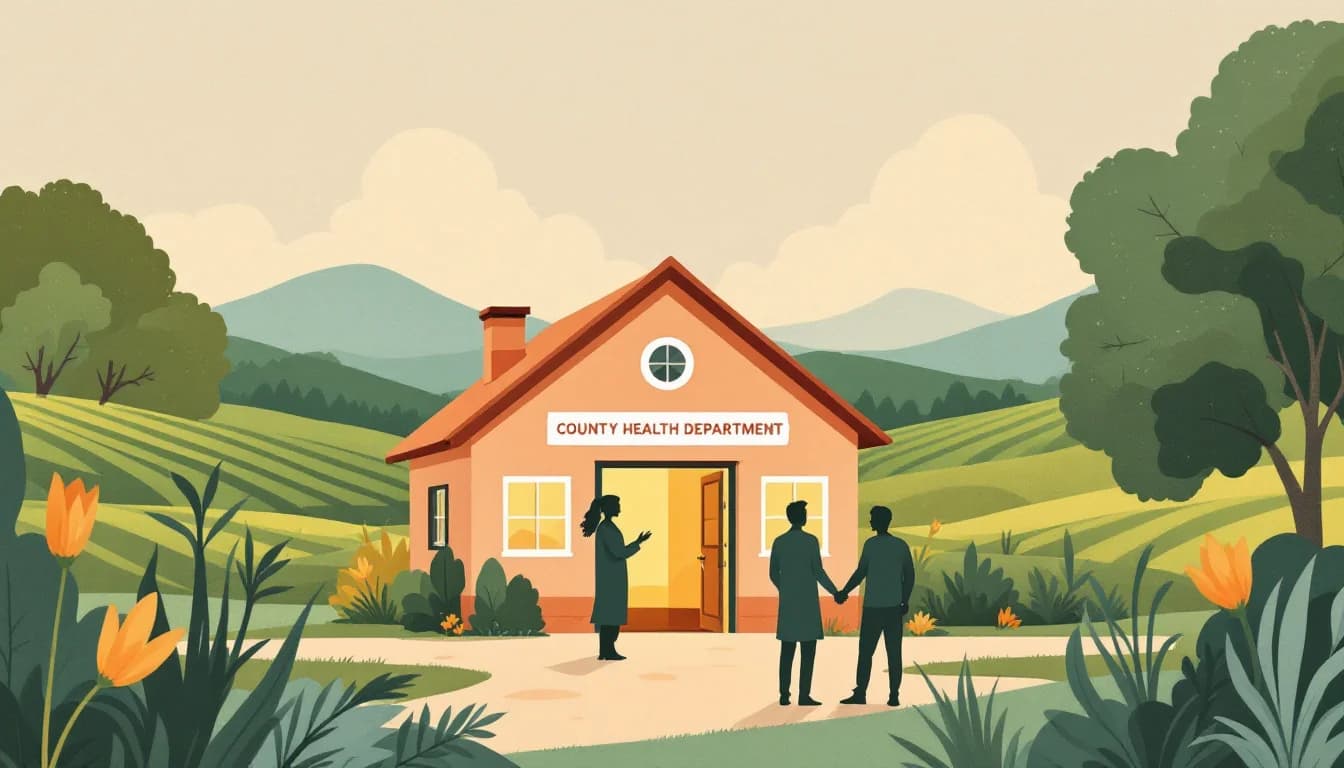
The model puts behavioral health staff in the same building where residents already come for blood pressure checks, immunizations and chronic disease follow-ups. In Tennessee the arrangement began as a pilot with the Department of Health before the current expansion.
What each site gets
Every participating county health department will receive funding for one therapist and one peer wellness coach. The pair will run group sessions on diabetes management, smoking cessation and other chronic conditions, and will offer one-on-one coaching for residents working toward wellness goals set with their primary care providers.
The peer component is the part that distinguishes the model from a standard co-located clinic. A peer wellness coach is a staff member with lived experience of a behavioral health condition who helps people stay engaged between appointments, a role that county health departments in rural areas have struggled to fill through traditional clinical hiring.
Referrals are expected to come mostly from county health department staff, according to a state spokesperson, but the program will accept them from elsewhere. "The goal is same day availability, 5 days a week," the spokesperson said. "Services are available regardless of payor source — private insurance, TennCare, Behavioral Health Safety Net, Uninsured, etc."
The connection the program is betting on
The premise behind integrated behavioral and primary care is that the two problems usually arrive in the same visit. A patient treated for hypertension who is also drinking heavily, or one whose untreated depression keeps disrupting diabetes care, is more likely to accept help in the exam room where they already have a relationship than through a referral to a clinic across the county.
For rural counties the arithmetic is less clinical than logistical. People who must drive an hour to see a therapist often don't, and a health department that already has the patient on the schedule is cheaper to equip than a new standalone clinic.
Commissioner Marie Williams framed the grant as a way to stretch money the state already spends. "Taking a whole-body approach to mental health really helps us make the most of the precious dollars we have to reach and to treat our neighbors in need, and making those services more accessible in our state's rural counties just makes sense," Williams said. "We're so grateful for our community mental health center partners and our counterparts at the Department of Health who are helping to expand this work."
What the announcement does not promise
The release does not include caseload targets, outcome measures or a count of residents the seven sites are expected to reach, and the timeline depends on hiring clinicians in counties where behavioral health providers are already scarce. Tennessee has spent years trying to widen that pipeline, and a five-year grant with staff costs at its center is exposed to the same vacancy problem it is meant to address.
The program also lands in the middle of a broader shift in how rural behavioral health is paid for. Federal rural health dollars, Medicaid waivers and state general fund appropriations have all been moving at once, and a county health department that adds a therapist in 2027 may find the funding mix underneath the position very different by 2030.
For residents, the practical question is simpler. The state says care will be available five days a week on a walk-in basis, at no cost tied to insurance status, in the same building where they get their other primary care. If the hiring goes as planned, that is a lower barrier than most of rural Tennessee has had.
People looking for outpatient treatment options in the state can search by county, and the state's Behavioral Health Safety Net remains the backstop for residents without coverage.
Sources
Editorial Board
Editorial review using SAMHSA, CDC, CMS, and state agency sources
The NWVCIL editorial team reviews and updates treatment-center information using public data from SAMHSA, CDC, CMS, and state behavioral-health agencies. We cross-check facility records, state coverage rules, and clinical-practice updates so the directory reflects current evidence and policy.
Related Articles

Ohio Gets $92 Million in Rural Health Funds, Including Behavioral Care
CMS awarded Ohio $92 million in Rural Health Transformation Program funds, with $30.3 million for upgrades at 22 rural hospitals including a new behavioral health unit.
Appalachian Commission Puts $1.49M Into West Virginia Recovery Jobs
Four West Virginia recovery-to-work programs will split $1,486,500, with $1,236,500 from the Appalachian Regional Commission and $250,000 from the state.

Cost Watchdog Opens Review of Psilocybin Ahead of FDA Filing
ICER will assess the clinical and economic value of Compass Pathways' synthetic psilocybin for treatment-resistant depression, with public comment open until Nov. 10.