
Wyoming Tribe Deploys State's First Harm Reduction Vending Machines to Combat Overdose Deaths
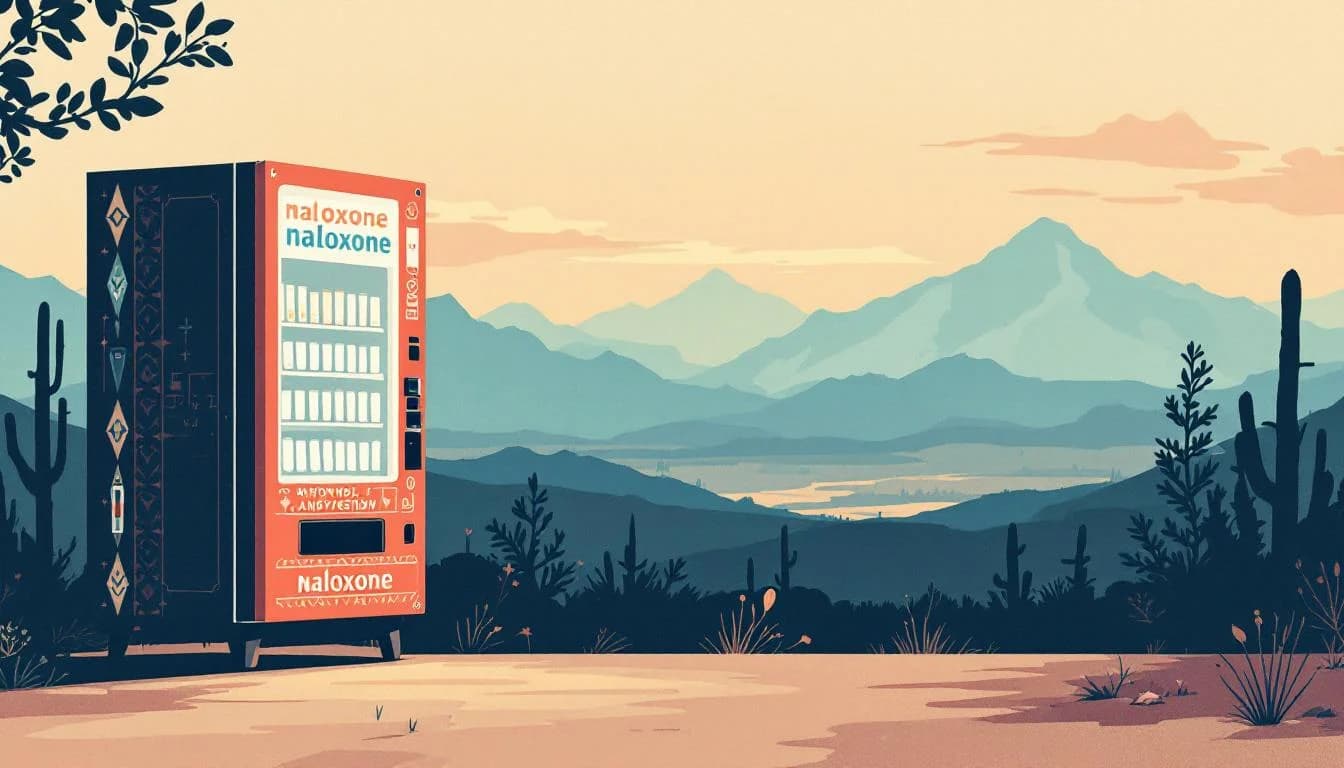
When someone walks through the door at Eastern Shoshone Tribal Health, the first thing they see isn't a receptionist or waiting room chairs. It's a white vending machine. But instead of soda and candy bars, its rows hold gun locks, fentanyl test strips, condoms, medication disposal kits—and dozens of boxes of Narcan, the overdose-reversing nasal spray.
In April 2026, this machine and a second one at Rocky Mountain Hall community center will open to the public, becoming Wyoming's first harm reduction vending machines. For the Eastern Shoshone community on the Wind River Reservation, it marks a turning point after years of losing parents and young adults in their twenties and thirties to overdose deaths.
"We were losing people," said Jocelyn Dewey, community health educator at Eastern Shoshone Tribal Health. "A few years ago, there was a big uptick. Community elders raised the alarm."
The culprit, it turned out, was fentanyl—the synthetic opioid that's driven a national surge in overdose deaths over the past decade. According to the CDC, deaths involving synthetic opioids like fentanyl have increased nearly tenfold since 1999, though the overall opioid overdose death rate declined 4% from 2022 to 2023.
From Crisis to Access
Dewey started searching for naloxone availability on the reservation and discovered a problem: Narcan wasn't easily accessible. When she began bringing it to public health outreach events and asking community members if they needed it, the response was revealing.
"They were honest. They said that we need it and we don't want to have to have our name on there, [like] how a prescription is given out," Dewey recalled. "I would just take their name down and then tell them it's not going to be reported to anybody. It's just for my information because I have to account for where I'm getting the Narcan and where it's going."
The pattern was clear: need was high, but stigma created a barrier. Even after naloxone became available over-the-counter in 2023, the challenge of social judgment remained.
Enter the vending machines.
"It helps in a way that they're not having to face anybody," Dewey explained. "They're not having to worry about having their name on it, and they're able to walk in and get it."
What Harm Reduction Looks Like
The machines represent a philosophy gaining traction across public health: harm reduction. Rather than demanding abstinence as a precondition for support, the approach focuses on keeping people alive and reducing the most dangerous consequences of drug use while they're still using.
Mike Selick, director of capacity building and community mobilization at the National Harm Reduction Coalition, said vending machines are relatively new but becoming more popular because they address both access and anonymity.
"Harm reduction vending machines allow people who might not feel comfortable talking about their drug use to even a harm reduction worker to get access to lifesaving supplies, and that's really where their value comes in," Selick explained.
The machines can operate 24/7 in some locations, but Selick emphasized they're meant to be a starting point—not a replacement for human connection.
"At the end of the day, the thing that is going to help people the most is human connection, talking to somebody who has gone through similar experiences, knowing where they can access various different ways to get support," he said.
Selick described harm reduction as recognizing that lasting change comes from within, not through shame or coercion.
"So much of society treats people who use drugs as worthless and terrible, and that makes you want to do more drugs about it," he said. "Helping people find that they are humans deserving of respect and dignity, helping them connect to things to keep themselves safe and spaces where they can actually have life-affirming experiences, helps people work towards behavior change and eventually make sustainable change."
Beyond Narcan
While naloxone fills most of the vending machine's real estate—bottom two rows packed with identical white boxes—the top shelves hold other harm reduction tools chosen specifically for the community's needs.
There are gun locks designed for suicide prevention. "What it basically does is slow down that person and give them time to think through what they're going through," Dewey said.
Cessation kits with aromatherapy oils and fidget toys aim to help people quit smoking. Fentanyl test strips detect the deadly opioid in other drugs before someone uses them. Deterra pouches allow people to safely dispose of unused medications instead of leaving them in medicine cabinets where they might be misused.
The plan is to keep adapting the inventory: toiletry kits, Plan B emergency contraception, wound care supplies, blood sugar testing kits—whatever the community needs.
Funding and Expansion
The Wyoming Department of Health partnered with the Eastern Shoshone Tribe to fund the machines through a CDC Overdose Data to Action in States grant. Wyoming first received funding from the program in 2023; it now supports 49 state health departments and D.C. in expanding drug overdose surveillance and prevention.
Dr. Alexia Harrist, Wyoming State Health Officer, said the grant has two main goals: improving data collection on fatal and non-fatal overdoses, and using that data to guide prevention focused on opioids and stimulants.
"It is our understanding, too, that the two vending machines that the Eastern Shoshone Tribe purchased are the first two in the state," Harrist noted.
From 2020 to 2024, 60% of overdose deaths in Wyoming involved opioids, while another 38.5% involved stimulants. Harrist emphasized the importance of addressing both.
"I carry naloxone in my backpack wherever I go, just in case," she said. "We want folks to know that it's accessible and everyone can have it and anyone can assist someone who might be experiencing an overdose."
Other Wyoming communities are using the same grant differently—some funding peer navigators to connect people with resources, others training clinicians on pain management alternatives to opioids, still others reviewing overdose fatalities to identify systemic gaps.
"We really, of course, leave it up to those local communities to make those decisions in terms of what's best for their community members," Harrist said.
How It Works
Starting in April, anyone can come to the Eastern Shoshone Tribal Health office to get set up with an individual PIN number. After that initial visit, they can access either machine anonymously whenever they need supplies.
"When you get a pin, then you'll enter it into there and whatever you want or need is there," Dewey demonstrated, punching numbers into the keypad. "And then you just go to checkout and there you go."
A box of Narcan dropped from its slot to the bottom tray.
The PIN system serves two purposes: it tracks what's being distributed for internal record-keeping and grant compliance, but it keeps individual users anonymous. No names attached to transactions. No judgment. No barriers.
The machine at Rocky Mountain Hall will be accessible all day, even after the health office closes—crucial for people whose work schedules don't align with clinic hours.
Everything is free.
The Larger Picture
The Eastern Shoshone vending machines arrive at a moment when harm reduction faces both momentum and backlash nationally. Overdose deaths have declined significantly—nearly 50% since the 2023 peak, according to recent CDC data—driven partly by wider naloxone availability, expanded medication-assisted treatment, and harm reduction messaging that acknowledges people will use drugs and focuses on keeping them alive.
But the approach remains politically contentious. Critics view distributing naloxone and sterile syringes as enabling drug use rather than preventing death. Federal funding for harm reduction has faced uncertainty, with the Trump administration briefly terminating then reversing hundreds of SAMHSA grants in January 2026.
On the Wind River Reservation, those debates feel distant from the practical reality Dewey faces: community members dying, families grieving, a need for intervention that meets people where they are.
The vending machines won't solve the opioid crisis. They won't treat addiction or address the underlying traumas and economic hardships that often fuel substance use. But they can keep someone alive long enough to have a chance at recovery.
Dewey, who teaches about suicide prevention, adverse childhood experiences, and intimate partner violence in addition to her overdose prevention work, understands that harm reduction is just one piece of a much larger puzzle.
"Even though you may not see it much or people don't talk about it, a lot of people go through mental health challenges," she said. "I provide adult and youth mental health first aid [trainings], which helps to give people tools and education on how to help themselves."
The machine by the door—with its gun locks, test strips, and rows of Narcan—represents a philosophy: that people struggling with addiction and mental health challenges deserve tools, dignity, and a community that wants them to survive.
When the machines go live in April, anyone who needs naloxone won't have to explain why. They'll just need their PIN.
Sources
Editorial Board
Editorial review using SAMHSA, CDC, CMS, and state agency sources
The NWVCIL editorial team reviews and updates treatment-center information using public data from SAMHSA, CDC, CMS, and state behavioral-health agencies. We cross-check facility records, state coverage rules, and clinical-practice updates so the directory reflects current evidence and policy.
Related Articles

Trump Administration Orders Health Programs to Move Away from Overdose Prevention
CDC informs state and local health programs they must agree to new Trump administration priorities within days, including deprioritizing harm reduction and housing-first strategies proven to reduce drug overdoses.

White House Summit Convenes National Experts to Address Addiction Treatment Among Homeless Populations
ONDCP, SAMHSA and HUD launch two-day summit to develop national toolkit for treating substance use disorders among homeless individuals, marking a shift toward integrated care models
FDA Approves Generic OTC Naloxone Nasal Spray, Adding Third Option to Overdose Reversal Market
Amneal Pharmaceuticals' generic 4mg naloxone nasal spray receives FDA approval for over-the-counter sales, expanding access to life-saving overdose reversal medication amid ongoing opioid crisis.