
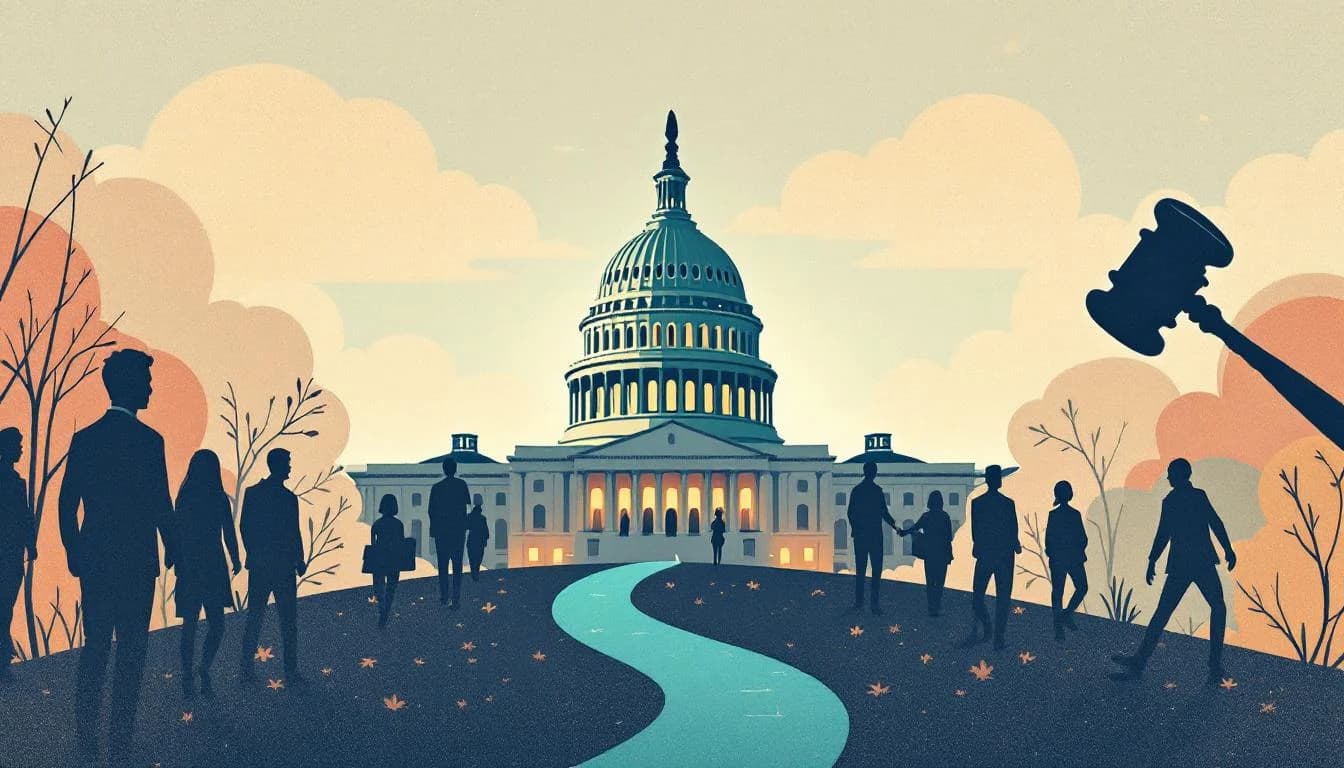
Congress Warns SAMHSA Dismantling Threatens Hard-Won Overdose Progress
The gains made against America's overdose crisis now hang in political limbo. At a House Energy and Commerce Committee hearing this week, lawmakers confronted a stark reality: the federal agency responsible for addiction treatment and mental health services has been gutted at precisely the moment its work was showing results.
Representative Frank Pallone, the committee's ranking member, delivered a sharp rebuke of the administration's handling of the Substance Abuse and Mental Health Services Administration during a March 26 hearing on "Policies to Protect Our Communities from Illicit Drug Threats." His remarks came two months after SAMHSA abruptly terminated an estimated $2 billion in grants to nonprofits nationwide—a decision reversed within 24 hours but which exposed deeper instability within the agency.
"After more than two decades of an overdose crisis that have devastated families and communities throughout the nation, we have finally seen signs of progress over the last several years," Pallone said. "This progress is now in jeopardy as federal funding for addiction treatment and overdose prevention is gutted."
The Numbers Behind the Progress
The congressman's concern stems from recent epidemiological data showing the first sustained decline in overdose deaths in years. Between 2023 and 2024, fatal overdoses fell nearly 28 percent—from approximately 105,000 to 79,000 deaths. Public health researchers attribute much of this decline to expanded access to naloxone, broader availability of medications like buprenorphine and methadone, and the distribution of fentanyl test strips.
All of those interventions—naloxone distribution, medication-assisted treatment expansion, harm reduction supplies—rely heavily on SAMHSA grant funding. The agency administers more than $4.5 billion annually in substance use and mental health services, supporting programs that serve an estimated 20.5 million Americans in recovery and tens of millions more experiencing mental illness.
The infrastructure producing that 28 percent decline is precisely what was placed at risk during the January crisis.
What Happened That Night
On the evening of January 13, 2026, nonprofit organizations across the country began receiving termination letters from SAMHSA. The emails were brief: federal funding had been canceled "effective immediately" due to "non-alignment with agency priorities." No explanation. No advance notice. No appeal process. Between 2,000 and 2,900 organizations received the letters.
A certified drug and alcohol counselor who works at one of the affected programs later described what followed: "Within an hour of the SAMHSA money being taken away, I received a call from my boss telling me that our entire team may not have jobs by morning." That program had distributed more than 500,000 doses of naloxone in 2025 alone.
According to reporting by Government Executive, SAMHSA's own career staff learned of the terminations around the same time as the grantees. Staff were called into a 5 p.m. meeting and told that notices would go out that night. Agency leadership had received no advance warning. An internal spreadsheet classified every active grant as either "proposed to cancel" or "proposed to keep"—but SAMHSA staff were not involved in making those determinations.
Dr. Yngvild Olsen, who served as SAMHSA's director for the Center for Substance Abuse Treatment until July 2025, was direct in her assessment: "It seems pretty clear that somebody made these decisions without any knowledge of what these programs are actually designed to do—without any thought of whether this makes any sense."
The affected programs were not peripheral initiatives. They included overdose prevention teams, naloxone distribution networks, peer recovery specialists, suicide prevention hotlines, HIV harm reduction services, treatment programs for pregnant and postpartum women, and workforce development for behavioral health clinicians. Many grants were roughly halfway through four-year commitments. The National Child Traumatic Stress Network—a 25-year-old program with bipartisan congressional backing—received the same termination letter as everyone else.
Twenty-four hours later, under pressure from Congress and advocacy organizations, the decision was reversed. A new letter arrived: "Your award will remain active under its original terms and conditions. Please disregard the prior termination notice."
But as Dr. Adam Scioli of Caron Treatment Centers noted at the time, providers across the country had already begun laying off staff, canceling trainings, and shutting down services within hours of the first notification. Employees told to clear their desks Wednesday morning had no way of knowing the money would return.
A System Under Siege
The January termination crisis was not an isolated event. At the March 26 hearing, Pallone outlined a pattern of destabilization at SAMHSA that has accelerated in recent months.
The administration initially proposed eliminating the agency altogether. While that hasn't happened, SAMHSA has seen its staff reduced by more than half. Earlier grant terminations in 2025 had already removed hundreds of millions in obligated funding before programs could complete their work. The behavioral health workforce—already stretched thin—now operates in a climate of perpetual uncertainty.
More than two-thirds of U.S. counties are designated mental health workforce shortage areas. Research published in JAMA Pediatrics found that counties with those shortages experience 16 percent higher youth suicide rates. The January episode hit a sector with no margin left.
Pallone also raised concerns about actions beyond SAMHSA itself. The administration's proposed health care legislation would cut Medicaid by $1 trillion over ten years—"the largest health care cut in our nation's history," according to the congressman. Medicaid is the largest single source of coverage for substance use disorder treatment services, and Medicaid expansion under the Affordable Care Act has been critical to recent treatment access gains.
"Without continued, sustained support for people with substance use disorders, the result is devastating but not complicated," Pallone said. "People can't get the care they need, and in the worst cases, they will die because of it."
The Minnesota Example
Pallone pointed to recent federal actions in Minnesota as an illustration of how policy instability translates into real-world harm. In January, the Centers for Medicare & Medicaid Services moved to withhold about 20 percent of Minnesota's federal Medicaid funding—an action Pallone described as "truly unthinkable and reckless."
Among the services targeted for funding cuts: peer recovery support. Evidence shows that peer recovery services increase treatment engagement, reduce hospitalizations, and improve long-term recovery outcomes. Yet rather than addressing specific instances of fraud through investigation and recovery, the administration withheld federal funding for peer recovery services across the state's entire Medicaid program.
"Hiding behind stories of bad actors, the Trump Administration didn't act to recover funding for legitimate, investigated instances of fraud," Pallone said. "It acted to withhold all of the federal Medicaid funding the state receives for peer recovery and 13 other services that help people live healthy and productive lives in their communities."
Peer recovery specialists are often people in long-term recovery themselves, providing support, mentorship, and navigation assistance to individuals earlier in their recovery journey. For many people with substance use disorders—particularly those who have had negative experiences with traditional clinical settings—peer support represents a critical bridge to formal treatment.
What the Numbers Don't Capture
The 28 percent decline in overdose deaths between 2023 and 2024 represents approximately 26,000 fewer families planning funerals. It is a genuine public health achievement. But aggregate statistics can obscure ongoing disparities. Researchers have documented that declines have not been evenly distributed across race, ethnicity, and age groups. And even with the reduction, 79,000 annual overdose deaths remains a historically catastrophic figure.
The infrastructure that produced that progress—naloxone distribution programs, expanded buprenorphine access, harm reduction services, peer recovery networks—did not build itself overnight. It required years of sustained federal investment, coordination between agencies and community organizations, workforce development, and trust-building with populations who have every reason to distrust government institutions.
What the January crisis demonstrated is how quickly that infrastructure can be destabilized. Organizations that distribute naloxone, provide peer support, or offer medication-assisted treatment operate on thin margins. When federal grants disappear—even for 24 hours—staff get laid off, services get canceled, and community trust erodes.
The counselor whose team nearly lost their jobs overnight put it plainly: "I never felt like decisions made by the president could or would affect me directly until this happened. Reckless and careless decisions have affected me in a big way and has made me fearful of my job security."
Questions Without Answers
At the hearing, Pallone noted that Congressional Republicans have conducted no oversight of SAMHSA's dismantling. Basic questions about the January termination crisis remain unanswered: Who authorized the original letters? Did agency lawyers review whether terminating congressionally-appropriated grants mid-stream was legally permissible? What process governed which grants were "proposed to cancel"? And what specifically triggered the reversal?
The Impoundment Control Act prohibits the executive branch from unilaterally refusing to spend funds Congress has appropriated. Mid-stream termination of congressionally-authorized grants—without legal process, without subject-matter review, and reversed within 24 hours under political pressure—raises serious questions about whether that prohibition was honored.
Dr. Stephen Taylor of the American Society of Addiction Medicine has called for structural reforms: "We can't afford to do that in the middle of an addiction crisis. We have to get more sustainable funding for addiction care services, because addiction is a chronic medical disease—so let's treat it and cover it like other chronic medical diseases."
But sustainable funding requires more than promises. It requires Congress to establish clear statutory guardrails around the termination of mid-stream behavioral health grants—including mandatory advance notice, specification of cause, and administrative appeal rights for programs serving large populations.
The Cost of Uncertainty
When program directors lie awake wondering whether their grants will evaporate next week, they cannot fully focus on the patients in front of them. When talented clinicians weigh careers in federally-funded behavioral health against the volatility they witnessed in January, some will choose differently. When community organizations plan for uncertainty instead of impact, the people who need them pay the price.
The same day the termination letters went out in January, SAMHSA released a $231 million funding announcement for the 988 Suicide and Crisis Lifeline. Promoting a crisis line while dismantling the infrastructure that supports it is not a policy. It is a contradiction.
As Pallone concluded his remarks: "These Republican actions have real life consequences. Without continued, sustained support for people with substance use disorders, the result is devastating but not complicated: people can't get the care they need, and in the worst cases, they will die because of it."
The 28 percent decline in overdose deaths proved that progress is possible. The January termination crisis—and the broader pattern of SAMHSA destabilization it revealed—proved how fragile that progress remains. Whether the infrastructure that produced those gains survives depends less on clinical evidence than on political choices about whether stability and expertise still matter in federal health policy.
The counselor whose program distributed 500,000 doses of naloxone still has their job. The money came back. But thousands of others whose work holds the system together are watching now—and their willingness to keep doing it depends on whether anyone gives them reason to believe it's worth the risk.
Sources
Editorial Board
Editorial review using SAMHSA, CDC, CMS, and state agency sources
The NWVCIL editorial team reviews and updates treatment-center information using public data from SAMHSA, CDC, CMS, and state behavioral-health agencies. We cross-check facility records, state coverage rules, and clinical-practice updates so the directory reflects current evidence and policy.
Related Articles
Senators Shaheen and Hassan Reintroduce $65 Billion Turn the Tide Act to Combat Substance Use Disorder
New Hampshire Senators Jeanne Shaheen and Maggie Hassan reintroduce landmark legislation that would authorize over $65 billion in federal funding over ten years to expand addiction treatment, prevention programs, and workforce development nationwide.

Private Equity's Retreat from Addiction Treatment Leaves Uncertain Future as Federal Funding Falters
Deal flow in substance use disorder treatment hits six-year low as investors pull back amid quality concerns, Medicaid uncertainty, and volatile federal grants—leaving safety-net providers facing potential closures.

HRSA Awards $89.3 Million for Rural Addiction Treatment and Recovery
HRSA awarded $89.3 million through its Rural Communities Opioid Response Program, including $62.7 million for integrated treatment and recovery services.