
Springfield Fire Department Installs 14 Free Naloxone Boxes as International Overdose Awareness Month Begins
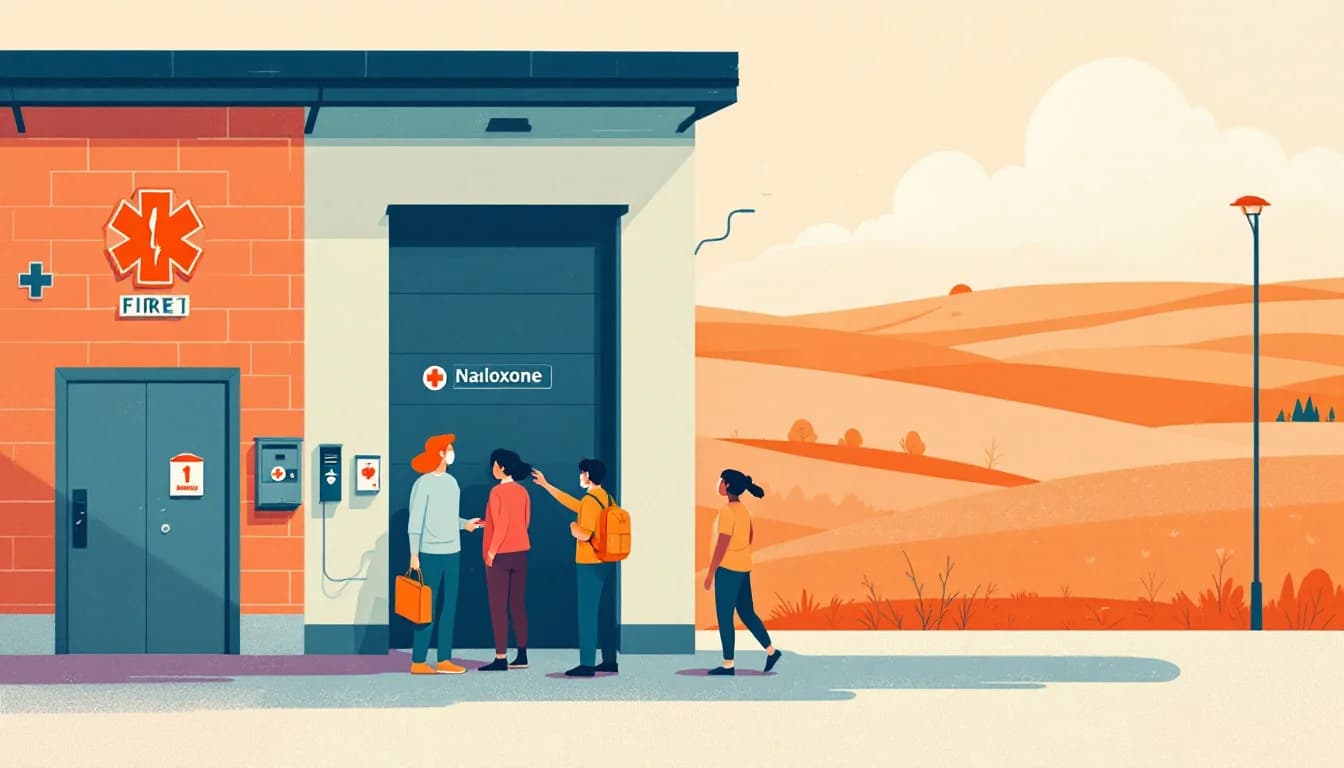
The Springfield Fire Department has completed installation of 14 free naloxone distribution boxes across the city, making the opioid overdose reversal medication available around the clock without requiring identification, prescriptions, or interaction with emergency personnel. The final box was placed on August 4, marking the full deployment of a program that began quietly on July 31 and already distributed at least 40 rescue kits before any public announcement.
Each distribution box contains overdose rescue kits equipped with naloxone nasal spray, a pocket mask for rescue breathing, and information about treatment resources. The boxes are located at fire stations throughout Springfield and at the department's training campus, providing 24-hour access in a city where opioid addiction has strained emergency responders for years.
Christopher Roush, battalion chief of emergency medical services for the Springfield Fire Department, said the design prioritizes removing every possible barrier to access. Residents can simply take what they need. There are no forms to complete, no staff to check with, and no limits on how many kits someone can carry away.
From First Box to Full Network in Five Days
The rapid rollout—from first installation to complete network—took less than a week. The fire department chose locations based on call volume, geographic coverage, and proximity to neighborhoods with higher overdose rates. Each box includes a QR code that connects users to additional resources and helps locate alternative distribution points if a particular box is temporarily empty.
Roush emphasized that residents should not enter fire stations seeking additional supplies if a box is empty. The contents represent the available supply at that location, and the department restocks boxes as quickly as possible. The QR code system directs users to nearby community distribution points when needed.
The timing aligns with International Overdose Awareness Month, observed throughout August and culminating on August 31. The observance, which began in Australia in 2001 and has since spread globally, aims to raise awareness of overdose risks, reduce stigma associated with drug-related deaths, and acknowledge the grief of families and friends who have lost loved ones.
Training and Community Preparedness
Roush encouraged residents not only to obtain naloxone but to learn how to administer it. The medication works by displacing opioids from brain receptors, rapidly restoring normal breathing in someone experiencing an overdose. Training covers recognizing overdose signs—the slowed or absent breathing, the blue lips or fingernails, the unresponsiveness to stimuli—as well as proper nasal spray administration and rescue breathing techniques.
The department directs residents to Revive417.com for training on overdose response and CPR. The website helps locate naloxone sources throughout the 417 area code region and connects users with educational resources about recognizing and responding to opioid emergencies.
Naloxone, sometimes called the "Lazarus drug" for its ability to reverse overdoses within minutes, has no effect on someone who is not experiencing an opioid overdose. This safety profile makes it appropriate for bystander use—even if uncertainty exists about whether opioids are involved, administering naloxone will not cause harm.
Partnership Model for Sustainability
The naloxone supplies come through a partnership between the Missouri Institute of Mental Health at the University of Missouri-St. Louis and the Springfield-Greene County Health Department. This academic-public health collaboration provides the medication at no cost to the fire department, allowing resources to focus on distribution infrastructure rather than procurement.
Missouri has seen overdose deaths decline for three consecutive years, with a 23% reduction in opioid-related fatalities reported in 2025. State health officials attribute part of this progress to expanded naloxone availability—Medicaid claims for the medication exceeded 11,000 annually, and the state's standing order was updated in 2026 to explicitly include individuals under 18.
But the improvements remain uneven. Rural areas continue facing longer emergency response times, making bystander intervention more critical. Springfield's distribution box model addresses this gap by decentralizing access, placing life-saving medication directly in neighborhoods rather than requiring travel to pharmacies or health departments.
Harm Reduction in Context
The Springfield program represents a particular approach to the overdose crisis—one that prioritizes immediate survival over long-term treatment, recognizing that the opportunity for recovery depends entirely on surviving the initial emergency. This harm reduction philosophy has gained traction across Missouri even as some state lawmakers have questioned funding for related programs.
Governor Mike Kehoe's veto of $1 million in opioid settlement funds for prevention programs in July 2026, including cuts to the GuidEd teen intervention program, highlighted ongoing tensions about resource allocation. The Springfield Fire Department's distribution boxes operate through a different funding stream—academic and local public health partnerships—insulating them from the state budget disputes that have affected other harm reduction initiatives.
For now, the 14 boxes stand as physical evidence of a city's attempt to keep its residents alive. The first 40 kits disappeared within days, taken by people who may never need them, or who may find themselves standing over someone whose breathing has slowed to a dangerous halt, holding a nasal spray device that could mean the difference between a fatal overdose and a second chance.
The boxes will remain stocked, Roush said, as long as the partnership funding continues. In a crisis measured in minutes, having naloxone nearby—at a fire station down the street, available at 3 a.m. without questions asked—represents the kind of infrastructure that saves lives before ambulances arrive.
Editorial Board
Editorial review using SAMHSA, CDC, CMS, and state agency sources
The NWVCIL editorial team reviews and updates treatment-center information using public data from SAMHSA, CDC, CMS, and state behavioral-health agencies. We cross-check facility records, state coverage rules, and clinical-practice updates so the directory reflects current evidence and policy.
Related Articles
Pennsylvania Launches Free Online Naloxone Training Program to Combat Opioid Overdoses
Pennsylvania's Department of Drug and Alcohol Programs introduces free self-paced online naloxone training, with over 100 residents completing the course in the first two weeks.
Ocean County Launches First Harm Reduction Vending Machine in New Jersey
Ocean County's first 24/7 harm reduction vending machine opens in Toms River, providing free naloxone, sterile syringes, and overdose prevention supplies anonymously.
Howard County Installs 24/7 Naloxone Vending Machines to Combat Opioid Overdoses
Howard County, Maryland deploys free naloxone vending machines providing 24/7 anonymous access to overdose reversal medication and drug testing supplies.