
Iowa Poison Control Center Launches 24/7 Opioid Consultation Hotline for Healthcare Providers
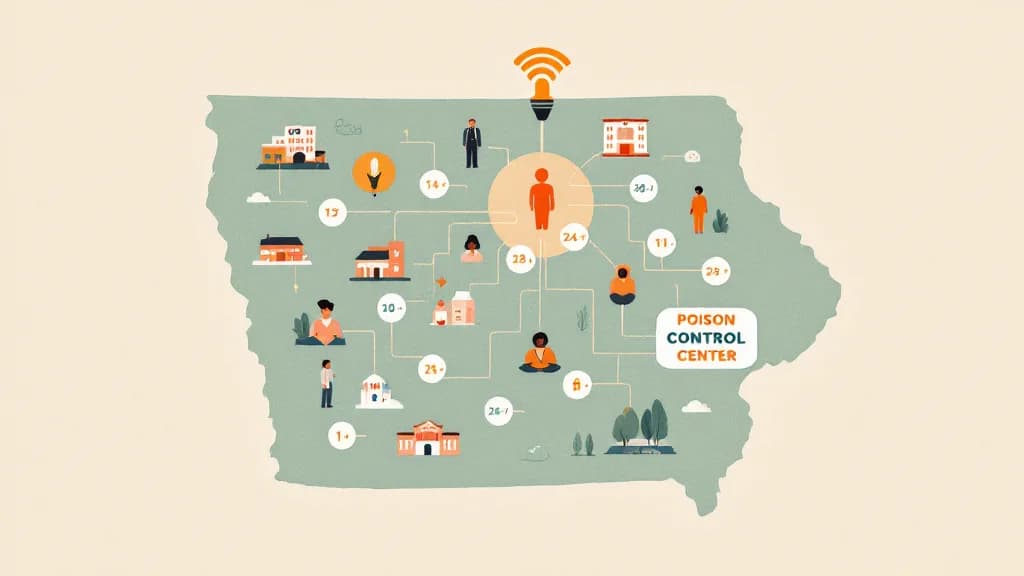
The Iowa Poison Control Center has launched a pioneering program that transforms the organization's traditional emergency response role into an ongoing clinical resource for treating opioid addiction across the state. The new I-BEACON initiative provides healthcare professionals with 24/7 access to specialized guidance on managing patients with opioid use disorder, funded through Iowa's $186 million opioid settlement with major pharmacy chains and drug manufacturers.
The program addresses a critical gap in addiction care: while many physicians can prescribe buprenorphine to treat opioid use disorder, they often lack immediate access to expert consultation on dosing protocols, monitoring strategies, and adverse reaction management.
Connecting Emergency Care to Long-Term Treatment
Dr. Daniel McCabe, medical director of the Iowa Poison Control Center and an emergency medicine specialist at University of Iowa Health Care, explained that the center has historically provided informal advice on substance use disorders. The new funding enables a formalized structure with dedicated resources.
"We can help guide them through the dosing and all the other effects that they should be waiting for," Dr. McCabe said of the consultation service. "We're trying to build a database of all the prescribers in the state that can see these patients after the fact, because if we merely just start the medication and there's no place for these patients to follow up with in a couple of weeks, then we're only putting a band-aid on the situation."
The program's name reflects its core mission: serving as a beacon for clinicians navigating the complexities of addiction treatment. When physicians encounter patients who have overdosed or present with opioid use disorder, they can now access immediate expert consultation rather than making treatment decisions in isolation.
Addressing Iowa's Opioid Challenge
The scope of Iowa's opioid crisis, while less severe than some coastal states, remains substantial. The Centers for Disease Control estimates that approximately 17,000 Iowans live with opioid addiction. State data shows 172 opioid-related deaths occurred in 2024, a figure that public health officials consider preventable with improved treatment access.
Emergency departments across Iowa see numerous patients daily suffering from opioid use disorder, often at critical junctures where immediate intervention can determine long-term outcomes. The I-BEACON program aims to ensure that these encounters result in sustainable treatment connections rather than temporary stabilization and release.
"Getting them in treatment allows them to function better within their family, have better relationships with their family and friends, allows them to function better at work, contribute to their neighborhoods and their community," Dr. McCabe explained. "This is just a safe way to not only keep people alive — which is our number one goal, but to allow people to re-enter their life."
Settlement Funds at Work
Iowa's opioid settlement fund, established through litigation against pharmacy chains and drug companies, has allocated resources to various treatment and prevention initiatives. The I-BEACON program represents a distinctive approach that targets provider education and support rather than direct patient services.
By focusing on the clinical workforce, the program leverages the existing healthcare infrastructure to expand treatment capacity. Physicians in rural areas, where addiction specialists are scarce, can now access expert guidance that would otherwise require referrals to distant academic medical centers.
The 24/7 availability acknowledges the reality of medical practice: opioid-related emergencies do not follow business hours, and clinical questions often arise during overnight shifts when specialist consultation is least available.
A Model for Other States
Iowa's initiative joins a growing portfolio of innovative programs funded by opioid settlement proceeds. While many states have directed resources toward treatment facilities, harm reduction supplies, or public awareness campaigns, Iowa's approach of strengthening the clinical support system for frontline providers offers a complementary strategy that could be replicated elsewhere.
The program's structure—building upon an established poison control center infrastructure—demonstrates how existing public health assets can be repurposed to address emerging challenges without requiring entirely new organizational creation.
For Iowa healthcare providers, the I-BEACON hotline represents a significant expansion of their capacity to respond to the opioid crisis with confidence that expert guidance is always available. For patients, it offers the prospect of more consistent, evidence-based care as they navigate the difficult path from addiction to recovery.
Editorial Board
Editorial review using SAMHSA, CDC, CMS, and state agency sources
The NWVCIL editorial team reviews and updates treatment-center information using public data from SAMHSA, CDC, CMS, and state behavioral-health agencies. We cross-check facility records, state coverage rules, and clinical-practice updates so the directory reflects current evidence and policy.
Related Articles

New York Opens $32 Million Residential Treatment Facility on Wards Island
Governor Hochul announces opening of Kate Rothko Center for Recovery, a 60-bed residential addiction treatment facility combining medication-assisted treatment with expressive arts programming.

Maine's County Jails Spent $12.6M Treating Addiction Last Year
Maine's 15 county jails spent an estimated $12.6 million on addiction and mental health care last year, leaning on grants and opioid settlement funds officials call unsustainable.

Louisiana Bill Would Create Psychedelic Therapy Research Initiative Using Opioid Settlement Funds
State Senator Pat McMath proposes using unspent opioid settlement dollars to fund clinical research into psychedelic-assisted therapy for veterans, first responders, and people with opioid dependence.