
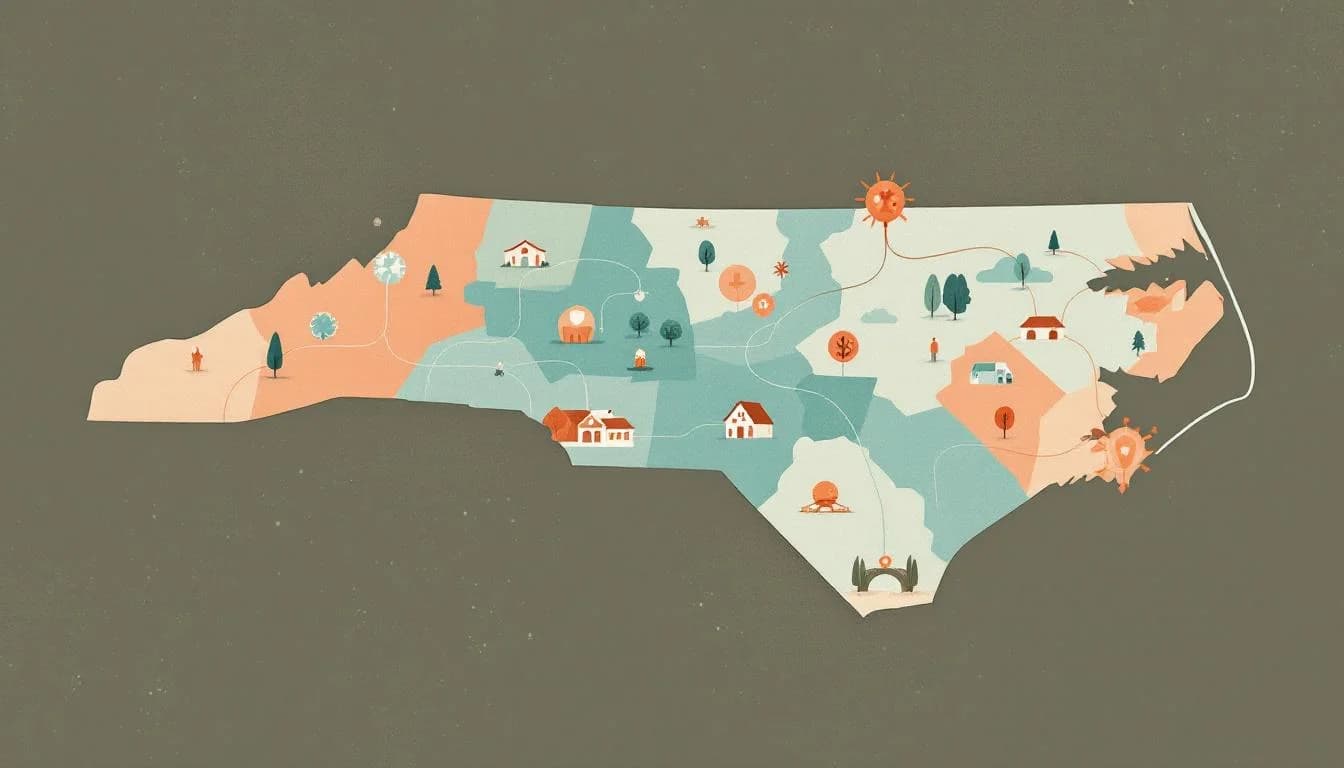
North Carolina Allocates $5.7 Million to Expand Substance Use Services in Underserved Communities
The North Carolina Department of Health and Human Services announced this week a $5.7 million investment to expand substance use disorder treatment in areas where services remain scarce or nonexistent. Twelve community-based organizations received awards ranging from $287,000 to $500,000 each, with the possibility of similar funding for up to two additional years depending on continued federal appropriations.
The grants draw from the federal Substance Use Prevention, Treatment, and Recovery Services Block Grant, administered by the Substance Abuse and Mental Health Services Administration. SAMHSA sends these funds to states and territories annually, and North Carolina health officials decide where local need exceeds available infrastructure.
"More than 1.4 million people in North Carolina struggle with substance use," said Health and Human Services Secretary Dev Sangvai in a statement released Tuesday. "While we have made strides in reducing emergency room visits and overdoses in North Carolina, our work continues toward a goal of increasing access to care, particularly in areas where there are gaps in services like rural or low-income communities."
Geographic and Structural Barriers
North Carolina's geography creates access problems that money alone doesn't solve. The twelve grant recipients operate across a state where someone in Dare County might live ninety minutes from the nearest outpatient clinic, while someone in Charlotte finds multiple providers within a ten-minute drive. Uneven distribution of treatment resources reflects larger patterns in healthcare infrastructure—rural hospitals close, specialists cluster in metropolitan areas, and people who need help most often live farthest from it.
The funded programs target specific gaps federal epidemiological data and state needs assessments identified over the past two years. Several awardees will expand services in counties where no medication-assisted treatment providers currently practice. Others will build crisis co-response teams pairing behavioral health clinicians with law enforcement during mental health and substance use emergencies, a model that reduces arrests and emergency department visits while connecting people to care during acute episodes.
Blue Ridge Health, operating in the western mountain counties, received funding to expand mobile outreach units that bring treatment directly to individuals who cannot reach fixed clinic sites. Transportation barriers prevent many rural residents from accessing weekly therapy appointments or daily medication pickups, even when providers exist within theoretical driving distance. Mobile teams equipped to dispense medications, conduct assessments, and provide counseling reduce those logistical obstacles.
El Futuro, a Durham-based organization serving Latino communities, will use grant funds to expand culturally responsive treatment for Spanish-speaking residents who face linguistic and cultural barriers in addition to the financial and geographic challenges other North Carolinians encounter. Research consistently shows that treatment retention improves when services match clients' language, cultural context, and community norms. Providers who understand immigration-related trauma, family dynamics, and cultural attitudes toward mental health and addiction create environments where people feel safer disclosing struggles and seeking help.
Justice System Integration
Several programs align with Governor Josh Stein's Executive Order 33, signed in February, which prioritizes mental health and substance use treatment access for people involved in the criminal justice system. North Carolina jails and prisons house thousands of individuals with untreated opioid use disorder, alcohol dependence, and co-occurring mental health conditions. Without medication-assisted treatment and continuity planning before release, formerly incarcerated people face dramatically elevated overdose risk in the weeks and months after leaving custody.
Healing Transitions received an award to expand transitional and recovery housing for individuals leaving correctional facilities. Housing instability correlates strongly with treatment dropout and relapse—people cycling through homelessness, temporary shelter, and unstable living situations struggle to maintain regular clinic appointments, store medications safely, or avoid environments saturated with drug use and people actively using. Recovery housing provides stable environments with peer support, structure, and accountability during the months when overdose risk peaks.
Benevolence Farm, operating a working farm and recovery community for women leaving incarceration, will expand capacity and programming. Their model combines agricultural work, trauma-informed therapy, peer support, and life skills development. Women who cycle through the justice system often carry histories of intimate partner violence, sexual trauma, economic instability, and limited formal education. Programs addressing multiple dimensions of that complexity show better long-term outcomes than those treating addiction as an isolated problem.
The NC Survivors Union, a peer-led organization run by people in recovery and directly affected by drug policies, received funding to expand peer support services. Peer recovery specialists bring lived experience that complements clinical expertise. They understand the practical challenges of early recovery, the fears preventing people from seeking treatment, and the ways institutional systems can feel hostile or incomprehensible to someone navigating them for the first time. Research demonstrates that peer support improves engagement, retention, and satisfaction across treatment settings.
Youth-Focused Programming
SMART Recovery USA will launch programming specifically designed for adolescents and young adults, a population whose substance use patterns differ from older adults and who respond better to developmentally appropriate interventions. Youth often cycle between juvenile justice involvement, emergency departments, and school disciplinary systems without receiving consistent evidence-based treatment. Early intervention matters—people who develop substance use disorders in adolescence face worse health outcomes, higher mortality, and greater social and economic disruption than those whose problematic use begins later.
The funded youth programs emphasize prevention alongside treatment. Educational outreach about fentanyl risks targets teenagers who may encounter counterfeit pills or contaminated drugs without understanding the dangers. Screening and early intervention in schools and pediatric primary care settings identify problematic use before it progresses to severe dependence requiring intensive treatment.
Crisis Response and Clinical Expansion
Cabarrus Health Alliance will use grant funds to develop crisis co-response teams, dispatching behavioral health clinicians alongside police officers to mental health and substance use emergencies. Law enforcement officers receive limited training in de-escalation, psychiatric assessment, and addiction medicine. When someone experiencing acute psychosis, suicidal ideation, or drug-induced agitation encounters police without clinical backup, interactions escalate into arrests, injuries, or worse outcomes that could have been prevented through appropriate clinical intervention.
Co-response programs reduce criminal justice involvement for people whose behaviors stem from untreated mental illness or substance use rather than criminal intent. Someone arrested for disorderly conduct during a manic episode or acute methamphetamine intoxication ends up in jail rather than treatment, creating cycles of incarceration that worsen underlying conditions. Clinicians can assess whether someone needs hospitalization, crisis stabilization, medication adjustment, or connection to outpatient services—options unavailable to officers working alone.
Metropolitan Community Health Services and Insight Human Services will expand outpatient treatment capacity, hiring additional counselors, nurses, and case managers. North Carolina treatment programs report waiting lists ranging from days to months depending on location and service type. Every week someone waits for an intake appointment represents another week of active use, overdose risk, and mounting consequences. Expanding clinical capacity directly addresses the gap between people seeking help and the system's ability to provide it.
Granville Vance Public Health will integrate substance use services into existing public health infrastructure. Health departments already operate in every county, providing vaccinations, infectious disease testing, maternal and child health services, and chronic disease management. Adding substance use screening, brief intervention, and referral to treatment leverages existing community touchpoints where people already seek care. Public health departments reach populations—uninsured residents, recent immigrants, people experiencing homelessness—who don't regularly access traditional healthcare settings.
Funding Sustainability Questions
The awards carry one immediate certainty and one significant uncertainty. The certainty: twelve organizations now hold funding to expand services for populations demonstrably underserved by North Carolina's current substance use treatment infrastructure. The uncertainty: whether federal block grants will continue flowing at levels that permit states to maintain these expansions beyond the initial grant period.
SAMHSA block grants depend on annual congressional appropriations. Political priorities shift, deficit concerns fluctuate, and programs authorized in one budget cycle face cuts or elimination in future years. The Trump administration's proposed fiscal 2027 budget, released earlier this month, consolidates several behavioral health grant programs into a single Behavioral Health Innovation Block Grant totaling $4.5 billion. Advocates worry that consolidation may reduce total funding or redirect resources toward approaches favored for ideological rather than evidence-based reasons.
North Carolina's ability to sustain these program expansions depends partly on federal decisions beyond state control. If block grant funding declines, states must either absorb costs with general revenue, reduce services, or allow programs to close when grant periods expire. Treatment providers operating on grant cycles face perpetual uncertainty about whether they can hire permanent staff, sign multi-year facility leases, or make investments that assume continued operation.
The announcement arrives during a period of measured optimism about national overdose trends. Provisional CDC data through early 2026 shows drug overdose deaths declining approximately nineteen percent from the August 2023 peak, the longest sustained decrease in more than four decades. Multiple factors likely contribute—expanded naloxone access, increased medication-assisted treatment availability, shifts in illicit drug supply dynamics, and public awareness of fentanyl risks.
Whether North Carolina's mortality trends mirror national patterns remains an open question. State-level data lags federal provisional estimates, and regional variation complicates aggregate statistics. Some North Carolina counties continue experiencing rising overdose deaths even as statewide numbers improve. Rural areas with late-arriving fentanyl contamination face the epidemic phase that coastal cities weathered years earlier. Sustaining mortality decreases requires sustained investment in the treatment infrastructure these grants attempt to build.
Secretary Sangvai's statement acknowledged progress while emphasizing the scale of remaining need. Reducing emergency department visits and overdoses matters enormously to the individuals and families spared those outcomes, but 1.4 million North Carolinians with substance use disorders exceeds the capacity of current treatment systems to serve. The twelve grant recipients represent incremental expansion, not systemic transformation.
Governor Stein framed the investment in both public health and public safety terms, a rhetorical strategy that reflects political realities in a state where attitudes toward addiction treatment split along partisan and geographic lines. "By funding community-based programs that provide treatment and recovery services, we are helping more North Carolinians get on a path to recovery and strengthening public safety," his statement read. Treatment reduces crime, emergency service utilization, hospital costs, and child welfare involvement—outcomes appealing across political perspectives even when underlying philosophies about addiction differ.
The programs funded address pieces of a larger puzzle that money alone cannot complete. Expanding treatment capacity helps only people who know services exist, can reach them logistically, trust providers enough to disclose substance use, and believe treatment offers something better than their current circumstances. Stigma, criminalization, past negative experiences with healthcare systems, fear of child protective services involvement, immigration concerns, and simple exhaustion all prevent people from seeking help even when services theoretically exist nearby.
North Carolina's investment acknowledges that building adequate treatment infrastructure requires more than prescribers and therapists. It requires housing, transportation, crisis response, peer support, culturally responsive services, youth programming, and justice system diversion—the ecosystem of supports that transform clinical interventions into sustained recovery. Whether $5.7 million spread across twelve organizations and potentially three years makes a measurable difference in statewide outcomes depends on factors these grants cannot directly control: federal funding continuity, complementary policy reforms, workforce recruitment and retention, community acceptance of recovery housing and harm reduction services, and the countless individual decisions people make about seeking help.
The twelve organizations now carry responsibility for translating funding into outcomes. They will hire staff, lease facilities, purchase equipment, develop protocols, train clinicians, conduct outreach, and begin serving clients who previously had nowhere to turn. Whether those services continue beyond the grant period depends on questions currently unanswerable—congressional appropriations two years from now, state budget priorities amid competing demands, local political support when recovery programs seek zoning approvals or facility expansions.
For individuals who access treatment through these programs over the next several years, those uncertainties matter less than the immediate reality: services exist where they didn't before, or exist in greater quantity, in languages they speak, in formats that accommodate their circumstances. Someone in western North Carolina who can now receive medication-assisted treatment from a mobile unit instead of driving ninety minutes each way to the nearest clinic experiences a tangible improvement regardless of federal budget debates. A teenager who receives early intervention before opioid use progresses to dependence may avoid years of consequences their peers without access endured.
Award Distribution and Implementation Timeline
While NCDHHS has not released the specific dollar amounts awarded to each organization, the twelve recipients represent diverse service delivery models addressing different gaps in North Carolina's treatment landscape. The awards range from $287,000 to $500,000 annually, with variation reflecting program scope, service populations, and geographic coverage areas.
Organizations receiving awards include Blue Ridge Health (mountain counties mobile outreach), El Futuro (Latino culturally responsive services), Healing Transitions (justice-involved transitional housing), Benevolence Farm (women leaving incarceration), NC Survivors Union (peer-led support), SMART Recovery USA (youth programming), Cabarrus Health Alliance (crisis co-response), Metropolitan Community Health Services and Insight Human Services (clinical capacity expansion), Granville Vance Public Health (integrated public health services), United Katehnuaka Longhouse (tribal services), and Freedom House Recovery Center (justice-involved treatment).
Programs must begin operations within established timeframes, typically requiring service delivery to commence within three to six months of award notification. Organizations face immediate operational challenges: hiring qualified staff in markets where behavioral health workforce shortages persist, securing appropriate facilities where zoning and community acceptance permit addiction treatment services, establishing clinical protocols meeting SAMHSA evidence-based practice requirements, and developing data collection systems tracking metrics federal funders demand.
The competitive application process that preceded these awards required organizations to demonstrate specific community needs through epidemiological data, document existing infrastructure and organizational capacity, articulate evidence-based approaches addressing identified gaps, and project measurable outcomes within defined timeframes. Applications failing to meet federal block grant requirements or lacking sufficient supporting documentation were eliminated before reaching final evaluation stages.
North Carolina's Position Among States
North Carolina's $5.7 million investment represents a moderate allocation compared to peer states with similar populations and substance use disorder prevalence. California, with roughly three times North Carolina's population, distributed approximately $15 million in comparable SAMHSA block grant supplemental funding during the same federal fiscal year cycle. Texas allocated $12 million across twenty-eight community organizations, spreading resources more thinly than North Carolina's twelve-recipient model.
Smaller states sometimes achieve higher per-capita investment through concentrated focus. Vermont directed $2.1 million to eight organizations serving a state population under 650,000, translating to roughly $3.20 per resident compared to North Carolina's approximately $0.54 per resident. However, Vermont's rural character, limited existing treatment infrastructure, and severe opioid mortality rates—consistently ranking among the nation's highest—justified more aggressive per-capita investment from limited federal dollars.
The southeastern region faces particular challenges expanding treatment access despite substantial need. Alabama, Arkansas, Kentucky, Mississippi, South Carolina, Tennessee, and West Virginia all experience high substance use disorder prevalence and opioid mortality but rank below national averages for treatment program availability, prescriber density, and medication-assisted treatment utilization. Regional patterns reflect historical underinvestment in behavioral health infrastructure, workforce shortages affecting rural areas across service sectors, and political environments sometimes resistant to harm reduction approaches and evidence-based addiction medicine.
North Carolina's competitive position improves when examining medication-assisted treatment adoption rates rather than raw funding totals. The state eliminated barriers to buprenorphine prescribing earlier than southeastern neighbors and achieved higher penetration of office-based opioid treatment compared to states maintaining stricter opioid treatment program models. However, methadone access remains limited, with clinic distribution concentrated in urban counties leaving vast rural areas hours from the nearest provider.
Lessons From Previous Grant Cycles
North Carolina has distributed SAMHSA block grant supplemental funding through similar competitive processes in prior years, generating evidence about what works and what proves more challenging than grant applications anticipated. A 2023 evaluation examining outcomes from organizations funded in the 2020-2022 cycle found that programs exceeded client engagement targets by an average of eighteen percent while falling short of treatment completion goals by similar margins.
The evaluation identified workforce recruitment and retention as the most significant implementation barrier. Organizations struggled to hire qualified counselors, nurses, and case managers at salaries grant budgets supported, particularly in rural counties where few behavioral health professionals practice. Some programs operated below projected capacity for months awaiting staff hires, reducing the number of clients served relative to projections that assumed full staffing from program launch.
Facilities presented another frequent obstacle. Organizations seeking to establish new clinic locations or expand recovery housing encountered zoning restrictions, neighborhood opposition, landlords unwilling to lease to addiction treatment providers, and regulatory requirements adding months to timeline projections. Several programs began operations in temporary locations while working through permitting processes for permanent sites, creating inefficiencies and reduced service delivery during transition periods.
Successful programs demonstrated several common characteristics: existing organizational infrastructure and community relationships predating grant funding, leadership with prior experience managing federal grants and navigating compliance requirements, strong connections to local healthcare systems enabling referrals and clinical collaboration, and realistic projections acknowledging likely implementation challenges rather than optimistic assumptions about immediate full-scale operations.
The evaluation also documented positive outcomes that competitive application processes cannot easily predict. Peer recovery specialist programs consistently exceeded engagement targets, suggesting that lived experience credibility matters enormously to people hesitant about traditional clinical settings. Mobile outreach units reached populations—individuals experiencing homelessness, people in active use avoiding fixed clinic sites, residents in areas without public transportation—that stationary programs struggled to serve. Youth-focused programming demonstrated that early intervention prevented progression to more intensive treatment needs, generating cost savings exceeding program expenses.
Implementation Roadmap and Success Metrics
The twelve organizations now entering program launch phases face defined accountability requirements. SAMHSA block grants mandate quarterly reporting on client demographics, services delivered, treatment episodes initiated and completed, and adherence to evidence-based practices. North Carolina's Department of Health and Human Services layers additional state-specific data collection addressing opioid settlement fund spending transparency requirements and Executive Order 33 metrics tracking criminal justice population outcomes.
Success metrics include quantitative measures—number of individuals served, treatment retention rates at thirty, sixty, and ninety days, reductions in emergency department utilization among enrolled clients, overdose reversals by peer outreach teams, successful transitions from incarceration to community treatment—and qualitative assessments examining client satisfaction, perceived barriers to accessing services, and program adaptations addressing emerging needs.
Programs must also document efforts addressing health equity. Federal block grants require grantees to demonstrate that services reach populations experiencing disparities: racial and ethnic minorities, LGBTQ individuals, people with disabilities, justice-involved populations, pregnant and postpartum women, and veterans. North Carolina adds rural residents to priority populations given geographic access barriers affecting much of the state.
The two-year grant period with potential for third-year renewal creates operational challenges alongside accountability requirements. Organizations cannot commit to multi-year facility leases, hire permanent staff, or invest in infrastructure improvements that assume continued funding beyond confirmed grant periods. This short-term funding model undermines the relationship-building and community integration that effective substance use treatment requires.
Some organizations receiving awards will succeed beyond projected outcomes, expanding services, demonstrating measurable impact on local overdose mortality and treatment access, and securing additional funding to sustain operations beyond the grant period. Others will struggle with implementation challenges, fail to achieve projected enrollment numbers, encounter community opposition, or discover that models working elsewhere don't translate to their specific contexts. The competitive process cannot perfectly predict which organizations fall into which category—implementation reveals what applications only approximate.
The Broader Policy Context
These grant awards arrive during a particularly turbulent period for federal behavioral health policy. The Trump administration's proposed consolidation of categorical grant programs into a single Behavioral Health Innovation Block Grant creates uncertainty about whether specialized substance use funding streams will continue at current levels. Consolidation proponents argue that states gain flexibility allocating resources where local needs dictate rather than following federal categorical requirements. Critics worry that combined funding becomes vulnerable to overall cuts and that states may redirect resources toward politically favored approaches rather than evidence-based practices.
Congressional authorization for SAMHSA block grants expires in fiscal 2027, requiring reauthorization that may substantially restructure programs or terminate them entirely. The Medicaid expansion debate continues affecting treatment access—North Carolina expanded Medicaid in 2023, dramatically increasing insurance coverage for low-income adults including many with substance use disorders, but future administrations could roll back expansion or fundamentally restructure the program through work requirements, premiums, or other barriers reducing enrollment.
Harm reduction services—syringe exchange programs, safe consumption sites, drug checking equipment—face particular political vulnerability despite evidence demonstrating effectiveness at preventing infectious disease transmission and connecting people to treatment. Several states have banned or restricted harm reduction programs in recent years, and federal funding remains contested. North Carolina's inclusion of NC Survivors Union, explicitly engaged in harm reduction work, signals state-level support, but federal policy shifts could eliminate funding streams supporting those services.
The opioid settlement funds North Carolina will receive through 2040—approximately $1.8 billion total—create opportunities for sustained investment beyond annual federal grant cycles. However, settlement fund allocation involves complex political negotiations balancing treatment expansion against law enforcement funding, prevention programming, and other priorities. Whether settlement dollars primarily support evidence-based clinical services or flow toward approaches favored for political rather than effectiveness considerations remains an open question different counties and the state legislature will answer through budget decisions in coming years.
Funding announcements generate press releases and political credit, but programs succeed or fail in contexts distant from government statements and bureaucratic processes. The twelve organizations receiving these awards operate in communities where substance use remains inadequately treated, stigma persists, and people continue dying from overdoses that effective treatment might have prevented. The grants provide resources to attempt addressing those realities. Whether resources translate into changed outcomes unfolds slowly, measured not in announcements and appropriations but in people accessing care, staying engaged, and rebuilding lives disrupted by addiction.
Editorial Board
Editorial review using SAMHSA, CDC, CMS, and state agency sources
The NWVCIL editorial team reviews and updates treatment-center information using public data from SAMHSA, CDC, CMS, and state behavioral-health agencies. We cross-check facility records, state coverage rules, and clinical-practice updates so the directory reflects current evidence and policy.
Related Articles

Cherokee Nation Expands Reentry Program with Opioid Settlement Funds
The Cherokee Nation is investing $6.5 million in opioid settlement money to expand its Coming Home reentry program, including $4 million for transitional housing for formerly incarcerated tribal citizens.

Colorado Ends Twelve-Step Requirement for Parolees
Colorado's Department of Corrections will stop requiring parolees to attend Alcoholics Anonymous or Narcotics Anonymous, referring them to peer support networks instead.

Lakewood Peer Recovery Center to Close as County Cuts Funding
Future Directions, a peer-run recovery space in Lakewood, Ohio, will stop operating in 2027 after the Cuyahoga County ADAMHS Board ended its $428,000 grant.